
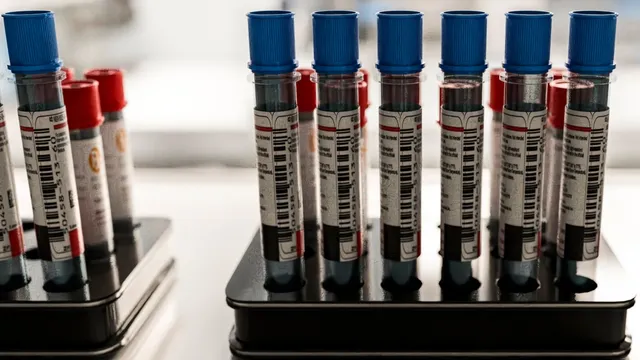
Patients demand Alzheimer's blood tests despite doctors' skepticism
- A survey revealed that 85% of participants would take a blood test for Alzheimer's risk if recommended by a doctor.
- The effectiveness of these tests in predicting Alzheimer's for asymptomatic individuals is debated among medical professionals.
- Despite the growing demand for testing, there are significant concerns about the accuracy and implications of the results.
Story
In the United States, a survey involving nearly 600 adults revealed that a significant 85% would opt for an Alzheimer's blood test if their healthcare provider advised it. The blood test aims to predict a person's risk of developing Alzheimer's disease even before symptoms appear. Alzheimer's disease currently affects about 7 million individuals in the U.S., with no known cure, motivating many to seek more information about their health status. However, this proactive approach is met with skepticism from medical professionals. Neurologists, including Dr. Alberto Espay from the University of Cincinnati College of Medicine, express concerns regarding the effectiveness of these tests in providing early diagnoses and whether early detection leads to meaningful patient benefits. They note that, despite the tests' approval for symptomatic patients, there is insufficient evidence to support their use for asymptomatic individuals. Moreover, physicians caution about the risks involved, such as the occurrence of inaccurate results, including false positives and negatives. This could lead to inappropriate diagnoses and unnecessary treatments. Critics highlight that the tests are not designed to diagnose Alzheimer’s on their own but must be combined with other testing methods, such as PET scans, which evaluate brain pathology. Dr. Ronald Petersen from the Mayo Clinic also emphasized that while blood tests have seen considerable improvements over the years, the field still lacks conclusive evidence regarding their reliability as standalone diagnosis tools. The debate surrounding Alzheimer's blood tests has gained traction due to increasing interest from patients eager to understand possible cognitive decline. With at least 25 commercially available blood tests globally and more in development, demand for these assessments is evident. Following this trend, one study conducted in 2024 noted a 90% accuracy rate in blood tests identifying Alzheimer's among patients with memory issues but cautioned that the findings originated from Sweden and need validation within a more diverse population in the U.S. Experts assert that while these biomarkers could indicate Alzheimer’s risk, the correlation with disease progression isn't straightforward. Aging often brings amyloid and tau proteins in the brain that are present without leading to Alzheimer's. Patients express a strong desire for clarity at a stage when intervention could meaningfully alter the course of their lives. Nonetheless, the medical community remains cautious, highlighting the absence of clear treatment options that would benefit individuals identified at early disease stages.
