

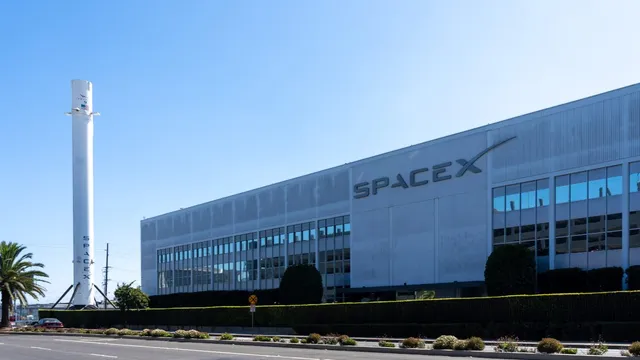
Anthropic strikes deal with SpaceX for AI data center access
Anthropic strikes deal with SpaceX for AI data center access
- Anthropic has partnered with SpaceX to gain access to its Colossus 1 data center to enhance AI services.
- The deal enables Anthropic to increase usage limits for Claude Code and Claude API for paying users.
- This collaborative effort highlights the growing importance and demand for computational power in the AI sector.
Story
In May 2026, in the United States, Anthropic announced a significant partnership with SpaceX to utilize the latter's advanced artificial intelligence data center known as Colossus 1. This partnership is designed to enhance Anthropic's capabilities in delivering AI products, such as its AI assistants Claude Pro and Claude Max, by allowing greater computing resources in response to increasing demand for its services. The deal involves Anthropic securing compute capacity within SpaceX's facility located in Memphis, Tennessee, which houses over 220,000 Nvidia GPUs, including the latest model accelerators designed for AI workloads. SpaceX's Colossus 1 data center has become a prominent infrastructure in the AI arms race, showcasing innovative technology and extensive computing power essential for advanced AI operations. With this arrangement, Anthropic can double usage limits for its Claude Code service, remove peak hour restrictions for certain users, and significantly raise API rate limits for its AI models. This move addresses the growing pressures on AI service platforms and operators as they contend with soaring client interest and a rapidly evolving technological landscape. The partnership not only bolsters Anthropic's offerings but also serves as a validation of SpaceX's ambitions in AI, particularly in light of its planned initial public offering. Hypothetically, the collaboration can lead to more sophisticated AI applications across various sectors, which are increasingly reliant on computational power and innovative AI solutions. SpaceX and Anthropic's mutual interests suggest future initiatives, including the potential for co-developing data centers in space. Notably, this could harness solar energy to facilitate sustainable and efficient AI operations. Both companies are positioning themselves as frontrunners in the tech industry, with substantial backing anticipated from investors as the AI market continues to expand. The partnership signifies a vital contribution to both companies' growth trajectories, especially amidst trends indicating increased enterprise reliance on AI. With major financial institutions also forming alliances with Anthropic, the implications of this deal reach beyond technical cooperation, suggesting a transformative shift in how businesses employ AI technologies.
Context
The AI arms race refers to the competition among nations and corporations to develop and deploy advanced artificial intelligence technologies, particularly in military and defense applications. As AI systems become more capable, there is an increasing emphasis on harnessing these technologies to gain strategic advantages. This race raises important ethical and security concerns, as the potential for misuse and unintended consequences grows alongside the speed of innovation. Governments are investing heavily in AI research and development, leading to a landscape where the capabilities of AI can alter the balance of power among nations and impact global stability. One crucial aspect of the AI arms race is the development of autonomous weapon systems, which can operate without human intervention. These systems, often referred to as lethal autonomous weapons or "killer robots," have sparked intense debate regarding their moral implications and operational risks. Critics argue that delegating life-and-death decisions to machines could lead to unforeseen tragedies, errors in judgment, and escalation of conflicts. Proponents, however, suggest that such technologies could enhance military efficiency and reduce casualties in combat. As nations pursue advancements in AI-military capabilities, establishing international norms and regulations becomes increasingly urgent to mitigate risks. In addition to military applications, the AI arms race also encompasses economic competition. Countries are not only trying to secure a lead in military AI but also in AI technologies that can enhance their economic productivity and global competitiveness. This results in a dual-focus strategy where nations allocate resources towards both defense and civilian AI initiatives. The interplay between these priorities can influence the pace of technological advancements and create a dynamic where collaboration and competition coexist. Ultimately, the AI arms race represents a complex interplay of technology, ethics, and geopolitics. As nations continue to pursue their interests in AI, the potential for an escalation in tensions is likely. Policymakers must navigate this landscape carefully, balancing the benefits of AI innovation with the need for international cooperation and regulatory frameworks. A proactive approach to governance and dialogue among nations could help create stability and prevent a destructive AI arms race.


