
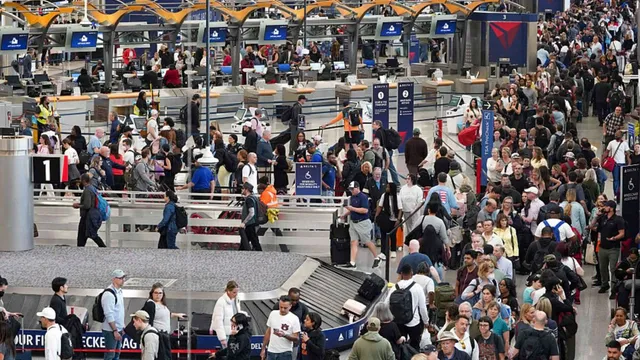
Hundreds of TSA officers quit as government shutdown drags on
- The recent government shutdown since February 14 has led to significant staff shortages at the TSA.
- The situation has resulted in extended wait times for travelers, with callout rates sometimes exceeding 10%.
- Public outcry and union voices are rising, emphasizing the need for federal employee compensation and safety.
Story
In the United States, more than 400 Transportation Security Administration workers have resigned amid a partial government shutdown that commenced on February 14. The shutdown has led to many TSA officers working without pay, resulting in a significant strain on airport security operations. According to the Department of Homeland Security, the callout rates for TSA officers surged to as high as 10.22% during the shutdown, highlighting the growing discontent among staff as they deal with financial hardships caused by not receiving paychecks. Airports like John F. Kennedy International and Houston Intercontinental reported exceptionally high callout rates, leading to longer wait times for travelers. During this challenging period, the ongoing impasse over funding between Democrats and Republicans has further complicated the situation. Democrats demand reforms in immigration enforcement agencies, specifically Immigration and Customs Enforcement and Customs and Border Protection, citing concerns over accountability and practices. As federal negotiations continue without resolution, essential services, particularly airport security provided by TSA, remain at risk due to staffing shortages and low morale among employees. Travelers have reported long waits at multiple airports across the nation caused by the reduced number of available TSA officers. On March 21, TSA data revealed a notable spike in callouts, with over 3,250 officers absent, thereby impacting the efficiency and safety of airport operations. The situation has drawn public attention, and various stakeholders—including unions representing TSA staff—have expressed deep concerns over the implications of the shutdown. They argue that relying on untrained personnel, such as ICE agents, for airport security tasks could compromise passenger safety. The ongoing crisis serves as a stark reminder of the interconnectedness of government, employment, and public safety. As the dilemma persists, various political figures have vocalized their positions, but a clear path forward remains elusive. The call for reform from Democrats signifies a commitment to addressing perceived injustices in federal agency operations, while the Trump administration has laid blame for the shutdown at the feet of Democratic lawmakers. With funding issues unresolved, time will tell how this impasse continues to develop, affecting thousands of workers and millions of travelers relying on safe air travel across the United States.
Context
The effects of a government shutdown on federal employees can be profound and multifaceted, significantly impacting their financial stability, mental health, and the overall functioning of federal services. During a shutdown, a significant portion of federal employees are furloughed or required to work without pay, resulting in immediate economic distress for those workers. Many federal employees live paycheck to paycheck, and the sudden loss of income can lead to difficulties in meeting basic living expenses such as mortgage or rent payments, utility bills, and grocery costs. This financial strain not only affects the employees but can also ripple through the local economies where they reside, leading to decreased spending and economic activity. Moreover, the uncertainty surrounding the duration of the shutdown adds to the stress experienced by these employees, worsening the financial impact they face and causing heightened anxiety about the future. Additionally, the psychological toll of a government shutdown can be detrimental to federal employees. The stress associated with financial insecurity often leads to heightened feelings of anxiety and depression. Employees may experience low morale, as the disruption to their employment affects not just their economic well-being but also their professional identity and sense of purpose. The work environment suffers as productivity drops and interdepartmental collaboration is hindered. Mental health resources become critical during times of shutdown when employees may face increased stress levels. The need for support and wellbeing programs for federal employees is vital as these situations often prolong the adverse effects on mental health, potentially leading to longer-term issues even after workplaces reopen. The consequences of a government shutdown are exacerbated in critical fields such as healthcare and national security, where services may halt or drastically reduce. Federal employees working in these sectors must navigate the complexities of maintaining operational readiness while dealing with the uncertainties of their employment status. The shutdown can delay essential programs, affect vital operations, and hinder ongoing projects that contribute to public welfare. This can create not only an internal strain within federal organizations but also diminish public trust in government capabilities to deliver key services to citizens, further contributing to a cycle of discontent and distrust among both federal employees and the general public. Overall, the ramifications of a government shutdown extend far beyond the immediate financial concerns faced by federal employees. It impacts their mental health, income stability, productivity, and the quality of federal services provided to the public. Recognizing these effects is essential for policymakers to address the impacts of future shutdowns more proactively and consider the implications for thousands of dedicated public servants. Effective communication, better planning, and support systems could alleviate some of this strain in times of crisis and help maintain the workforce that is critical to the functioning of government operations.
