

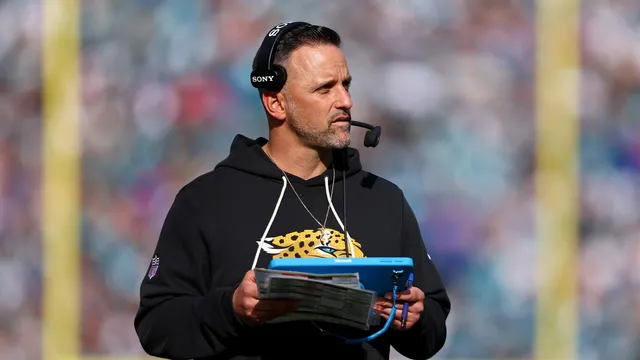
Ravens consider Mike McDaniel for head coach position
Ravens consider Mike McDaniel for head coach position
- Mike McDaniel was interviewed today by the Ravens for their head coaching vacancy.
- He was recently dismissed as the Dolphins' head coach after a four-year tenure.
- The Ravens are contemplating if McDaniel's offensive strategies can elevate Lamar Jackson's game.
Story
In the United States, the Baltimore Ravens conducted an interview with Mike McDaniel for their head coaching vacancy on January 16, 2026. This follows McDaniel's recent termination as head coach of the Miami Dolphins, which took place a week prior. During his time with the Dolphins, McDaniel led the team to the playoffs in each of his first two seasons but failed to secure a playoff victory and did not qualify in his subsequent two seasons. His overall regular season record with the team stood at 35 wins and 33 losses. Prior to his role with the Dolphins, McDaniel served as the offensive coordinator for the San Francisco 49ers, where he worked closely with head coach Kyle Shanahan. McDaniel is well-known for his offensive strategy and was once considered one of the brightest young minds in the NFL. However, the inability of quarterback Tua Tagovailoa to progress within McDaniel's offensive system has impacted McDaniel's reputation negatively. The Ravens are exploring their options for their head coach as they seek to determine who could effectively manage quarterback Lamar Jackson's talents and lead the team towards a Super Bowl victory. With McDaniel’s experience and past achievements, he represents a significant candidate for this key position. His history shows promise, but the assessment will hinge on whether he can adapt his coaching style to better support and develop Jackson's abilities. Alongside McDaniel, other candidates vying for head coaching roles have been noted in the league. The Miami Dolphins, for instance, have also recently interviewed Chargers defensive coordinator Jesse Minter and 49ers defensive coordinator Robert Saleh, indicating a competitive hiring period across the NFL. The Ravens and Dolphins are not the only teams looking to fill coaching vacancies, as various head coaching opportunities are being evaluated throughout the league, highlighting a dynamic and shifting coaching landscape.
Context
The impact of coaching changes in the NFL is a significant factor that can influence team performance, player development, and overall organizational success. Coaching transitions can occur for a variety of reasons, including poor performance, conflict within teams, or new management directions. When a team parts ways with a coach, it often results in a shift in strategy, philosophy, and even player personnel. The introduction of a new coaching staff can breathe new life into a struggling franchise while potentially disrupting the existing culture and cohesion among players. Historical data suggests that teams that undergo coaching changes frequently experience short-term fluctuations in their win-loss records, but the long-term ramifications vary widely depending on the coach's experience and fit with the team's identity and goals. One crucial aspect of coaching changes is the impact it has on player performance. Coaches are pivotal in developing talent, implementing game strategies, and maintaining a team's competitive edge. A new coach may bring innovative tactics that can unleash a player's potential, or conversely, their coaching style may not align with the players' strengths, leading to decreased performance. Additionally, a coaching change can either foster a competitive environment that motivates players or create an atmosphere of uncertainty and fear of change, which can harm team morale. The ability of a new coach to effectively communicate their vision and philosophy to the team can be instrumental in smoothing the transition and enhancing performance. Moreover, the timeline for a new coach to establish themselves and witness positive results often extends beyond a single season. Fan expectations are typically high, and scrutiny from the media intensifies during this transitional phase. Teams may need to balance the urgency for immediate results with the necessary patience to allow a coaching staff to implement their system. While some coaches achieve quick success, others may require several seasons to fine-tune their strategies and build a winning culture. Success can also depend on the support they receive from management, especially in terms of roster construction and resource allocation. The alignment between the coaching staff's vision and the front office's strategy can significantly affect the long-term success of the coaching change. In conclusion, coaching changes in the NFL possess profound implications for a team’s dynamics and performance. While the potential for revitalization and success exists, the transition can also pose risks that affect player performance and team stability. The effectiveness of a coaching change is not merely measured by immediate results but rather through the long-term impact on player development and the establishment of a sustainable competitive model. Understanding these dynamics is essential for NFL franchises aiming to navigate the complexities of coaching changes while striving for success on the field.


