

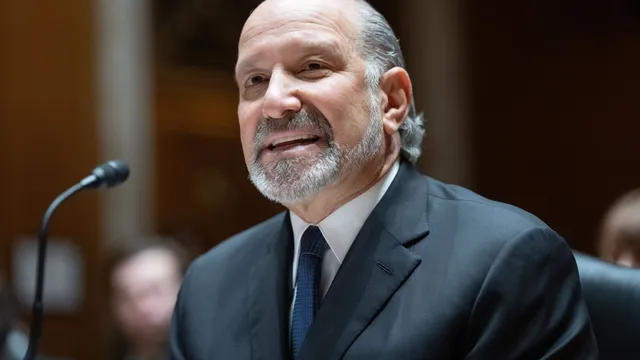
Supreme Court strikes down Trump's tariffs, benefiting Lutnick family financially
Supreme Court strikes down Trump's tariffs, benefiting Lutnick family financially
- The Supreme Court ruled against most of Trump's emergency tariffs, allowing for potential duty refunds.
- Howard Lutnick's sons may benefit financially from this ruling through their firm, Cantor Fitzgerald.
- The ruling raises significant ethical concerns about conflicts of interest in tariff-related financial dealings.
Story
In a landmark decision by the Supreme Court, most of President Donald Trump's emergency tariffs were invalidated, which could have significant financial implications for several parties involved, particularly Secretary of Commerce Howard Lutnick's sons, Brandon and Kyle Lutnick. The ruling, issued on a Friday, enables companies and individuals to potentially seek refunds on the duties they had already paid under these tariffs. The tariffs, put in place by Trump for various reasons including curbing immigration and reducing trade deficits, faced scrutiny from multiple fronts due to perceived conflicts of interest and insider trading concerns, especially in relation to the activities of Cantor Fitzgerald, the parent company of a financial services firm led by the Lutnick brothers. As reports emerged, it seemed that Cantor Fitzgerald had been preparing for this ruling, suggesting that they explored arrangements allowing investors to profit from the legal outcomes regarding tariff refunds. This has raised significant questions about the ethical implications of having a commerce secretary whose family is positioned to financially benefit from a legal outcome associated with policies he previously advocated, indicating a potential conflict of interest. Critics, including Democratic Senators and various economic analysts, have voiced strong concerns about how these actions might reflect insider dealings and the broader implications for American citizens who had to absorb the costs of the tariffs.
Context
The history of Trump's tariffs is a significant aspect of his administration's trade policy, reflecting a shift toward protectionism in the U.S. economy. President Donald Trump, who took office in January 2017, advocated for tariff increases as a means to protect American jobs and industries from what he described as unfair competition from foreign countries. His administration initiated a series of tariffs that primarily targeted China, which was accused of intellectual property theft, currency manipulation, and other trade practices detrimental to American interests. In 2018, Trump imposed a 25% tariff on steel and a 10% tariff on aluminum imports, asserting these measures were necessary for national security. These actions marked the onset of what many referred to as a 'trade war,' leading to retaliatory tariffs from affected countries, including China, which, in turn, targeted U.S. agricultural products and other goods. The tariffs imposed by the Trump administration had both immediate and long-term implications for various sectors of the economy. Industries such as steel and aluminum saw a brief resurgence due to increased domestic production, as the tariffs incentivized American companies to ramp up output. However, other sectors, particularly those reliant on imported materials, faced increased costs, which often led to higher prices for consumers. Farmers, particularly in states that voted for Trump, experienced significant challenges as China imposed tariffs on U.S. agricultural exports like soybeans, corn, and pork. To mitigate these impacts, the administration implemented subsidy programs to support farmers who were adversely affected by retaliatory measures. The negotiations with China aimed to reduce the trade deficit and address intellectual property concerns were marked by a series of ups and downs. Initial agreements led to a Phase One deal in January 2020, which resulted in China's commitment to increase its purchases of American goods and address some of the U.S. concerns regarding trade practices. However, many analysts argue that while tariffs may have provided temporary relief to some industries, they ultimately did not resolve the deeper structural issues within the U.S.-China trade relationship. The ongoing trade tensions and the uncertainty surrounding trade policies contributed to volatility in the markets and affected supply chains as businesses grappled with inconsistent tariffs and trade regulations. Trump's aggressive tariff strategy also spurred a broader discussion on globalization and its benefits versus the need for protectionist measures to safeguard domestic industries. Critics of the tariffs argued that they harmed the economy more than helped, causing job losses in sectors dependent on international trade. As the 2020 election approached, a shift in public opinion regarding trade policies became apparent. The turbulent trade landscape, influenced by tariffs and ensuing geopolitical tensions, played a significant role in shaping the economic discourse leading up to the election. As of February 2026, the long-term effects of Trump's tariffs continue to be a subject of significant analysis as the U.S. navigates its position in global trade.


