

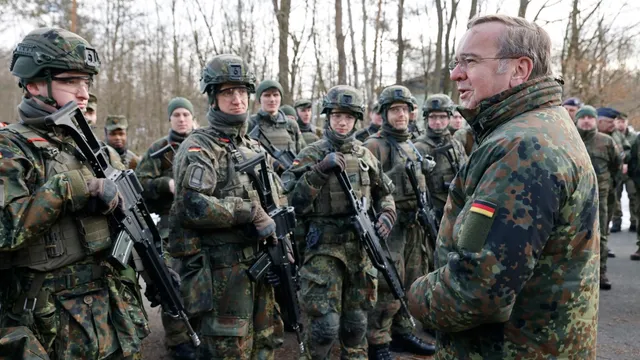
Germany plans to drastically increase military forces amid NATO tensions
Germany plans to drastically increase military forces amid NATO tensions
- Germany is aiming to grow its military personnel from 186,000 to 260,000 by the mid-2030s.
- The proposed voluntary military service, effective from January 1, faces criticism, with calls for reinstating compulsory service.
- The military expansion reflects rising concerns about Russian aggression and aims to enhance collective security in Europe.
Story
Germany is undergoing a significant military expansion, aiming to increase its active-duty forces from approximately 186,000 to 260,000 by the mid-2030s. This decision, linked to rising concerns regarding Russian military aggression and a perceived uncertainty about U.S. defense commitments, is part of a broader defense overhaul. German Defense Minister Boris Pistorius outlined this pragmatic approach in response to the evolving geopolitical landscape. The buildup involves substantial procurement measures, including the acquisition of numerous tanks and self-propelled howitzers, scheduled for delivery beginning in 2026. As part of this transformation, the government has also proposed voluntary military service starting January 1, sparking protests across the nation. Critics, including Bavaria’s Christian Social Union leader Markus Soder, argue for the reinstatement of compulsory military service to bolster troop numbers. Soder asserts that relying solely on volunteers will not provide the security needed. If the Bundeswehr is to become the largest army in Europe, regulatory measures for mandatory service should be reintroduced as a priority. Germany's military expansion is a direct response to both the ongoing conflict in Ukraine and the anticipation of further Russian aggression in Europe, particularly against the Baltic states. As tensions continue to rise, the re-establishment of a sizable and equipped military force is deemed necessary to ensure national and collective security. This effort follows various European nations, including Croatia and Finland, who have already reintroduced or adjusted conscription policies amid similar threats. Despite these efforts, experts warn that simply enhancing troop numbers will not suffice to effectively address the challenges posed by Russia. Observations suggest that logistical issues, readiness, and sustainable support systems remain critical areas that need to be addressed. Some analysts predict that the real risks will arise after the current conflict in Ukraine concludes, underscoring the importance of careful and strategic planning for the future security of NATO allies. As Germany adopts a more assertive military posture, deployments to Eastern Europe mark a departure from its historically cautious approach to defense, signifying a notable shift in policy that reflects current demands and threats.


