

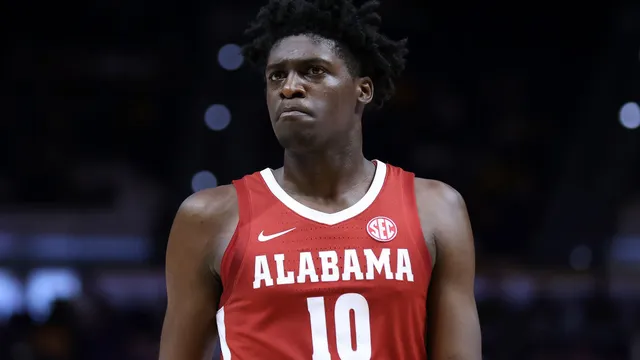
Charles Bediako challenges NCAA eligibility rules in court
Charles Bediako challenges NCAA eligibility rules in court
- Charles Bediako successfully returned to college basketball after participating in the G-League.
- His lawsuit against the NCAA raised questions about athlete eligibility and NIL earnings.
- The outcome of his court case could lead to significant changes in NCAA regulations regarding professional athletes returning to college sports.
Story
In Alabama, Charles Bediako, a college basketball player, recently made headlines after returning to the University of Alabama just a week after playing in the G-League. In this period, he managed to score thirteen points during a game against Tennessee. Following his return, Bediako filed a lawsuit against the NCAA asserting that his eligibility should allow him to participate in college basketball despite his recent professional experience. At the heart of his case is his claim that if he had understood the financial potential of Name, Image, and Likeness (NIL) opportunities, he would not have entered the NBA draft. This assertion points to a broader issue concerning collegiate athletes' rights and the evolving landscape of college sports. The NCAA had previously denied his waiver request for eligibility, prompting him to take legal action. This case was set for a hearing in a Tuscaloosa courtroom, which could significantly affect how eligibility is determined for athletes transitioning between amateur and professional leagues. The impact of this case extends beyond Bediako, as it could lead to more professional athletes exploring options to return to college sports. Observers note that if Bediako succeeds in court, it could pave the way for others in similar situations and lead to a shift in NCAA policies regarding athlete eligibility. The judge presiding over the case has faced scrutiny due to his connections to Alabama athletics, with the NCAA requesting his recusal to avoid any appearance of bias in this high-profile matter. Bediako's situation highlights the complex issues within college athletics, particularly in balancing NCAA regulations with the evolving dynamics of college sports and the professional world. As the hearing approaches, many are watching closely to see how the courts will navigate these challenges, and what precedence it might set for future athlete eligibility disputes. The NCAA finds itself in a precarious situation, advocating for legislative intervention to resolve ongoing eligibility disputes while facing significant backlash from athletes and changing public opinions. In light of recent developments and increased media attention, the negotiations over college athletes' rights and their potential return to collegiate play raise critical questions about the future of amateur sports. This case exemplifies the tension between traditional NCAA rules and the realities of modern college athletics where opportunities are plentiful, and athletes seek ways to capitalize on their skills and presence. Regardless of the outcome, the case is bound to have lasting implications on the landscape of college athletics and how eligibility is perceived and enforced moving forward.


