

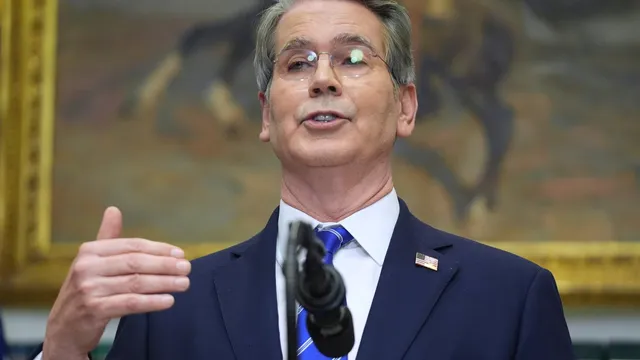
Kevin Hassett emerges as leading contender for Federal Reserve chair
Kevin Hassett emerges as leading contender for Federal Reserve chair
- President Donald Trump has selected his nominee for the next Federal Reserve chair.
- Kevin Hassett is seen as the top candidate and has expressed his willingness to serve.
- The decision is expected to have significant implications for monetary policy in the U.S.
Story
In the United States, President Donald Trump announced his intention to select a new chair for the Federal Reserve as affordability pressures rise across the country. As the incumbent chair, Jerome Powell, approaches the expiration of his term in May 2026, multiple candidates have emerged for consideration, with Kevin Hassett, the National Economic Council Director, being the favorite among Trump's inner circle. The selection comes amid ongoing economic challenges, such as high inflation and rising living costs, putting Trump’s economic agenda to the test. Analysts speculate that Trump's choice will significantly influence monetary policy, particularly regarding interest rates. During his recent media appearances, Kevin Hassett expressed his willingness to take on the role if selected, emphasizing that markets seem to be responding positively as discussions about a successor to Powell intensify. His assertion points to a broader expectation in the financial community of continued reforms and a potential shift in policy under new leadership. Reports suggest that Trump's decision should be announced soon, with the Senate Banking Committee preparing for an expedited review of the nomination. The administration's focus on selecting a new Fed chair comes at a crucial moment, as concerns regarding the independence of the central bank grow. Following recent criticisms directed at Powell by Trump, there are fears that the upcoming selection could allow for closer alignment between the White House and the Fed’s monetary policies. This potential influence on the central bank is a matter of debate among economists, who warn of historical patterns where political ties to the Fed chair have previously resulted in conflicts. As the urgency of affordability issues compels Trump to choose carefully, names such as former Fed governor Kevin Warsh and current board member Christopher Waller are expected to accompany Hassett on the shortlist. The growing anticipation regarding the new appointment suggests that stakeholders are preparing for significant consequences in U.S. monetary policy. The new Fed chair will not only have to navigate challenges of inflation but also stabilize public confidence in the central banking system amidst varying political pressures.
Context
The role of the Federal Reserve Chair is crucial in shaping U.S. economic policy. The Fed Chair's decisions and statements have far-reaching implications on monetary policy, impacting everything from inflation rates to employment levels. The Chair's leadership can influence market perceptions and expectations, highlighting the importance of effective communication and policy direction. Various economic indicators, such as GDP growth, unemployment rates, and consumer spending, serve as a backdrop for the Fed's actions. The decisions made by the Fed, especially during times of economic uncertainty, are significant in either stimulating or constraining economic growth. This demonstrates the power that the Fed Chair holds in navigating the U.S. economy through differing fiscal environments. Through the lens of historical context, the impact of the Fed Chair can be examined during key events such as the 2008 financial crisis and the recent COVID-19 pandemic. During the 2008 crisis, then-Chair Ben Bernanke implemented unprecedented measures, including zero interest rates and quantitative easing, aimed at stabilizing the economy. In contrast, the response to the pandemic involved rapid interventions to support economic recovery through stimulus packages and interest rate adjustments. Each decision was crucial in influencing recovery trajectories and setting the example for future monetary policy under both Bernanke and his successor, Janet Yellen, as well as current Chair Jerome Powell. The Fed Chair's influence extends beyond monetary policy to include global economic relationships. With the U.S. dollar being a primary reserve currency, the Fed's interest rate decisions have implications for global markets and economies. Changes in U.S. interest rates can lead to capital flows into or out of emerging and developed markets, affecting exchange rates and international trade dynamics. Thus, the strategic decisions made by the Fed Chair often require consideration of both domestic and international economic landscapes, illustrating the interconnectedness of economic policy. In conclusion, the influence of the Fed Chair on U.S. economic policy is profound and multifaceted, involving critical decision-making that impacts monetary policy, financial markets, and global economic interactions. As the economy evolves, the challenges faced by the Fed Chair will continue to necessitate careful scrutiny and adept leadership to bolster economic stability and growth. Understanding these dynamics is key to anticipating the implications of monetary policy changes led by the Federal Reserve, which remains an integral institution in shaping the economic future of the United States.


