

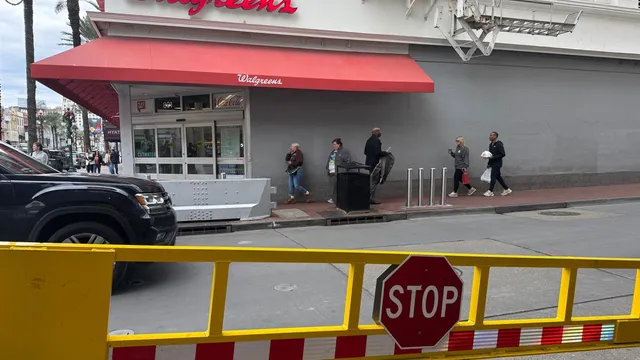
National Guard enhances security in New Orleans after deadly attack
National Guard enhances security in New Orleans after deadly attack
- The National Guard deployment in New Orleans began as part of heightened security for New Year's celebrations.
- This move comes in the wake of a deadly vehicle attack that killed 14 people on January 1, 2025.
- Authorities emphasize the deployment's purpose is to enhance public safety and provide visible security for attendees.
Story
In New Orleans, Louisiana, National Guard troops have been deployed to provide added security for New Year's celebrations, starting on December 30, 2025. The deployment was authorized by President Donald Trump in response to a tragic incident that occurred a year earlier on January 1, 2025, when a vehicle attack on Bourbon Street resulted in the deaths of 14 individuals. This incident heightened local and federal authorities' concerns over safety during large gatherings, especially in popular tourist areas such as the French Quarter. Prior to the current deployment, National Guard members were already present in New Orleans earlier in 2025 for events like the Super Bowl and Mardi Gras. Officials, including New Orleans police spokesperson Reese Harper, clarified that National Guard members are not present for immigration enforcement but rather as a visible security measure aimed at ensuring public safety. The Guardsmen are tasked with patrolling specific areas known for high tourist traffic and will be maintaining a presence through the Carnival season, which culminates in Mardi Gras festivities in mid-February. In total, over 800 local, state, and federal law enforcement personnel have been marshaled to oversee the New Year's events. This deployment involves closing off Bourbon Street to vehicular traffic, conducting bag searches, and maintaining order among the participants in the festivities. These measures are designed to reassure both residents and tourists in light of the previous year's violence. The community's response contains a mix of apprehension and the desire for safety as they engage in traditional celebration activities. Following the attack on Bourbon Street, which took place in the early hours of New Year's Day, concerns over security have led to repeated calls for increased military support to address rising crime rates. Governor Jeff Landry had previously requested troops from Trump to bolster security, reflecting ongoing debates about law enforcement's capacity to ensure safety in urban areas. The deployment of the National Guard thus serves as part of wider safety protocols, aiming to stabilize the environment while reassuring the public. As New Orleans prepares for another season of vibrant celebrations, having the National Guard in place symbolizes a commitment to protecting the community during large-scale events.
Context
shift analysis global impact analysis data shift data policy analysis global trends data shift economic analysis insight policy global analysis policy analysis geopolitical policy shift market analysis analysis data policy impact data policy data policy data impact insight impact market policy economic policy market data market data economic shift geopolitical strategic data trends economic global policy shift market global data strategic insight policy trends insight policy trends geopolitical policy global impact global analysis global strategic shift data shift impact policy...


