

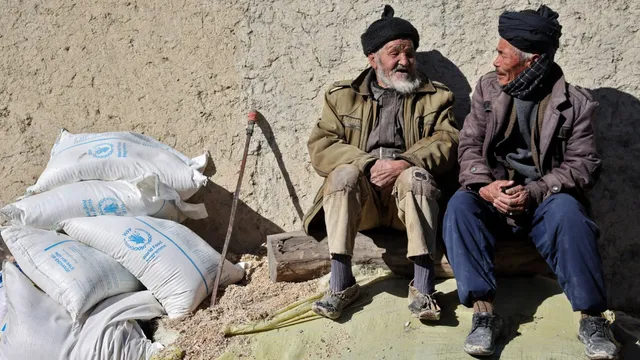
Afghanistan's hunger crisis plunges millions into despair amid economic collapse
Afghanistan's hunger crisis plunges millions into despair amid economic collapse
- Afghanistan will implement a $100 million food security project supported by the United Nations and Asian Development Bank.
- The program aims to assist over 151,000 families facing acute food insecurity amid economic collapse and natural disasters.
- The situation in Afghanistan is dire, with projections indicating millions may face hunger and malnutrition by 2026.
Story
Afghanistan, facing a deepening humanitarian crisis, is rolling out a $100 million food security program funded by the United Nations and Asian Development Bank. This initiative aims to address the urgent needs of over 151,000 families, particularly Afghan returnees and those impacted by recent natural disasters. The country has seen over 2.5 million Afghans expelled from neighboring Iran and Pakistan this past year, exacerbating the existing economic hardships that have led to severe food shortages across the nation. The primary drivers of this crisis include mass deportations, significant cuts in foreign aid, and a relentless economic downturn. As assistance from international entities dwindles, many families have been pushed to the brink of starvation. The Food and Agriculture Organization has projected that by 2026, an alarming 17.4 million individuals will be at risk of acute food insecurity, with an estimated 4.7 million suffering from acute malnutrition. This stark assessment indicates that the country is in a state of escalating desperation. Moreover, the rise in malnutrition rates reached historic levels last year, attributed largely to the winter conditions, job scarcity, and insufficient funding for aid efforts. Relief agencies, including the World Food Programme, have highlighted that the economic situation severely restricts household resources, contributing to the highest surge in malnutrition ever recorded in Afghanistan. As many households grapple with the realities of their subsistence, the overall livelihood spectrum in Afghanistan continues to shrink, placing the most vulnerable populations at greater risk. In light of these challenges, the newly initiated food security project seeks not only to alleviate immediate hunger but also to close the production gap in food supplies. The goal is to foster conditions for private sector recovery, thus offering long-term solutions beyond mere emergency responses. As the program unfolds, it remains crucial for stakeholders to monitor its effectiveness against the backdrop of an escalating national crisis, where the needs of millions hang in the balance as Afghanistan strives to navigate these daunting challenges.
Context
As of January 2026, Afghanistan is facing a severe humanitarian crisis that has escalated significantly since the Taliban regained control in August 2021. The country is grappling with a multitude of challenges including widespread poverty, food insecurity, and a healthcare system on the brink of collapse. Approximately 24 million Afghans, or roughly 60% of the population, are in urgent need of assistance, and many are experiencing acute malnutrition, particularly vulnerable groups such as children and nursing mothers. The ongoing economic decline, worsened by international sanctions and loss of foreign aid, exacerbate these conditions, driving millions to the brink of starvation. Access to basic services such as healthcare, education, and clean water continues to deteriorate. The World Health Organization reports that health facilities are under-resourced and unable to meet the rising demand for medical care, leading to increased morbidity and mortality rates. Additionally, the education sector is severely impacted, as many girls are barred from attending school, which not only denies them education but also perpetuates cycles of poverty and inequality. The lack of access to clean water and sanitation compounds these issues, resulting in outbreaks of waterborne diseases, further straining the already fragile public health infrastructure. The situation is further complicated by the ongoing political instability and a lack of recognition from the international community. Despite the urgent needs of the Afghan people, the Taliban's governance has led to a cautious response from donor countries, leading to a significant reduction in foreign aid that previously supported critical humanitarian programs. As funding diminishes, local NGOs and international organizations face increasing challenges in delivering essential services, and many are forced to scale back their operations or suspend them entirely, leaving millions without support. To address this crisis, a coordinated international response is urgently needed. Humanitarian organizations call for increased funding and support for food assistance, healthcare, and education programs, ensuring that aid reaches the most vulnerable populations. Efforts must also focus on fostering dialogue with the Taliban to improve human rights conditions, particularly for women and children. As the humanitarian crisis deepens, it remains imperative that the global community recognizes the suffering in Afghanistan and takes collective action to alleviate the plight of millions, ensuring that no one is left behind in this desperate situation.


