

Iran blocks Strait of Hormuz, stranding 20,000 sailors
Iran blocks Strait of Hormuz, stranding 20,000 sailors
- Iran's blockade of the Strait of Hormuz has stranded 20,000 sailors on their vessels.
- Sailors face extreme conditions, including watching rockets fly overhead amid military tensions.
- The situation underscores the need for global awareness of seafarers' contributions and hardships.
Story
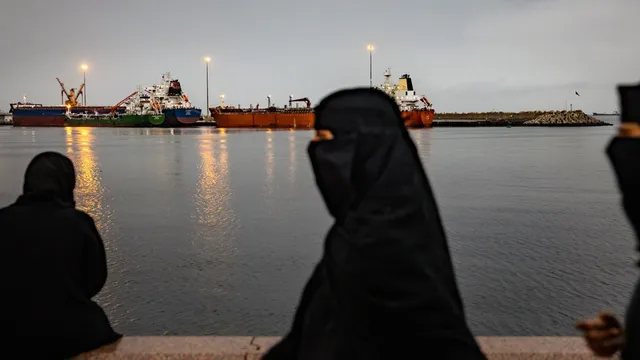
In response to U.S.-Israeli strikes, Iran's blockade of the Strait of Hormuz has left 20,000 sailors stranded on hundreds of ships in the Persian Gulf. This situation arose as tensions escalated between Iran and the U.S., effectively shutting down one of the world's busiest maritime routes. Many sailors, including a 28-year-old from India, face extreme challenges, including sleepless nights spent on deck watching rockets fly overhead and fearing potential attacks. Reports indicate that at least seven seafarers have lost their lives, and several others have sustained serious injuries in attacks attributed to Iranian forces on commercial vessels. During the pandemic, sailors were already confined to their ships for extended periods due to various border restrictions, making their current situation even more dire as they find themselves stuck amid ongoing conflicts. Angad Banga, chief executive of a Hong Kong-based shipping company, highlights the plight of these workers, emphasizing the risks they endure just to keep global trade flowing. The sailors are trapped in a cycle of fear and uncertainty as they wait for the situation to improve. Banga stated that while their work is critical, the world often forgets about them once crises fade from public view. An example of the dangers these sailors face is evident in an incident where a Thai-flagged ship was struck by projectiles, resulting in an explosion and the subsequent rescue of crew members with three still missing. In this context, as the sailors attempt to carry on with daily activities such as exercising and watching movies during the day, the fear of nightfall intensifies since most attacks occur after dark. The situation has been compounded by recent military actions between Iran and its adversaries, forcing vessels to navigate a perilous maritime environment without guarantees of safety. Iran has stated that “non-hostile vessels” will be allowed safe passage through the Strait of Hormuz, but for now, many sailors remain uncertain of their fate as they navigate the geopolitical landscape that has left them stranded.
Context
The impact of Iran's blockade on maritime trade has been profound and multifaceted, affecting regional and global trade dynamics, economic stability, and international relations. Iran, strategically located along the Strait of Hormuz – a crucial chokepoint for about 20% of the world's oil supply – has leveraged its geographical position to impose trade blockades as a means of exerting political influence. These blockades have historically disrupted shipping routes, leading to increased shipping costs, delays, and a heightened risk of maritime confrontations. The implications are especially significant for countries heavily reliant on maritime transport for their economic activities, including the transit of oil, gas, and essential goods. Consequently, nations have had to reassess their shipping routes, often opting for longer, more expensive overland alternatives, which in turn affects global supply chains and contributes to inflationary pressures in various economies. The blockade's most immediate economic effects are seen in the increased insurance premiums for shipping companies transiting through the region. As the threat of seizures or attacks on vessels rises, shipping insurers adjust their policies to account for the heightened risk, leading to inflated costs that are often passed on to consumers. Additionally, the blockade impacts local markets, especially in countries neighboring Iran, which experience shortages of goods and fluctuations in prices due to disrupted supply chains. Import-dependent nations find themselves scrambling to secure alternative suppliers, which can create a power vacuum and further destabilize regional economies. On a broader scale, Iran's maritime blockade serves as a catalyst for escalating tensions between it and other nations, particularly the United States and its allies, who seek to maintain open maritime routes for trade. Diplomatic efforts to resolve these tensions are often complicated by the interplay of military posturing, sanctions, and the geopolitical competition for influence in the Middle East. The resulting environment of uncertainty discourages foreign investment and complicates international trade agreements, as potential investors weigh both the economic opportunities and the risks associated with operating in or near the region. This dynamic can stymie economic growth and innovation and prevent countries from realizing the full potential of their maritime sectors. In summary, Iran's blockade has significant ramifications for maritime trade that extend beyond the immediate disruption of shipping routes. It affects economic stability, influences global pricing mechanisms, and complicates international relations in a geopolitically sensitive region. Addressing these challenges requires coordinated international efforts to ensure maritime security, promote diplomatic resolutions, and support affected nations in mitigating the economic fallout from such blockades. As global dependency on maritime transport continues to grow, understanding the implications of Iran's actions on trade will remain a critical area of analysis for policymakers and researchers alike.


