

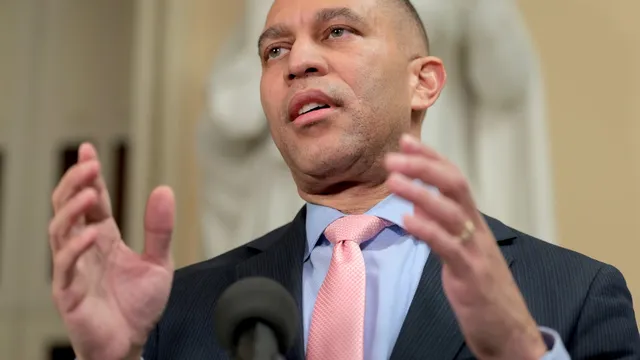
House Democrats warned against traveling to Minnesota amid security fears
House Democrats warned against traveling to Minnesota amid security fears
- House Democrats received an advisory against traveling to Minnesota to support protests regarding immigration policies.
- The advisory was based on discussions with local officials who feared visitors would strain law enforcement resources.
- The situation reflects broader tensions arising from recent incidents involving immigration enforcement and local violence.
Story
In January 2026, House Democrats were advised against traveling to Minnesota for protests regarding Donald Trump's immigration policies. A senior staffer to House Minority Leader Hakeem Jeffries sent an email to congressional offices discouraging the trip, citing potential burdens on local resources and law enforcement. The advice aligned with concerns from Minnesota elected officials who believed that such visits could overwhelm local law enforcement resources during a time of heightened tensions following incidents of violence, including the killing of civilians by immigration enforcement agents. Concurrently, some members, such as Georgia Senator Raphael Warnock and Representative Ro Khanna, defied the advice and visited Minnesota in support of protestors. Khanna emphasized the necessity of action in person rather than online commentary. The state of Minnesota recently experienced significant unrest, especially after the shooting of Alex Pretti by Customs and Border Protection agents, which provoked strong public outcry. There were also incidents of violence involving elected officials, notably an attack on Minnesota Representative Ilhan Omar during a town hall where she was sprayed with a syringe. The fear of violence was underscored by the actual incident involving Omar, who called attention to the hostility stirred by political rhetoric. Regardless of the concerns articulated by leadership, the Democratic party saw a division in strategy, with some members opting to engage directly with constituents while others prioritized safety and local resource management.


