

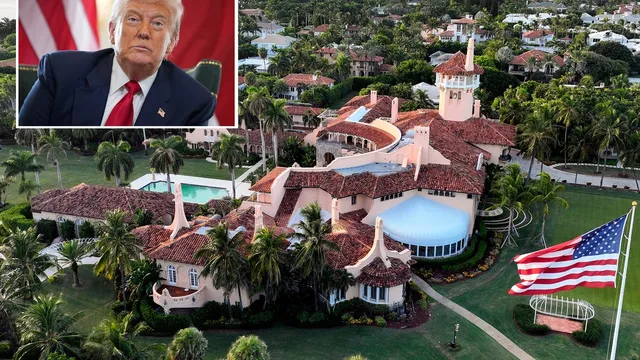
Developer Robin Birley plans new private club to rival Trump's Mar-a-Lago
Developer Robin Birley plans new private club to rival Trump's Mar-a-Lago
- Robin Birley, owner of London's elite clubs, is approaching a deal to open a new venue in Palm Beach.
- Backed by the Reuben brothers, this club aims to rival Trump's Mar-a-Lago and will feature an outdoor swimming pool.
- Birley's venture reflects the growing trend of wealthy British elites moving to Florida for social and political reasons.
Story
In recent weeks, news surfaced regarding a London private members' club owner, Robin Birley, who is nearing a deal to establish a new venue in Palm Beach, Florida, aimed at competing with Donald Trump's Mar-a-Lago resort. Birley, who is 68 years old, is known for his upscale clubs in London, notably Oswald's and 5 Hertford Street, which cater to an elite clientele including prominent figures in Britain’s right-wing political establishment. The financing for this venture is backed by billionaire investors, the Reuben brothers. The Palm Beach club is described as being more discreet compared to Trump's extravagant estate, yet is expected to feature lavish amenities, including an outdoor swimming pool. Birley has begun discussions with leading interior designers to ensure the club has a distinctly American style while also appealing to the tastes of an affluent clientele. His London establishments have previously attracted high-profile individuals like Prince William, Leonardo DiCaprio, and Hugh Grant, establishing a reputation for being favored by wealthy, politically right-leaning members. Birley’s decision to open this new venue comes at a time when many wealthy and politically conservative figures are relocating to Florida, particularly to Palm Beach, which is becoming a hotspot for affluent British buyers. Since December 2025, there has been a notable increase in large home sales in that area to British residents. Real estate expert Senada Adzem noted an influx of rich clients who view Palm Beach as a favorable option for primary residence, driven by concerns around wealth preservation. This trend reflects a socio-political shift, as former British Prime Minister Liz Truss recently characterized Palm Beach as the 'epicenter of the counter-elite,' highlighting the divergence from liberal strongholds like New York and Los Angeles. Figures from the UK's far-right, such as Nigel Farage, have also been seen in the area, suggesting a concerted pull towards an emerging elite network in Florida. The establishment of Birley's club may signify a new chapter in Palm Beach's social scene, inviting scrutiny and discussion about the changing dynamics of wealth, politics, and exclusivity in contemporary America.
Context
The impact of wealthy individuals relocating to Palm Beach has become a focal point of discussion among economists, urban planners, and community leaders. As an attractive destination for affluent individuals, Palm Beach has witnessed a significant influx of high-net-worth residents over the past few years. This trend has rejuvenated the local economy, leading to increased spending in luxury real estate, high-end services, and exclusive social clubs. The migration of wealthy individuals is often associated with the rise of property values, which in turn contributes to higher property taxes that can benefit municipal services. However, this economic boon can also present challenges, including the risk of gentrification and the possibility of displacing long-time residents who may find it increasingly difficult to afford housing as prices escalate. Furthermore, the demographic shift can alter the social fabric of Palm Beach. As new residents bring in diverse perspectives and practices, local traditions and community dynamics may change. The affluent newcomers often seek exclusive amenities and services, which can lead to the establishment of a dual economy where high-end businesses thrive while small, local establishments struggle to compete. This creates a juxtaposition between the interests of new arrivals and long-standing community members, necessitating careful consideration by local policymakers. The environmental implications of this influx also warrant attention. With increased population density, there are concerns regarding the strain on local resources including water supply and waste management systems. Urban development projects may also pose risks to the natural environment, specifically in flood-prone areas affected by climate change. While new developments can introduce modern infrastructure, they can also disrupt local ecosystems. Balancing growth with sustainable practices will be key in maintaining the charm and natural beauty of Palm Beach that originally attracted many of its new residents. In conclusion, the relocation of wealthy individuals to Palm Beach brings both opportunities and challenges that must be managed with foresight and strategic planning. The local government, businesses, and community organizations are tasked with navigating these changes to foster an inclusive and thriving environment for all of Palm Beach’s residents. Efforts should focus on integrating the interests of both new arrivals and existing residents while safeguarding the unique character and ecological health of the region.


