

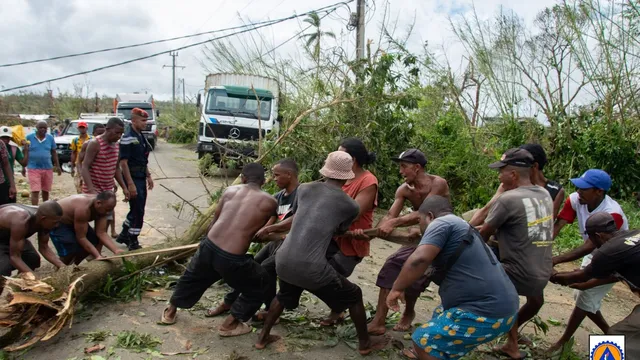
Cyclone Gezani devastates Madagascar, claiming dozens of lives
Cyclone Gezani devastates Madagascar, claiming dozens of lives
- Cyclone Gezani has forced over 16,000 residents from their homes and killed at least 59 people.
- The storm caused significant infrastructure damage across five regions, affecting 424,000 people.
- Madagascar's government declared a national disaster, highlighting the need for humanitarian assistance.
Story
In Madagascar, Cyclone Gezani struck in mid-February 2026, causing widespread destruction across multiple regions. The National Office for Risk and Disaster Management reported that the cyclone resulted in the deaths of at least 59 individuals and forced more than 16,000 residents to evacuate their homes due to severe storm damage. As of February 14, 2026, the government declared a national disaster, heightening awareness about the cyclone's impact. The storm damaged numerous homes, hospitals, and schools, affecting approximately 424,000 people in five regions, including Atsinanana and Analamanga. The cyclone, classified as an intense tropical cyclone, brought sustained winds of around 185 km/h and gusts reaching 270 km/h, leading to significant flooding and making several roads impassable. As emergency response teams mobilized, international assistance was anticipated to aid those most severely impacted. The storm followed closely on the heels of another cyclone, Tropical Cyclone Fytia, which had already caused significant disruption just weeks prior by displacing over 31,000 people and affecting more than 200,000 across multiple regions. The combination of these cyclones has prompted the UN Office for the Coordination of Humanitarian Affairs to monitor the situation closely, especially as Cyclone Gezani shifted towards the Mozambique Channel, potentially threatening other areas. The government and relief organizations continue to assess damage and provide humanitarian aid, trying to address the urgent needs of those affected by the disasters. The long-term consequences of this series of storms are still unknown, but the immediate impacts have left many communities devastated and in desperate need of support. Adaptive measures will be crucial as Madagascar faces ongoing challenges related to climate change and severe weather events. The capacity of local and national authorities to respond to humanitarian crises will be tested in the upcoming months as recovery efforts begin in the aftermath of Cyclone Gezani's destruction.
Context
Madagascar, located in the Indian Ocean, is highly susceptible to cyclones due to its geographic position and climatic conditions. The cyclone season typically runs from November to April, with peak activity occurring between January and March. Historical records indicate that the island has faced numerous cyclones, some of which have caused significant destruction and loss of life. Cyclonic activity is influenced by the warm waters of the Indian Ocean, which provide energy for storm formation. As a result, Madagascar experiences a variety of cyclones, ranging from tropical storms to more intense systems that can lead to catastrophic flooding and landslides. Throughout its history, Madagascar has been affected by several notable cyclones. One of the most devastating was Cyclone Gafilo in March 2004, which brought heavy rainfall and led to widespread flooding, displacing thousands of residents and causing extensive damage to infrastructure. Similarly, Cyclone Ivan in 2008 resulted in significant losses, particularly in the southern regions of the island, where agricultural production suffered greatly due to flooding and damage to crops. Various studies have highlighted the socioeconomic impacts of these cyclones, as they not only affect immediate relief efforts but also disrupt long-term development goals in affected areas. The government's disaster preparedness and response mechanisms have evolved in response to the increasing frequency and intensity of cyclones in Madagascar. This includes improvements in early warning systems that utilize satellite technology and meteorological data to provide timely alerts to vulnerable populations. Additionally, community-based resilience initiatives aimed at enhancing local capacity to cope with disasters have been implemented. These efforts are crucial as Madagascar continues to deal with the impacts of climate change, which is hypothesized to intensify cyclonic activity in the region, leading to more extreme weather events in the future. The collective experience of past cyclones has underscored the importance of adopting a proactive approach to disaster risk management in Madagascar. As the country continues to experience the devastating effects of cyclones, integrating climate adaptation strategies into development plans becomes paramount. Investing in infrastructure, promoting sustainable land use practices, and enhancing community awareness are essential components in building resilience against future cyclonic events. By learning from historical experiences and implementing strategic plans, Madagascar can better prepare for the challenges posed by its cyclone-prone environment.


