

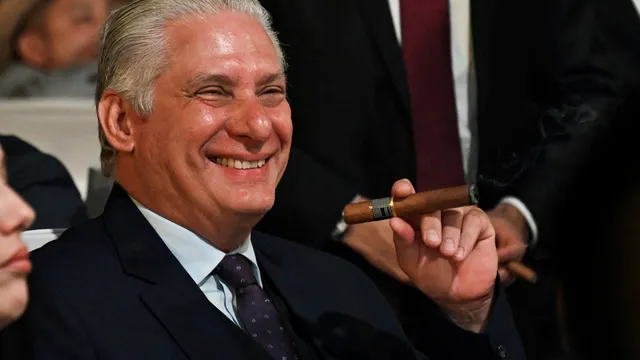
Cuba insists on no talks with US amid Trump’s threats
Cuba insists on no talks with US amid Trump’s threats
- Cuban President Miguel Díaz-Canel declared that there are currently no ongoing discussions between his government and the U.S. government.
- This statement came after President Donald Trump suggested that Cuba should negotiate a deal before it faced severe consequences.
- The situation highlights the strained relationship between the two nations and the challenges Cuba is facing amid economic pressures.
Story
Cuba has been facing heightened tensions with the United States, particularly following recent threats made by President Donald Trump regarding the Caribbean island. A significant moment occurred when Trump suggested that Cuba should 'make a deal' with the U.S. amidst ongoing issues related to Venezuela and its impact on Cuba's economy. Cuban President Miguel Díaz-Canel responded by clarifying that his administration was not engaged in any discussions with U.S. authorities, except for minor technical communication regarding migration. Díaz-Canel emphasized that Cuba's relationship with the U.S. ought to be built on mutual respect and adherence to international law rather than hostility and economic coercion, reflecting his administration's desire for respectful dialogue. Before Trump's threatening statements, Cuba had been reliant on Venezuelan oil, with estimates suggesting that the island was receiving around 35,000 barrels daily. This dependency increased concerns for Cuba's economic stability following an operation by the U.S. against Venezuela, which multiplied the strain on Cuba's resources. Trump's remarks also included statements regarding the U.S. intention to halt oil and monetary support to Cuba, a move perceived as a direct attack on the communist regime. In light of these developments, the situation has been described as 'very sad and concerning' by Cuba analysts, indicating that the regime is facing a critical decision point. Some experts view Díaz-Canel's emphasis on the lack of active negotiations as a possible strategy to buy time while the government deliberates its next steps. As consequences from U.S. sanctions accumulate, the Cuban government has claimed that such restrictions have incurred losses exceeding $7.5 billion. The broader geopolitical undertones also involve responses from other nations; notably, China has expressed its support for Cuba, urging the U.S. to discontinue its blockade and sanctions, highlighting the international implications of the conflict. The growing pressure on the Cuban government, coupled with calls for respectful dialogue, paints a challenging yet intricate picture of the dynamic between the U.S. and Cuba, as the latter navigates through these troubled waters.


