

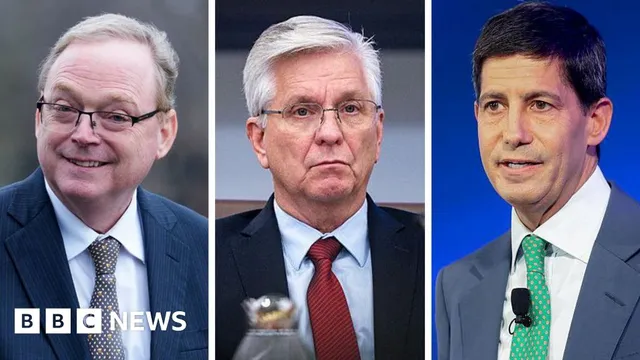
Trump set to appoint new Federal Reserve chair amid political pressures
Trump set to appoint new Federal Reserve chair amid political pressures
- Donald Trump is expected to name a new chair for the Federal Reserve soon.
- Francesco Waller is viewed favorably due to his experience at the Fed and distance from the White House.
- The new chair's appointment is crucial for maintaining the Fed's independence amid political pressures.
Story
In recent months leading up to December 2025, speculation has intensified regarding who will succeed Jerome Powell as the chair of the Federal Reserve. The appointment comes during a politically charged atmosphere, with President Donald Trump poised to name a new leader at a time when economic policy is under scrutiny. Key frontrunners include Kevin Hassett, a loyalist to Trump with a history of serving as chair of the White House Council of Economic Advisers; Kevin Warsh, who previously held a hawkish stance as a Fed governor but now seems to advocate for lower rates; and Christopher Waller, a current Fed governor recognized for his experience and relatively independent stance from the White House. Analysts have expressed concerns about Hassett's potential influence on the Fed's independence due to his allegiance to Trump, while Warsh's re-emergence raises questions about the implications of his past views versus current economic needs. Trump’s administration has been actively pushing for steeper rate cuts, adding pressure to the selection process and the functioning of the Federal Reserve. As discussions continue, it remains unclear whether Powell will stay on the board or step down following the new chair's appointment, with implications for the Fed's credibility and independence. Additionally, the situation is complicated by potential challenges against Fed governors, heightening stakes for Powell's decision-making in the near future.
Context
The history of Federal Reserve chair appointments is a significant aspect of the U.S. monetary policy landscape, reflecting both the evolution of the Federal Reserve System and the broader economic context in which these leaders operated. Established in 1913, the Federal Reserve (often referred to as the Fed) was created to provide the nation with a safer, more flexible, and more stable monetary and financial system. The position of the chair of the Federal Reserve has been a pivotal one, not only in shaping economic policy but also in responding to periods of economic crisis, inflation, and recession. Over the decades, the selection of the Fed chair has often mirrored the political and economic priorities of the sitting administration, influencing decisions that affect employment, interest rates, and inflation across the nation. The first chair of the Federal Reserve was Charles S. Hamlin, appointed in 1914. His term set a precedent for subsequent chairs, including William McChesney Martin, who served from 1951 to 1970 and is noted for his efforts to combat inflation and manage interest rates. The tenure of Paul Volcker (1979-1987) marked a crucial turning point in U.S. monetary policy, as he took aggressive measures to curb the hyperinflation of the late 1970s, leading to a period of economic turmoil but ultimately restoring confidence in the dollar. His leadership signified a shift towards prioritizing price stability over only focusing on unemployment, which would shape future economic strategies. Alan Greenspan, who served from 1987 to 2006, expanded the Fed's role and influence in financial markets, presiding over a period of unprecedented economic growth. Greenspan's policies and communication strategies were influential, although his later tenure faced criticism for the monetary policies that contributed to the 2008 financial crisis. Ben Bernanke followed Greenspan and played a crucial role in navigating the financial turmoil of 2008-2009, implementing measures such as quantitative easing to stabilize the economy. His leadership highlighted the Fed's adaptability in crisis management, emphasizing the role of the central bank in not just monetary policy but also in providing broader financial stability during emergencies. In more recent years, Janet Yellen's appointment as the first woman chair (2014-2018) represented a significant milestone. Her focus on maximum employment alongside price stability continued to influence Fed policy, emphasizing the dual mandate of the bank. Following Yellen, Jerome Powell took the helm, navigating the challenges brought on by the COVID-19 pandemic in 2020, where he implemented unprecedented measures to support the economy. The history of Federal Reserve chair appointments illustrates a continual evolution in response to changing economic landscapes, political pressures, and financial crises, encapsulating how leadership at the Fed shapes not just monetary policy but also the broader economic health of the nation.


