

Lori Idlout's defection brings Liberals closer to majority in Canada
Lori Idlout's defection brings Liberals closer to majority in Canada
- The Liberal government currently holds 169 seats in Canada's House of Commons, needing three more for a majority.
- Lori Idlout has recently defected to the Liberals from the NDP, becoming the fourth MP to do so.
- Three upcoming by-elections on April 13, 2026, could enable the Liberals to achieve a majority government.
Story
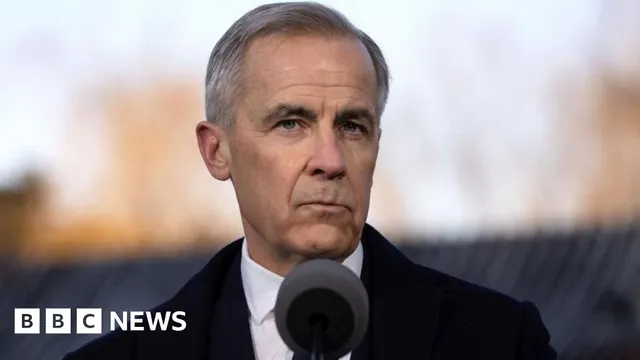
In Canada, Prime Minister Mark Carney's Liberal Party is inching closer to a majority government as it prepares for three by-elections set for April 13, 2026. Currently, the Liberal government holds 169 seats, just three short of a majority in the House of Commons. Recent political dynamics have seen a notable shift, with several former Conservative MPs defecting to the Liberal Party, bolstering Carney's quest for a stronger governing position. This realignment in parliamentary support has created a more favorable environment for the Liberals, requiring only a few more seats for a stable majority. Among these significant changes, Lori Idlout, a former member of the New Democratic Party (NDP), has recently crossed the floor to join the Liberal Party. This defection marks the fourth instance of an MP shifting allegiance to the Liberals, which has raised concerns among opposition parties about the tactics being employed. The NDP's interim leader expressed disappointment over the departure of Idlout, suggesting that such moves should be presented for voter approval. The upcoming by-elections include two constituencies in Toronto, traditionally strongholds for the Liberals, and a much-watched seat in Montreal. The Toronto seats became vacant following the resignation of Chrystia Freeland and Bill Blair, who moved on to diplomatic roles. The Montreal seat was a close contest won by the Liberals in the last election by a mere vote, leading to the Supreme Court's decision to order a re-election. If the Liberal Party secures victories in all three races, it would extend its seat count to 173, allowing for more seamless governance and a reduced likelihood of facing another election for the next three years. Current polling data indicates that the Liberals could claim a majority if elections were to occur at present. Overall, the political landscape is shifting in favor of Carney's government, providing an opportunity for the Liberals to solidify their legislative power and implement policies without excessive opposition interference.
Context
The political landscape of the Canada Liberal Party as of 2026 reflects a critical juncture for the party in the face of evolving national sentiments and external challenges. Following the significant political shifts marked by the 2025 federal elections, the party has seen a resurgence in certain regions while grappling with heightened scrutiny in others. The leadership under Prime Minister Justin Trudeau, despite facing challenges throughout his tenure, has attempted to unify and adapt the party's platform to meet the changing demands of Canadians, particularly on issues such as climate change, healthcare, and economic recovery post-pandemic. The Liberal Party has also been proactive in addressing concerns regarding reconciliation with Indigenous peoples, which has become a focal point for public discourse and policy-making in recent years. In 2026, the Liberal Party's electoral strategy focuses on building coalitions and strengthening ties with key demographic groups, including urban voters, women, and younger Canadians. The party has recognized the importance of addressing systemic inequalities and promoting social justice, aiming to differentiate itself from opposition parties. Nonetheless, the rise of the New Democratic Party (NDP) and other political movements has put the Liberals under pressure, leading to a more polarized political environment. Tensions within the party have emerged, particularly around progressive versus centrist factions, which have implications for policy coherence and electoral strategy moving forward. Furthermore, the Liberal Party is navigating its role in the face of global geopolitical challenges and economic fluctuations, which have directly impacted Canada. The government's approaches to international relations, trade agreements, and climate policies have been scrutinized in relation to both domestic and global expectations. This has prompted the Liberal leadership to re-evaluate its foreign policy, emphasizing multilateralism and a focus on sustainable development. As the party prepares for future elections, it must balance its commitments to climate action with economic growth, ensuring that its policies resonate with a broader electorate concerned about both environmental sustainability and job security. In conclusion, the Canada Liberal Party's landscape in 2026 embodies a dynamic interplay of public sentiment, internal party dynamics, and external challenges. The road ahead requires a deft balancing act, where the party must remain responsive to the electorate's needs while managing differing views within its ranks. The outcome of the forthcoming elections could shape the Liberal Party's trajectory, determining whether it solidifies its place as a leading political force or retreats to a more contested position in Canadian politics. The stakes are high, and the actions taken in the coming months will be pivotal for the party's future.


