

Philippines discovers significant natural gas deposit amid South China Sea tensions
Philippines discovers significant natural gas deposit amid South China Sea tensions
- A new natural gas deposit, Malampaya East 1, has been discovered off the coast of the Philippines, estimated to contain about 98 billion cubic feet of gas.
- The Philippine government is enhancing military capabilities to defend its territorial waters amid rising tensions with China over the South China Sea.
- The discovery is critical for ensuring energy security for the Philippines, potentially supplying power to millions of households and helping avoid a power crisis.
Story
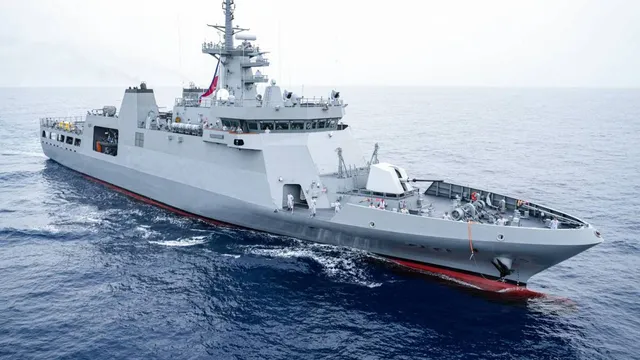
The Philippines made a significant energy discovery with the announcement of a new natural gas deposit named Malampaya East 1. This deposit, located just 5 kilometers east of the main Malampaya gas field, is estimated to contain approximately 98 billion cubic feet of gas and could supply power to around 5.7 million households annually. President Ferdinand Marcos Jr. emphasized this find as crucial for mitigating the potential for a power crisis, especially as the original Malampaya field's output is expected to decline in the coming years. The government has been working to extend exploration contracts and bolster domestic energy production in response to these challenges. The new gas find is not only a boon for the Philippines in terms of energy supply but also comes at a time of increased geopolitical tensions in the South China Sea. The Philippines has been facing aggressive assertions of sovereignty from China over these contested waters. In response, the Philippine Navy is enhancing its military capabilities, including the recent addition of a new offshore patrol vessel, BRP Rajah Sulayman. This initiative signals a commitment to protecting territorial waters and resources. Another critical aspect of this discovery is its timing. Fears surrounding the depletion of the Malampaya gas field have triggered a strong push for the Philippines to secure more energy resources. The announcement has also shed light on the broader implications such energy developments have in the context of regional security and independence from foreign energy supplies. As the Philippines navigates its energy strategy, it must balance economic growth with the geopolitical realities presented by China's maritime activities. China's claims over much of the South China Sea have complicated oil and gas exploration for the Philippines and neighboring countries like Vietnam. As China has increasingly reinforced its military presence, territorial disputes have become more frequent and intense, leading to clashes between Chinese and Philippine maritime forces. The Philippines, backed by a mutual defense treaty with the United States, is determined to strengthen its military and protect its sovereign rights in the face of these challenges. The discovery of the new natural gas deposit is consequently seen as an integral step toward increasing energy independence and asserting national sovereignty.
Context
The South China Sea disputes have a long and complex history that has significant implications for regional security and international relations. The South China Sea is a critical shipping lane, with an estimated one-third of global maritime trade passing through it. It is also believed to be rich in oil and natural gas reserves, which has heightened the stakes involved. The primary claimants in the disputes include China, Vietnam, the Philippines, Malaysia, Brunei, and Taiwan, each asserting various historical and legal claims to different parts of the sea and surrounding islands, particularly the Spratly and Paracel Islands. The disputes are largely rooted in competing historical narratives and legal interpretations of international law, notably the United Nations Convention on the Law of the Sea (UNCLOS). China's extensive claims, represented by the so-called 'nine-dash line,' have been a central point of contention. These claims were first formalized in the 1940s but are viewed by other nations and international bodies as lacking legal basis under UNCLOS, which generally awards coastal states a territorial sea extending 12 nautical miles from their shores, and exclusive economic zones (EEZs) that can extend up to 200 nautical miles. In 2016, an Arbitration Tribunal in The Hague ruled against China's claims in a landmark case brought by the Philippines, asserting that there was no legal basis for these assertions. However, China rejected the ruling and has continued to assert its claims, resulting in increased militarization and tensions in the region. Throughout the years, the response to these disputes has varied from diplomatic negotiations to military confrontations. The presence of the United States in the South China Sea, primarily through freedom of navigation operations, further complicates the situation. The U.S. does not take an official position on the territorial disputes themselves but emphasizes the importance of a rules-based international order and has expressed commitment to defend its allies in the region. This bolstering of military presence has antagonized China, leading to a precarious balance in the area, which is often punctuated by skirmishes and confrontations at sea. The future of the South China Sea disputes remains uncertain. As China continues to assert its claims and expand its influence, regional players are growing increasingly wary and are seeking ways to bolster their own defenses and diplomatic ties. The situation is further complicated by the evolving geopolitical landscape, including the strategy of the United States under various administrations and the growing role of other nations such as India and ASEAN countries in regional stability efforts. Ultimately, the key to resolving these disputes will require continued diplomacy, mutual respect for legal precedents under international law, and a commitment to peaceful dispute resolution to avoid further escalation.


