

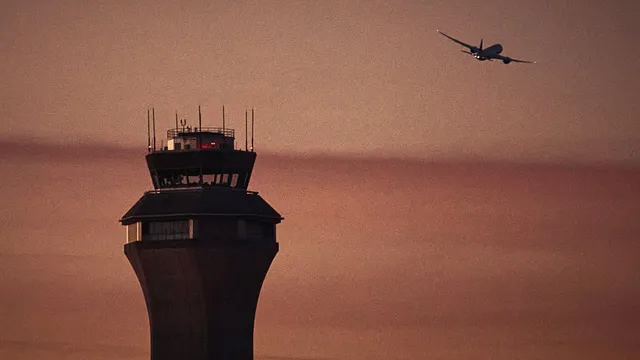
Air traffic controller neglects turbulence warning, injuring flight attendants
Air traffic controller neglects turbulence warning, injuring flight attendants
- The incident involved a United Airlines flight from Los Angeles to Newark that encountered violent turbulence.
- Three flight attendants were severely injured due to a failure to communicate a turbulence warning.
- The oversight highlights significant gaps in safety communication protocols within the FAA.
Story
On February 10, 2024, an incident occurred involving United Airlines Flight 1890, a Boeing 777 flying from Los Angeles to Newark, New Jersey. The flight crew, having reviewed weather forecasts and monitoring onboard weather tools, found themselves unprepared for the sudden turbulence that hit the aircraft during its final approach to Newark Liberty International Airport. Investigators reported that the turbulence was unexpectedly violent, resulting in severe injuries among the flight attendants. While the crew had taken precautions based on the available data, they lacked crucial real-time information about the turbulence conditions ahead. About three minutes prior to the incident, another aircraft in the same area had reported moderate turbulence to an air traffic controller in Boston. However, this vital information was not communicated to the United Airlines crew, which is a failure of the Federal Aviation Administration’s established procedures. The air traffic controller, busy completing other coordination tasks, did not acknowledge the turbulence report nor disseminate it to other aircraft, violating FAA regulations requiring controllers to relay such warnings actively. As a result of this oversight, the flight crew lacked the ability to adequately prepare for the hazardous conditions. When United Airlines Flight 1890 finally encountered the turbulence, the impact was staggering. Three flight attendants suffered serious injuries, including broken bones and head trauma. One attendant was thrown into the ceiling before crashing down to the floor, sustaining a spinal fracture, while two others lost consciousness and experienced major injuries such as a shattered femur and severe head trauma. Passengers, including an adult in the lavatory and an infant being held in someone's arms, were also thrown upward due to the turbulence, illustrating the force of the incident. This unexpected occurrence raised significant concerns about the safety practices surrounding real-time communication between air traffic controllers and flight crews. The National Transportation Safety Board (NTSB) conducted a two-year investigation into the matter, documenting their findings in a final report. They emphasized that their investigations are not designed to assign blame but rather to identify safety concerns and improve future aviation protocols. NTSB reports cannot be utilized as evidence in civil lawsuits nor are they meant to determine liability. The investigation into this incident is part of a larger commitment to enhancing aviation safety by ensuring that air traffic controllers effectively relay critical information to flight crews. Stronger adherence to communication protocols is essential to prevent similar accidents in the future, as the safety of both passengers and crew members remains a top priority in the aviation industry.
Context
The Federal Aviation Administration (FAA) establishes specific regulations governing air traffic control communication to ensure the safety and efficiency of air navigation. Effective communication between pilots and air traffic controllers is crucial to managing the complex operations within controlled airspace and on taxiways. The FAA's guidelines outline the standard phraseology, language proficiency requirements, and protocols for transmission to minimize misunderstandings and enhance communication clarity. Pilots, as well as air traffic controllers, are mandated to use a standardized aviation English vocabulary to achieve mutual comprehension, particularly in high-stress environments or during adverse weather conditions. Among the vital components of FAA regulations is the requirement for pilots to properly acknowledge all communications from air traffic control. When a clearance, instruction, or information is communicated, pilots must read back key elements to confirm understanding. This practice is known as readback/acknowledgment, and it serves as critical error-checking to mitigate potential miscommunications. Additionally, the use of standard phraseology not only helps in preventive measures against errors but also expedites the communication process, allowing for increased efficiency in air traffic management. An essential aspect covered by the FAA regulations relates to the appropriate use of technology in communication. The FAA encourages the use of advanced tools such as Automatic Dependent Surveillance–Broadcast (ADS-B) and cockpit display systems, which enhance situational awareness and communication capabilities. However, even with modern technology, these tools do not replace the necessity of direct verbal communication between pilots and controllers. Operators must be proficient in utilizing these technologies while being able to engage effectively in traditional communication methods, especially in scenarios of system failure or emergency. Adherence to the FAA regulations on air traffic control communication is continuously monitored through operational assessments and training programs. Regular evaluation ensures that air traffic professionals remain adept in communication skills, able to adapt to evolving aviation technologies, and prepared to follow protocols under diverse conditions. The FAA is committed to improving the communication framework and provides updates and additional training resources to further enhance the effectiveness of air traffic operations. Ensuring that both pilots and air traffic controllers maintain clear lines of communication is of paramount importance to the overarching goal of flight safety in the national airspace system.


