

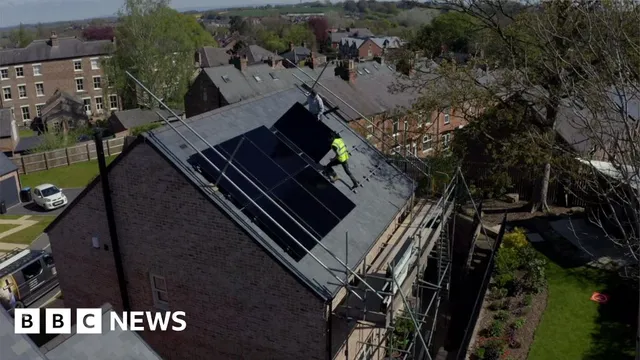
Homeowners rush to install solar panels amid rising oil prices
Homeowners rush to install solar panels amid rising oil prices
- Yorkshire installers report a significant increase in solar panel inquiries as fuel prices rise.
- Mark Houldsworth noted a tenfold increase in inquiries since the beginning of April 2026.
- The growing interest in solar energy reflects homeowners' concerns over rising energy costs and desire for sustainability.
Story
In Yorkshire, England, a significant rise in interest for solar panel installations has occurred as a result of escalating oil prices linked to the ongoing conflict involving Iran. As the Russia-Ukraine war previously spurred demand for renewable energy solutions, the current geopolitical tensions have further intensified this trend, prompting households to seek alternatives to traditional oil and gas energy sources. Energy supplier Octopus noted a remarkable 50% increase in solar panel sales, mirroring the growing trend observed by local businesses engaged in renewable energy. Mark Houldsworth, the managing director of Solar Plus Yorkshire Ltd, indicated that typically in April, his company receives about 15 inquiries per month. However, this year's inquiries have surged to around 150, attributed primarily to concerns over energy costs and a desire for greater control over energy sources. Houldsworth remarked that similar patterns of increased interest had been seen during previous crises, including the pandemic and the Ukraine war, but suggested that this current situation has prompted an unprecedented response from the public. Gavin Andrews of Leeds Solar echoed Houldsworth's observations, reporting a 50% increase in inquiries since the onset of the Iran conflict, effectively doubling the volume from the same period last year. Some homeowners, like Chris Simpson, have expedited their plans to install solar panels, influenced by the urgency of the ongoing geopolitical events. Simpson, who resides in Great Ouseburn, had initially intended to wait until the following year but chose to act sooner amid the rising tensions. Emily Seymour, an energy editor at Which?, advised homeowners to conduct thorough research when considering the installation of solar panels, as they may not be suitable for every property. She recommended obtaining an independent solar feasibility survey to assess potential financial benefits, followed by seeking quotes from multiple installers. However, the increasing demand could be complicated by supply chain disruptions, primarily as solar panels are manufactured in China and shipped to the UK, which could affect homeowners' plans in the near future.
Context
The intersection of geopolitical events and renewable energy adoption has become increasingly significant in the context of global economic stability and environmental sustainability. As countries grapple with the pressing realities of climate change and the consequences of fossil fuel dependency, the geopolitical landscape influences how swiftly nations transition to renewable energy sources. The adoption of renewable energy is not merely an environmental imperative but a strategic necessity, impacting national security, economic independence, and international relations. In this evolving landscape, geopolitical tensions and alliances shape the pace and nature of energy transitions, dictating both investment flows and technological innovation in renewable energy sectors. Recent geopolitical events have underscored the urgency for countries to shift towards renewables. The ongoing conflicts and crises, notably in fossil fuel-rich regions, have prompted nations to rethink energy security. The volatility associated with oil and gas supply chains has led to a reevaluation of energy policies, prioritizing local and sustainable energy sources over imported fossil fuels. For instance, European countries, in response to geopolitical pressures, have accelerated their investments in wind and solar power, aiming to reduce reliance on energy imports, particularly from politically unstable regions. This shift not only enhances energy security but also fosters economic resilience by creating jobs in the burgeoning renewable energy sector. Moreover, international cooperation and tension significantly impact renewable energy technology transfer and investment. Countries with advanced renewable technologies often engage in strategic partnerships, providing technology to developing nations in exchange for resources or geopolitical alignment. However, geopolitical rivalries, particularly between major powers, can hinder such collaborations, leading to fragmented markets and uneven adoption rates of renewable technologies. For instance, the tensions between the US and China over trade and technological supremacy have implications for global renewable energy supply chains, affecting how technologies are developed and shared across borders. Looking ahead, the interplay between geopolitical events and renewable energy adoption will remain crucial. Policymakers must navigate complex international relations while fostering an environment conducive to energy innovation and collaboration. The global commitment to addressing climate change through the adoption of renewable energy offers a pathway to mitigate geopolitical risks associated with fossil fuel dependency. By recognizing the geopolitical dimensions of energy transition, governments and organizations can make informed decisions that not only contribute to environmental goals but also enhance national security and economic stability. The future of renewable energy is inextricably linked to the geopolitical landscape, necessitating a coordinated response that considers both local and global contexts.


