

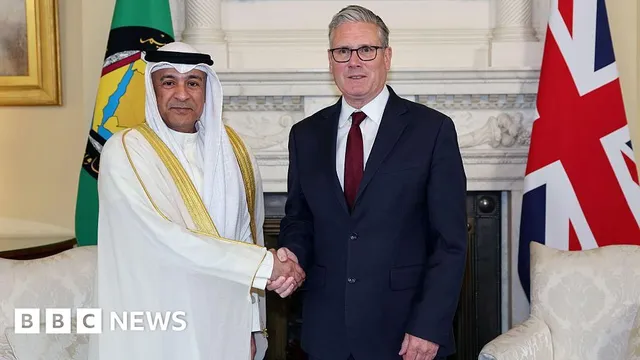
UK government signs £3.7 billion trade deal with Gulf states amid rights concerns
UK government signs £3.7 billion trade deal with Gulf states amid rights concerns
- The UK government signed a trade deal with six Gulf states, aimed at boosting the economy by £3.7 billion.
- This agreement will remove tariffs, particularly on British exports like cheese and chocolate, enhancing trade relations.
- Critics, including human rights organizations, express concerns about the lack of safeguards in the deal.
Story
In recent months, the United Kingdom has successfully negotiated a substantial trade deal with six Gulf Cooperation Council (GCC) countries: Oman, Bahrain, Kuwait, Qatar, Saudi Arabia, and the United Arab Emirates. The agreement, which is projected to enhance the UK's economy by £3.7 billion, is expected to eliminate approximately £580 million in tariffs annually on British exports to this region. Various British products, including cheddar cheese, butter, and chocolate, will benefit from this tariff-free access, thus providing UK exporters with the confidence to further engage with these markets. The trade deal represents a milestone for the UK, being the first agreement of its kind forged between a G7 nation and the GCC. Despite the government's positive outlook on the deal, stating it supports job growth and business expansion, human rights organizations have raised significant concerns. These advocacy groups highlight the potential risks associated with deeper trade relations with governments known for human rights abuses and oppressive practices. The negotiations for this trade deal were initiated by the previous Conservative government, and the current government, led by Prime Minister Sir Keir Starmer, is positioning the agreement as a major win contributing to the post-Brexit strategy to forge new international partnerships. Officials assert that the resulting economic benefits will translate into higher wages and job opportunities for British citizens. Despite the optimistic rhetoric surrounding this trade agreement, critics worry that the lack of provisions regarding human rights and labor standards compromises ethical considerations and risks further entrenching the UK’s commercial ties with repressive regimes. The Trade Justice Movement's remarks underscore these worries, emphasizing that the economic returns appear minor compared to the potential human rights implications. As debates continue, the government's commitment to balancing trade benefits with ethical responsibilities is put to the test in this complex geopolitical and economic landscape.


