

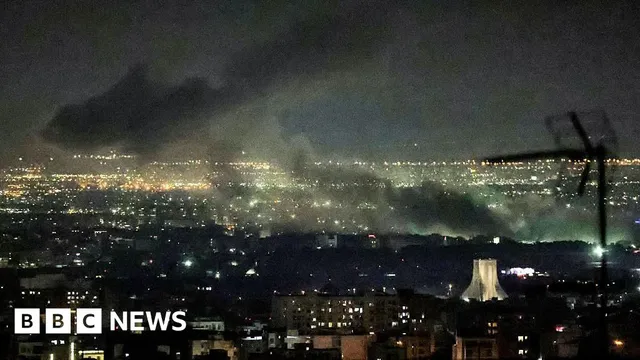
Civilian casualties soar as Tehran endures relentless strikes
Civilian casualties soar as Tehran endures relentless strikes
- Since February 28, 2026, Tehran has experienced relentless US-Israeli air strikes targeting military sites, resulting in approximately 1,300 civilian deaths.
- The ongoing conflict has led to approximately 3.2 million people being internally displaced across Iran, causing significant disturbances to normal life.
- Many residents express hopelessness and fear, questioning whether the situation can ever improve amidst the chaos of warfare.
Story
Since February 28, 2026, Iran has faced intense bombardment from US-Israeli air strikes, primarily targeting military and paramilitary sites in its capital, Tehran, leading to severe civilian casualties and displacement. Reports indicate that around 1,300 civilians have been killed amidst the ongoing conflict, with roughly 3.2 million people displaced across the country, which has a population of around 90 million. The conflict has spiraled into a scale not seen since the Iran-Iraq War of the 1980s, shattering normal life and causing residents to fear for their safety as strikes come without warning. Many residents in Tehran have described nights filled with explosions that leave them unable to find peace, while some express feelings of being trapped in their city with little ability to escape as roads have also become targets. Temporary blackouts caused by bombings have made living conditions even more difficult. Amid this turmoil, some Iranians who once showed support for military action against their government are now questioning the wisdom of this approach, pondering whether the cost of continued conflict outweighs the potential for political change. Despite a near-total internet blackout restricting outside communication, families are relying on each other to keep updated on the war and its impact within their neighborhoods. Resilience among residents is evident, with shops and bakeries mostly remaining operational; however, the atmosphere is weighed down with dread and uncertainty about the future. Many report having taped up windows in an attempt to protect their homes from blasts, though this precaution offers little comfort as security forces patrol the streets, often leading to an increased sense of tension. As the war enters its third week, the presence of security forces has intensified, enforcing order and quelling dissent among the populace. Strikes on Tehran have highly targeted positions associated with the Iranian military and police forces, but civilians are caught in the crossfire, leading to widespread structural damage that threatens the integrity of homes and the safety of residents. Conversations about the regime's ability to withstand the attacks have shifted from optimism to fear, with some concerned about the emerging chaos and instability that may follow if the current leadership is toppled.


