

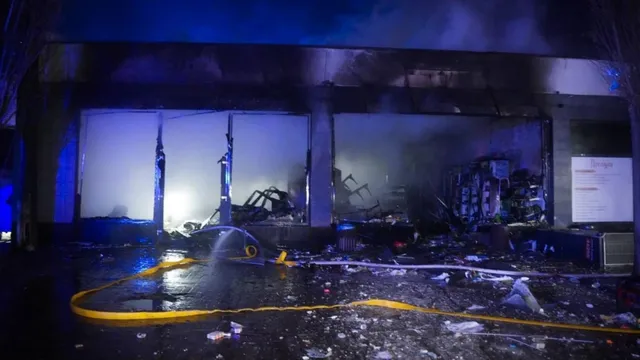
Russia escalates conflict, launching over 400 drone and missile strikes on Ukraine
Russia escalates conflict, launching over 400 drone and missile strikes on Ukraine
- Ukrainian and Russian negotiators met in Geneva for peace talks facilitated by the US amid an ongoing conflict.
- Moscow intensified military action, launching hundreds of drones and missiles against Ukrainian targets.
- The situation indicates a challenging path ahead for achieving peace, as both sides maintain conflicting demands.
Story
On February 17, 2026, Ukrainian and Russian negotiators gathered in Geneva for US-brokered peace talks amid ongoing military conflict in Ukraine. The meeting occurred just a week before the fourth anniversary of Russia's extensive war on Ukraine, resulting in an estimated 2 million casualties on both sides. As negotiations commenced, Russia intensified its offensive, launching hundreds of drones and missiles that targeted various locations across Ukraine, particularly impacting Ukraine's energy infrastructure during a challenging winter. Ukraine has been advocating for firm security guarantees from the US and European allies to prevent future aggression from Russia. In previous talks, both parties reported positive engagement, focusing on detailed security matters. However, Russia maintains a hard stance, demanding that Ukraine concede territory in the eastern Donbas region. Underlining their determination, the leader of the Ukrainian delegation, Kyrylo Budanov, remarked on the importance of learning from past events while engaging with Russian negotiators. The US delegation, including special envoy Steve Witkoff and Jared Kushner, is involved in these discussions, indicating the US's keen interest in resolving the conflict. The backdrop of these negotiations includes ongoing military actions, with emergency services reporting civilian casualties in various Ukrainian cities like Odesa and Sumy. In Crimea, local officials acknowledged that Russian forces successfully intercepted a significant number of drone attacks. The deepening crisis is exacerbated by Russia's significant advances in attacking Ukraine's energy infrastructure, leaving many Ukrainians struggling without basic services in an already harsh winter. While Ukraine's military focus remains on defending its territory, recent rhetorical exchanges between leaders, including comments from former President Donald Trump urging Ukraine to expedite its negotiations, highlight the complex interplay of diplomacy and military strategy in this enduring conflict.
Context
The conflict between Ukraine and Russia has its roots in complex historical, political, and social factors that have shaped the region's landscape over the last several decades. Following the collapse of the Soviet Union in 1991, Ukraine emerged as an independent nation, but tensions began to rise as the country grappled with its national identity and orientation towards Europe and Russia. The 2004 Orange Revolution and the 2014 Euromaidan protests were pivotal moments that demonstrated the Ukrainian people's desire for greater European integration and democratic reforms, leading to heightened conflict with Russia, which viewed these movements as a threat to its influence in the region. Russia's annexation of Crimea in March 2014 marked a significant escalation in the conflict, as it not only violated international law but also ignited a pro-Russian insurgency in Eastern Ukraine, particularly in the Donetsk and Luhansk regions. This situation transformed into an ongoing war that has resulted in thousands of casualties and displacement of civilians, with Ukraine fighting to reclaim territorial integrity while Russia continues to support separatist movements covertly. The international community, particularly through organizations like NATO and the European Union, has imposed sanctions on Russia and provided varying levels of support to Ukraine, reflecting the geopolitical stakes involved in the conflict. The war in Eastern Ukraine has become a protracted struggle characterized by ceasefire agreements that have repeatedly broken down, leading to further violence and suffering. Various attempts at negotiation, most notably the Minsk agreements, aimed to establish peaceful resolutions but have been undermined by non-compliance from both sides. The conflict has not only caused immense human suffering but also deepened the divide between pro-Russian and pro-European factions within Ukraine, complicating efforts at reconciliation. Economic challenges have emerged amid the conflict, as infrastructure has been damaged, industries disrupted, and both regions and the country overall have faced significant financial hardships. Internationally, this conflict has broader implications for global security, alliances, and the balance of power, with many viewing it as a litmus test for Russia's ambitions and Western responses to aggression. In addition to the immediate military confrontations, the conflict has highlighted the significance of information warfare and propaganda as tools employed by both Russia and Ukraine. Misinformation campaigns aimed at shaping public opinion, not just in Ukraine but also internationally, have become commonplace, complicating the narrative surrounding the conflict. The portrayal of events in the media often reflects the deep-seated biases and national identities of the parties involved, further entrenching divisions and underscoring the challenges to achieving a peaceful resolution. Cyber warfare has also been a tactic used in this conflict, with Ukraine facing numerous cyber-attacks reportedly linked to Russian state actors, which have targeted government, infrastructure, and public services, aiming to destabilize the country from within. As of February 2026, the situation remains tense, with no clear resolution in sight. While there is a strong desire among the international community to support Ukraine in its quest for sovereignty and territorial integrity, the complexities of the conflict—including Russia’s strategic interests and Ukraine’s internal divisions—continue to hinder peace efforts. Ongoing dialogue, both direct and mediated through international channels, is essential to bringing about a sustainable resolution. The united front presented by Ukraine’s allies could be a decisive factor in influencing a path towards peace, but it requires careful navigation of diplomatic channels alongside a commitment to humanitarian assistance for those affected by the ongoing conflict.


