

U.S. sanctions target Colombian firms recruiting mercenaries for Sudan war
U.S. sanctions target Colombian firms recruiting mercenaries for Sudan war
- The U.S. Treasury imposed sanctions targeting Colombian nationals and recruitment agencies for allegedly supporting the RSF in Sudan.
- The RSF has been involved in severe human rights abuses and war crimes during its conflict with the Sudanese military.
- These sanctions are part of broader efforts to address the ongoing humanitarian crisis in Sudan and limit external support to the RSF.
Story
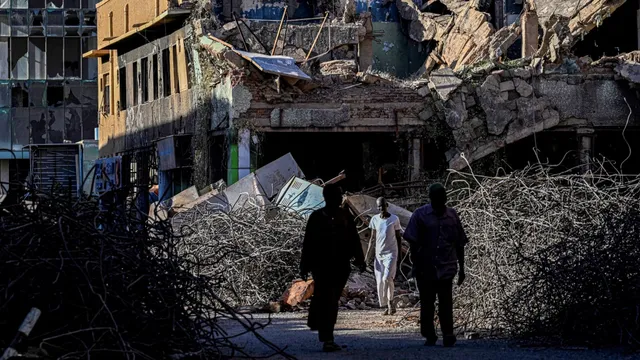
In Sudan, a protracted conflict has escalated as the paramilitary Rapid Support Forces (RSF) clash with the Sudanese military. Since April 15, 2023, this violence has resulted in significant humanitarian crises, with more than 59,000 fatalities reported, and the United Nations declaring it the largest humanitarian crisis globally. The U.S. Department of Treasury recently announced sanctions against three individuals and two recruitment agencies based in Bogota, Colombia, for their roles in enlisting Colombian mercenaries to support the RSF. This move comes as part of ongoing U.S. actions against the RSF amid reports of atrocities committed by the group, including war crimes and ethnic cleansing in areas like Darfur. The sanctioned entities, Fénix and GQAB, were directly involved in deploying former Colombian military personnel to assist RSF operations in various combat roles in Sudan. The situation has drawn international attention due to the alarming reports of abuses perpetrated by the RSF, including summary executions and torture, leading to widespread condemnation and increased calls for accountability. As evidence mounts of the humanitarian disaster, the U.S. aims to disrupt the logistics and manpower supplied to the RSF, challenging their ongoing conflict with the Sudanese army and attempting to curtail further violence and suffering in the region.
Context
The Rapid Support Forces (RSF) of Sudan have undergone a significant transformation since their inception. Initially formed in 2013, the RSF emerged from the remnants of the Janjaweed militias, who were infamously involved in the Darfur conflict during the early 2000s. Originally intended to combat insurgent groups and maintain internal security, the RSF were integrated into the Sudanese Armed Forces to bolster the regime of former President Omar al-Bashir. This strategic move allowed the RSF to gain legitimacy and support from both the government and local communities, broadening their operational scope beyond counter-insurgency to include roles in border security and anti-smuggling operations. Over the years, the RSF have developed into a powerful paramilitary organization, wielding considerable influence within Sudan's political landscape. Their role became even more pronounced following the ousting of al-Bashir in 2019, amidst widespread protests against his rule, which heightened the need for a faction that could maintain order amid the chaos that ensued during the transitional period in Sudan's government. The leadership of the RSF, particularly General Mohamed Hamdan Dagalo, commonly known as Hemeti, has played a pivotal role in the forces’ evolution. Hemeti has managed to navigate the complex dynamics of Sudanese politics, positioning himself as a key player in the transitional government following the coup that led to al-Bashir’s removal. His alliance with military leaders and various political factions has enabled the RSF to expand its reach and power, resulting in both national and international scrutiny of the force’s actions, particularly regarding human rights violations and their involvement in violent crackdowns on protests. Furthermore, the RSF's involvement in regional conflicts has raised concerns about their activities beyond Sudan's borders. Their participation in the Yemeni Civil War, supporting the Saudi-led coalition, is an example of how the RSF has sought to extend its influence and gain financial resources through international partnerships. Such engagements reflect the RSF's evolving role from a domestic security force to a significant player on the regional stage, contributing to both security and instability in neighboring countries. The ongoing turbulent situations in Sudan, marked by power struggles between military factions and the pursuit of a genuine democratic transition, service to highlight the precarious position of the RSF. As of April 2026, the RSF remain a critical factor in Sudanese politics; however, their future is clouded by uncertainty. The internal rivalries, particularly with the Sudanese Armed Forces, have resulted in increased tensions that could lead to further conflict. The international community is being called upon to engage with Sudan’s political actors, including the RSF, to foster a more stable governance structure. The RSF’s actions, particularly regarding human rights and their response to civil unrest, will largely determine their legacy in Sudan's future and the extent to which they can transition from a paramilitary group to an integral part of a democratic framework.


