

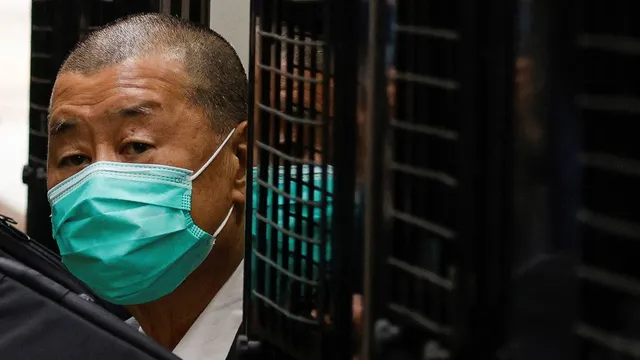
Jimmy Lai receives 20-year sentence for national security violations
Jimmy Lai receives 20-year sentence for national security violations
- Jimmy Lai, a pro-democracy campaigner, has been convicted of serious national security offenses.
- The 20-year sentence reflects a broader effort to stifle dissent following anti-government protests in Hong Kong.
- Lai's sentencing has drawn widespread condemnation from world leaders and human rights organizations.
Story
In Hong Kong, pro-democracy activist Jimmy Lai was sentenced to 20 years in prison after being convicted of serious national security charges. This ruling came as part of a broader crackdown following the enactment of China's national security law in 2020, which aimed to suppress dissent in Hong Kong amid significant anti-government protests. Lai, the founder of the now-defunct Apple Daily newspaper, faced charges including conspiracy to collude with foreign forces and publishing seditious materials, stemming from his criticism of the Chinese Communist Party and his advocacy for democracy and press freedom. His lawyers did not indicate whether an appeal would be pursued. Sebastien Lai, Jimmy's son, expressed concern for his father's health and described the sentence as essentially a death sentence for a man of his age, given Lai's worsening condition after spending over 1,800 days in solitary confinement. Many world leaders, including Yvette Cooper, the UK's foreign secretary, condemned the harsh sentence as politically motivated and called for Lai's immediate release on humanitarian grounds. The sentencing prompted outrage from various Western governments and human rights organizations, which argue that this case exemplifies the grave violation of human rights and the erosion of freedom of the press in Hong Kong. Lai's case has highlighted the international pressures surrounding Hong Kong's governance and the Chinese government's tightening grip on dissent and free expression. Lai's family fears that his long sentence and deteriorating health may mean they might never see him again, given the judicial environment in Hong Kong and the increased risks faced by those speaking out against Beijing’s regime. With pressures mounting from international bodies calling for his release, the ongoing situation represents a significant moment in the struggle for civil liberties in the region. As the global community watches, the implications of Lai's sentencing extend beyond just his own fate, suggesting a more profound impact on the freedom of press and reform movements in Hong Kong. The international outcry over his sentence signals a shared concern over the stability of democratic norms and human rights amidst China's assertive foreign policy objectives, while Beijing continues to dismiss foreign criticism as interference in its internal affairs.
Context
The impact of China's national security law on Hong Kong has been profound and multifaceted, reshaping the socio-political landscape of the region since its implementation in June 2020. Designed to curb dissent and reinforce Beijing's authority, the law has led to a significant erosion of civil liberties, resulting in increased surveillance, repression of protests, and a chilling effect on free speech. As critics argue, this move directly undermines the freedoms guaranteed under the "one country, two systems" framework that was meant to preserve Hong Kong's autonomy for 50 years following its handover from British rule in 1997. The consequences of the law have sparked widespread domestic and international condemnation, igniting fears about the future of democracy in the city and its role as a global financial hub. Since the introduction of the national security law, many activists, journalists, and political dissidents have faced intimidation, arrests, or self-imposed exile in order to avoid persecution. Prominent pro-democracy figures have been prosecuted under vague charges related to national security, effectively criminalizing dissenting voices. The legal ambiguity surrounding the law has also led to instances where even minor acts of protest or expressions of opinion have been interpreted as subversive activities, further stifling public discourse. This environment has not only repressed many forms of political expression but has also caused a ripple effect on civic organizations and educational institutions, as many choose to tone down their operations or policies to avoid coming under the law's scrutiny. The economic implications of the national security law are equally significant. While the Chinese government initially indicated that the law would restore stability and confidence in business, many international firms have reassessed their operations in Hong Kong. Concerns over the rule of law, data privacy, and increased regulatory scrutiny have led to discussions about relocating businesses to more stable environments. Additionally, foreign investors have reacted cautiously to the landscape, with some choosing to diversify their investments away from Hong Kong, fearing future political unrest. The long-term repercussions of this shift could alter Hong Kong's economic competitive edge, which has historically thrived on its status as a gateway to China. Internationally, the national security law has strained relations between China and other countries, raising significant geopolitical tensions. Governments around the world, particularly in the West, have criticized Beijing's actions, with many implementing sanctions against Chinese officials or offering refuge to fleeing Hong Kong residents. This backlash has ignited discussions around human rights and governance in the context of global diplomacy and trade relations. As nations grapple with how to respond to China's assertive posture in Hong Kong, the balance between economic cooperation and the defense of democratic values remains a contentious issue. Ultimately, the ongoing developments resulting from the national security law are not only pivotal for Hong Kong's future but also for the broader implications on global governance and international relations.


