

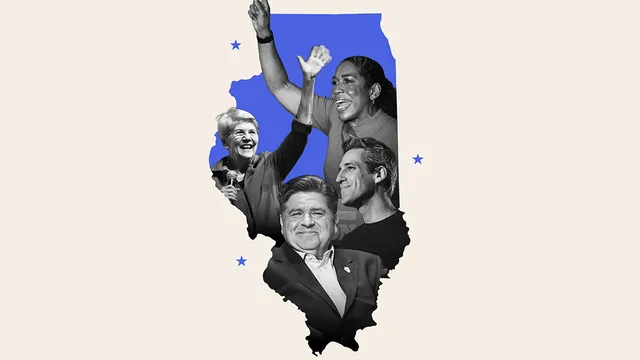
Progressives defeated by moderates in Illinois primary elections
Progressives defeated by moderates in Illinois primary elections
- Progressive candidates in Illinois faced major defeats against moderate Democrats in the recent Democratic primaries.
- High-profile financial backing from AIPAC influenced key races, illustrating the rift within the party regarding Israel and domestic policies.
- The election results signal a continued struggle for the future direction of the Democratic Party between its progressive and moderate factions.
Story
In Illinois, a series of Democratic primary elections revealed a significant trend in voter preference, where progressive candidates backed by prominent party figures suffered major defeats. On the voting day, marked by considerable funding from established political groups, candidates like Junaid Ahmed, Robert Peters, and Anthony Driver Jr. were unable to secure wins. Ahmed's call for Gaza's self-determination and universal healthcare garnered support from top lawmakers like Alexandria Ocasio-Cortez and Elizabeth Warren, yet it was not enough to turn the tides in favor of progressive ideals. The American Israel Public Affairs Committee (AIPAC) played a critical role in this year's elections, as its super PAC contributed substantial funds to bolster moderate candidates. Over $14 million was spent by AIPAC-backed groups to influence pivotal House Democratic primaries in Illinois. This unprecedented financial injection highlights the ongoing struggle within the Democratic Party regarding the approach to Israel and domestic policies, underscoring a growing divide among party members. In contrast to progressive figures, establishment candidates emerged victorious, raising questions about the party's trajectory. Political analysts discussed the implications of these electoral results, suggesting that the perceived momentum of the progressive wing is overstated. Established Democrats like Cook County Commissioner Donna Miller managed to secure necessary votes, validating strategies focused on mainstream appeal rather than the radical policies advocated by some progressive candidates. As Illinois reflects the broader national discourse within the Democratic Party, the outcomes of these primaries indicate a decisive moment for moderates against progressives. Many see this as a wakeup call for those who champion radical reform, suggesting a need to recalibrate their strategies to resonate more effectively with voters across the Democratic spectrum. The mixed responses from party members show that the struggle for ideological dominance continues, and as the party navigates its internal differences, the consequences of these elections may reverberate well beyond Illinois.
Context
The impact of primary elections on Democratic policies is a crucial aspect of understanding how political dynamics shape the party's platform and priorities. Primary elections serve as a key mechanism through which party members select their preferred candidates for the general election. This process significantly influences the policy agenda of the Democratic Party, as candidates often feel pressure to align their platforms with the interests of their core supporters, who may have distinct and sometimes divergent views from the broader electorate. Consequently, primary elections can lead to a greater emphasis on progressive policies, particularly when the electorate is energized by grassroots movements advocating for change, such as climate action, healthcare reform, and social justice initiatives. The intensity of primary elections can also reflect and amplify ideological divides within the party. As candidates mobilize support from various factions—such as moderates versus progressives—they bring forward issues that resonate with their constituencies. This internal competition can lead to a more pronounced dialogue about policy priorities, compelling candidates to articulate clear stances on critical issues. However, it can also risk alienating potential voters in the general election if the selected candidates are perceived as too extreme or disconnected from the centrist voters who may ultimately decide the outcome. Moreover, the timing and outcomes of primary elections play a significant role in shaping party unity and strategy heading into the general election. A contentious primary can lead to divisions that linger beyond the nominating process, affecting the party's ability to present a cohesive front against the opposition. Conversely, a successful primary campaign that unites various factions can enhance the party's chances of winning the general election by consolidating support and focusing on shared objectives. As party members rally behind their nominee, there is often a collective effort to integrate diverse policy proposals into a comprehensive platform that appeals to a wider audience. In recent years, we have seen how primary elections have the potential to drive Democratic policies toward more progressive stances. Candidates who emphasize bold, transformative ideas often gain traction in early primaries, influencing the overall direction of the party. This phenomenon shows that primary elections are not merely procedural steps in the electoral process; they are pivotal moments that can redefine party policies and orientation. As such, understanding the role of primary elections in shaping Democratic policies is essential for anticipating future political outcomes and the party's strategic direction.


