

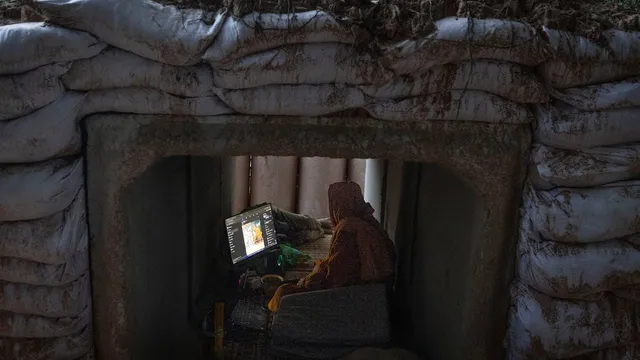
Cambodia vows fierce fight against Thailand amid escalating tensions
Cambodia vows fierce fight against Thailand amid escalating tensions
- Tens of thousands fled their homes due to renewed combat between Cambodian and Thai forces.
- Cambodia’s President Hun Sen announced a strategy aimed at countering Thai advances.
- The conflict raises serious humanitarian concerns as both nations struggle to maintain peace.
Story
Tensions between Cambodia and Thailand escalated significantly recently, resulting in widespread combat near their shared border. As Cambodia's forces engaged in renewed fighting, tens of thousands of residents were forced to evacuate their homes, resulting in a humanitarian crisis. Cambodia's President Hun Sen outlined a strategy to weaken enemy forces through counterattacks, while Thai military reports indicated that artillery from Cambodia struck a village in Sa Kaeo province, though with no casualties reported. Each side accuses the other of initiating the hostilities, further exacerbating the situation. The conflict's origins are rooted in a long history of enmity between the two nations, which share an extensive land border. As fighting continued over several days, casualties were reported on the Thai side, raising concerns about the need for military operations. Thai officials confirmed the deployment of the navy to strengthen their defensive posture near Cambodian borders. In contrast, Hun Sen asserted that Cambodia wishes for peace but must defend its territory against perceived aggression from Thailand. Ceasefire agreements brokered in past months appeared ineffective in maintaining peace, with accusations surrounding new land mines being laid and disputes over prisoners captured during skirmishes compounding the issues. The geopolitical relationship further deteriorated as neither side seemed fully committed to the ceasefire, despite international calls for restraint from figures such as U.N. Secretary-General Antonio Guterres. Consequently, the humanitarian impact is severe and growing, with thousands seeking temporary shelter in surrounding provinces. As this conflict unfolds, both nations seem caught in a cycle of mutual distrust and retaliatory violence that undermines the prospect of lasting stability in the region. Observers are left questioning the sustainability of peace efforts as both sides remain vigilant and prepared for further military engagement.
Context
The Cambodia-Thailand border conflict is rooted in a complex history of territorial disputes, colonial legacies, and national identity. Spanning several centuries, the conflict has its origins in the ancient Khmer Empire, where the concept of borders was fluid and often based on local control rather than fixed demarcations. The modern disputes intensified during the colonial era, particularly when Cambodia was under French rule and Thailand was a kingdom fiercely protecting its borders. The delineation of these borders often ignored the historical significance and cultural ties of local communities. This has led to an enduring sense of grievance on both sides, as each nation has sought to assert its sovereignty over regions that hold historical and cultural importance. A significant flashpoint in the border conflict has been the area surrounding the Preah Vihear Temple, a UNESCO World Heritage site, which has been the subject of a long-standing dispute. In 1962, the International Court of Justice (ICJ) ruled in favor of Cambodia, affirming its sovereignty over the temple, a decision that Thailand contested. Following this ruling, tensions simmered, with sporadic clashes occurring over the years, which often escalated due to nationalist sentiments and political pressures in both countries. The situation worsened in 2008, when military confrontations erupted, resulting in casualties on both sides and heightened nationalism, as both governments sought to rally support by invoking historical grievances. Diplomatic efforts aimed at resolving the border dispute have met with mixed success, often hampered by internal political issues and external influences. International organizations and bilateral talks have attempted to foster dialogue and alleviate tensions, yet the historical narratives and national pride on both sides continue to complicate these efforts. As recent as 2020, there have been reports of skirmishes and military buildups along the border, showcasing the fragility of peace in the region. The two nations have also utilized the dispute for domestic political gains, distracting from other significant issues while fostering a sense of nationalism among their citizens. Looking towards the future, sustainable resolution of the Cambodia-Thailand border conflict will likely require addressing historical grievances and fostering mutual understanding. Initiatives that emphasize cooperation, cultural exchange, and joint development of border areas could pave the way for more amicable relations. Moreover, leveraging international mediation could provide a framework for resolving disputes while ensuring that both nations can benefit from a peaceful coexistence. As the region continues to evolve politically and economically, the resolution of this conflict will be essential for regional stability and cooperation in Southeast Asia.


