

DOJ investigates Minnesota church protest over ICE presence
DOJ investigates Minnesota church protest over ICE presence
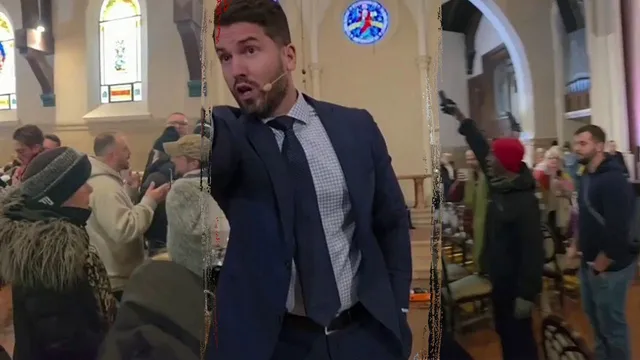
- Protesters disrupted a church service in St. Paul chanting against ICE and seeking justice for a woman fatally shot by an ICE agent.
- The U.S. Department of Justice initiated an investigation into potential violations of federal law concerning the protest activities.
- The incident has sparked a broader conversation about the role of law enforcement in communities and the treatment of sacred spaces.
Story
In January 2026, a significant protest occurred at the Cities Church in St. Paul, Minnesota, where a group of demonstrators disrupted a church service. This disruption was linked to the controversial presence of U.S. Immigration and Customs Enforcement (ICE) in the region, which had been ramping up enforcement actions under the Trump administration. Protesters alleged that one of the church's pastors, David Easterwood, oversees the local ICE field office, bringing the agency's practices into the church community. The protests followed the shooting of Renee Good, a mother who was killed by an ICE agent earlier that month, prompting widespread anger and civil unrest among community members and activists. This incident has highlighted growing tensions between local and federal authorities amidst ongoing concerns over federal enforcement policies that have intensified in Minnesota over recent months. Following the church disruption, the U.S. Department of Justice announced it would investigate potential violations of federal law, citing the Freedom of Access to Clinic Entrances (FACE) Act. This act protects places of worship from being obstructed or subjected to intimidation, raising questions about the methods and motivations behind the activists' actions. While federal officials condemned the protest as unlawful, local activists questioned the priorities of the DOJ investigation, arguing that community safety and the implications of federal enforcement should be at the forefront of discussions. The outcry and scrutiny surrounding these events reflect a broader ongoing national dialogue concerning immigration, law enforcement's role in communities, and the balance between free expression and protecting sacred spaces.
Context
The history of protests against Immigration and Customs Enforcement (ICE) in the United States reflects a growing movement concerned with immigration policies, human rights abuses, and the notable impact of ICE operations on communities throughout the country. Since its establishment in 2003, ICE has been a focal point of contention amongst activists advocating for immigrant rights. The agency's practices, including aggressive deportations and family separations, have incited widespread outrage and have galvanized diverse coalitions of individuals and organizations seeking to reform or abolish ICE altogether. This movement gained significant traction during the 2010s, particularly with the increase in deportation rates and a heightened visibility of ICE's actions under various administrations. Protests have ranged from peaceful demonstrations to more confrontational actions aimed at disrupting ICE activities, signaling deep-seated frustrations with the agency’s role in enforcing immigration laws perceived as harsh and unjust. The peak of protests against ICE can be traced to the 2018 family separation crisis, which saw widespread outcry following reports of children being separated from their parents at the U.S.-Mexico border. This incident mobilized thousands of people who participated in marches, rallies, and sit-ins across the nation, demanding accountability and an end to such policies. Large-scale demonstrations occurred in major cities, with activists using social media to organize protests and bring attention to the harsh realities faced by immigrants. The phrase "Abolish ICE" became a rallying cry among many activists, and several prominent political figures began voicing support for dramatic changes to the current immigration enforcement system. Throughout the years, protests have not only been a form of dissent but also a means to educate the public about the complexities of immigration policies. Grassroots organizations emerged, providing resources and support for undocumented migrants. The movement has been characterized by an intersectional approach, recognizing the impacts of systemic racism, economic inequality, and xenophobia, all while aligning with broader movements for social justice. Immigrants and allies have banded together, highlighting personal narratives to humanize the often-overlooked stories behind statistics of deportations and raids. Events such as the National Day of Action to Abolish ICE have fortified solidarity among various groups, showcasing an unwavering commitment to challenging the status quo. As of January 2026, protests against ICE continue to evolve, adapting to changing political climates while remaining steadfast in their mission for immigrant rights reform. Recent actions have also focused on advocating for better treatment of detainees, as well as dismantling detention centers, framing these facilities as unjust and harmful. The continued presence of protests underscores the increasing public awareness and dissatisfaction with immigration enforcement practices. While results from these protests may not be immediate, they contribute to a larger dialogue about human rights and the fundamentally humane treatment of all individuals, regardless of their immigration status. The fight against ICE is representative of a broader struggle for justice, embodying the aspirations of many for a more equitable society.


