

United Airlines flight forced to return after losing power near DC
United Airlines flight forced to return after losing power near DC
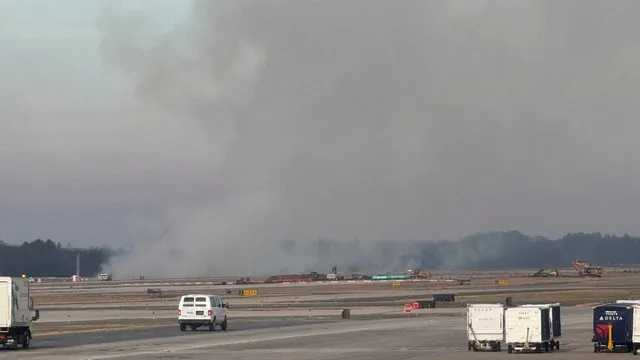
- A United Airlines flight from Washington, D.C. to Tokyo lost power in one of its engines shortly after takeoff, leading to a brush fire near the runway.
- The aircraft circled the airport for approximately 45 minutes to dump fuel before making a safe return landing without any reported injuries.
- The FAA has launched an investigation, and United Airlines is working to reschedule the affected passengers' flights.
Story
On Saturday, December 13, 2025, a United Airlines flight from Washington, D.C. to Tokyo encountered severe mechanical issues shortly after takeoff from Dulles International Airport. Flight 803, carrying 275 passengers and 15 crew members, lost power in one of its engines, leading to a small brush fire igniting near the runway. According to the Federal Aviation Administration, the airline’s pilots were unable to conduct an immediate emergency landing as the incident unfolded. They performed precautionary maneuvers, circling the airspace around the airport for approximately 45 minutes while the crew followed standard emergency protocols. The plane was reported to have dumped fuel to reduce its weight before landing, as is commonly done in such emergency situations to prevent damage upon touchdown. As the aircraft returned safely to Dulles International Airport around 1:30 p.m., fire responders were promptly prepared to assess and manage the situation. Emily McGee, a representative from the Metropolitan Washington Airports Authority, confirmed that the fire caused by the incident was extinguished quickly, and no injuries were reported among the passengers or crew. This incident prompted an investigation by the FAA to determine the specific causes behind the power loss in the Boeing 777-200’s engine. The Transportation Secretary, Sean Duffy, noted that a piece of the engine cover had separated, resulting in the brush fire. In response to the incident, United Airlines took immediate measures by temporarily closing a United Club lounge at Dulles to aid in rescheduling and facilitating the passengers affected by the emergency landing. The airline expressed gratitude towards its crews and the response teams for their effective management of the unforeseen situation. Those who had been scheduled to fly to Tokyo were consulted regarding alternative arrangements, and the airline anticipated rescheduling the affected flight later that day with a different aircraft. This incident brought attention to emergency preparedness concerning commercial aviation and underscored the importance of immediate response protocols to ensure passenger safety during technical malfunctions. Furthermore, the event serves as a reminder for continued scrutiny and evaluation of aviation safety measures in place, especially as more incidents involving engine failure are reported in various airlines across the globe.
Context
The FAA (Federal Aviation Administration) plays a crucial role in ensuring aviation safety through its investigation procedures for aviation incidents. When an aviation incident occurs, the FAA initiates a systematic investigation to determine the cause and contributing factors, aiming to enhance safety and prevent future occurrences. The investigation begins with the notification of the event, which can come from various sources, including pilots, air traffic controllers, or other aviation personnel. Upon notification, the FAA prioritizes the incident based on its severity and potential impact on aviation safety. Incidents that involve loss of life, severe injuries, or significant aircraft damage are given the highest priority, prompting an immediate response from the FAA and associated organizations, such as the National Transportation Safety Board (NTSB). Once an incident is prioritized, the FAA mobilizes a team of experts to conduct a thorough investigation. This team typically consists of aviation safety inspectors, engineers, and other specialists who gather and analyze evidence. The FAA employs a data-driven approach, utilizing flight records, maintenance logs, weather data, and witness testimonies to reconstruct the events leading up to the incident. During this phase, the team may also interview key personnel involved, such as pilots, crew members, and air traffic controllers, to gain a comprehensive understanding of the situation. The investigation process is methodical and adheres to strict protocols to ensure accuracy and objectivity. As the investigation progresses, the FAA assesses technical and procedural aspects that may have contributed to the incident. This includes examining aircraft design, maintenance practices, crew training, and compliance with regulations. The FAA also collaborates with various stakeholders, including airlines, manufacturers, and industry organizations, to gather insights and expertise. By integrating cross-discipline knowledge, the FAA aims to identify systemic issues that may have led to the incident rather than attributing blame to individual errors. The findings from the investigation play a pivotal role in shaping future regulatory recommendations and safety enhancements for the aviation sector. Upon completion of the investigation, the FAA publishes a report that summarizes its findings and recommendations. This report serves to inform the aviation community of the lessons learned from the incident and outlines measures that can be taken to enhance safety and prevent recurrence. The FAA's commitment to transparency ensures that this information is disseminated widely, fostering an environment of continuous improvement within the aviation industry. Overall, the FAA's investigation procedures are essential for maintaining high safety standards and instilling public confidence in air travel.


