

Brutal arctic blast brings life-threatening cold to parts of the U.S
Brutal arctic blast brings life-threatening cold to parts of the U.S
- An arctic blast has brought dangerous cold across the U.S., affecting millions.
- Temperatures have plummeted to life-threatening lows, especially in the Northern Plains and Midwest.
- Urgent action is required to ensure safety amidst these extreme weather conditions.
Story
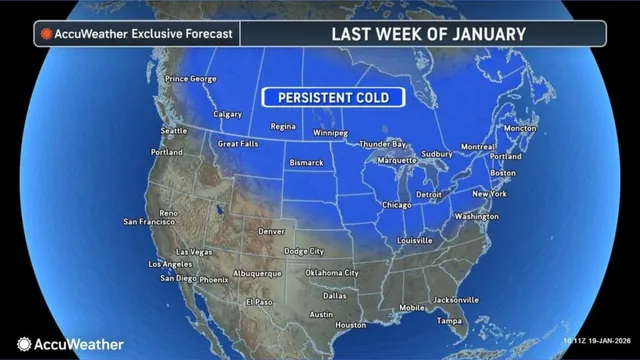
The United States has been engulfed by an arctic blast that has brought dangerously low temperatures across much of the Northern Plains, Midwest, and Northeast regions. This severe cold began making its way through the country starting January 21, 2026, as temperatures plummeted significantly due to a strong polar vortex. This phenomenon has caused an unusual weather pattern, allowing frigid air to spill down from the Arctic, leading to wind chill temperatures that have reached perilously low levels, making outdoor conditions life-threatening for millions of people. In fact, advisories were issued as parts of North Dakota and Minnesota could experience temperatures falling below -20 degrees Fahrenheit, contributing to hazardous travel and health conditions for the exposed population. As the polar vortex maintained its grip on the country, it created extreme conditions, including wind chills that brought temperatures as low as -40 degrees in the coming days. Several publications reported that 43 million people were under cold weather alerts covering areas from the Upper Midwest to the Northeast. Such conditions are known for rapidly causing frostbite and hypothermia, particularly in individuals who are not adequately protected against the elements. Weather experts have warned that this cold snap does not represent a record-setting event in its own right, but rather marks the onset of an even colder front expected later in the week, further complicating the already severe winter weather scenario across the nation. In addition to the chilling temperatures, the forecast predicted snow storms and lake effect snow, which could lead to dangerous travel conditions, particularly in the Great Lakes region and surrounding states. Snow squalls were also reported, causing sudden whiteout conditions leading to accidents and dangerous roadways. The forecast included expectations of additional snow accumulations, particularly in parts of New York, where certain areas could receive up to 2 to 4 feet through mid-week. In states like Michigan, hazardous driving conditions resulted in accidents, including a significant pile-up that involved over a hundred cars due to icy roads and visibility issues. Overall, the impacts of this arctic cold front highlight the urgent need for residents in affected areas to heed weather warnings and take necessary precautions to protect themselves and their families during such extreme weather events. As the cold air remains entrenched for weeks to come, the situation in many parts of the country could become dire, necessitating increased attention to safety and emergency preparedness for both individuals and communities alike.
Context
The polar vortex is a large area of low pressure and cold air surrounding the Earth's poles. This phenomenon usually exists in the stratosphere above the Arctic region, where frigid air is typically contained. During the winter months, however, the polar vortex can weaken or become disrupted. When this occurs, it allows cold Arctic air to escape and move southward into mid-latitude regions, impacting the weather patterns in those areas. This can lead to unusually low temperatures, heavy snowfall, and other severe weather events across the Northern Hemisphere, particularly in North America, Europe, and Asia. The structure of the polar vortex is characterized by a strong west-to-east jet stream, which helps to keep the cold air contained. However, various factors—including changes in temperature, atmospheric pressure, and other climatic elements—can lead to fluctuations in the jet stream's strength. A weaker jet stream often results in the polar vortex becoming less stable, which can enable cold air masses to migrate far from their usual boundaries. These shifts can lead to dramatic weather changes, prompting meteorologists to closely monitor the polar vortex for potential impacts on the weather. It's important to note that the polar vortex's behavior can be influenced by various factors, including climate change. Research has suggested that as the planet warms, changes in sea surface temperatures and the melting of Arctic ice can alter the dynamics of the polar vortex. Some studies indicate that a warming Arctic may contribute to a more erratic and unstable polar vortex, leading to increased instances of cold air outbreaks in lower latitudes. These shifts can cause more frequent and intense winter weather events, which raises concerns about infrastructure and public safety as communities face the increasing unpredictability of winter storms. In summary, understanding the polar vortex is crucial for predicting winter weather patterns and preparing for potential impacts on society. Researchers continue to study the intricacies of the polar vortex and its interactions with global climate systems to enhance the accuracy of weather forecasts. As our understanding evolves, it will be essential for meteorologists, policymakers, and the general public to remain informed about how changes in the polar vortex can affect regional climates and weather, particularly in the context of a warming world.


