

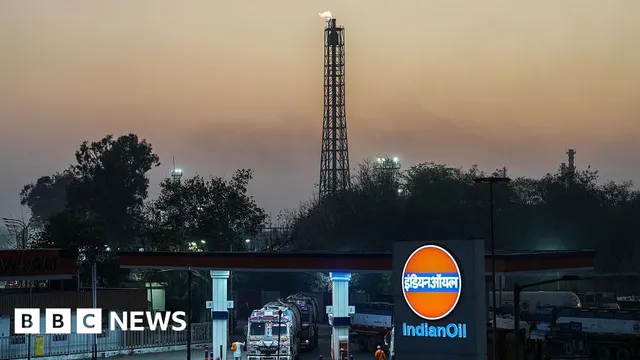
U.S. considers lifting Iranian oil sanctions to combat rising prices
U.S. considers lifting Iranian oil sanctions to combat rising prices
- The U.S. may lift sanctions on Iranian oil to increase global supply amid rising energy prices.
- Scott Bessent's proposal suggests a focus on oil that is already at sea, equating to about 140 million barrels.
- The potential reversal of longstanding policy raises questions about further support for the Iranian regime.
Story
The United States is contemplating the lifting of sanctions on certain Iranian oil to manage the escalating energy prices driven by the ongoing conflict in Iran. Treasury Secretary Scott Bessent raised this possibility during an interview on Fox Business, suggesting that waiving sanctions could make more oil available to global buyers. Reports indicate that around 140 million barrels of oil are currently stranded at sea, which might be included in such a waiver. This consideration follows the U.S. releasing millions of barrels from its strategic reserves and suspending some sanctions on Russian oil, aiming to stabilize oil markets affected by the war's impact on shipping and production. Concerns over global energy supply are heightened due to the war, particularly considering that approximately one-fifth of the world's petroleum consumption typically passes through the Strait of Hormuz. Any disruption in this key shipping lane could have dire repercussions on supply. International entities, such as the International Energy Agency (IEA), are also taking measures, planning to release significant amounts of oil from their emergency reserves to alleviate the strain on markets. Bessent's remarks were met with skepticism and criticism from various commentators. Industry experts indicated that lifting sanctions may provide limited relief in terms of price reduction and could inadvertently increase the revenue streams for the Iranian regime, which the U.S. aims to undermine. The potential move appears highly controversial, marking a significant departure from the long-standing American policy of sanctioning Iranian oil to curb its influence in the region. Moreover, there are questions about how any sanctions waiver could prevent the proceeds from oil sales from benefitting the Iranian government. Critical voices have emerged, with some analysts labeling the idea as misguided, suggesting that releasing Iranian oil might counteract the very goals the U.S. has pursued in its sanctions policy. As tensions continue in the region and the war’s impact evolves, the situation remains fluid, with the U.S. facing pressures to find alternative oil supplies wherever possible. The discussions around lifting sanctions could have profound implications for U.S. foreign policy and energy markets, signaling potential shifts in strategy that may attract both support and criticism from lawmakers in Washington.
Context
The impact of the war in Iran on global oil prices is a crucial subject, as it touches on both economic and geopolitical factors that shape the world's energy landscape. The ongoing conflict has led to significant disruptions in Iran's oil production and export capabilities, which are vital for the stability of the global oil market. With Iran being one of the largest oil producers in the Middle East, any conflict that impedes its output can lead to sharp fluctuations in oil prices, fueling concerns over supply shortages and increasing market volatility. These disruptions not only affect the regional dynamics but also create ripples across the global economy, impacting everything from transportation costs to consumer prices. In recent years, geopolitical tensions have escalated, resulting in various sanctions imposed on Iran by Western nations. These sanctions have limited Iran's ability to engage in international oil trade, thereby reducing its crude oil production and exports significantly. Consequently, a supply gap has emerged, compelling countries dependent on Iranian oil to seek alternative sources. This scramble for oil has led to increased demand for oil from other producers, primarily in North America and the Gulf states, which in turn puts upward pressure on global oil prices. As supply becomes constrained, the immediate reaction in the market is to raise prices to reflect the heightened risk and uncertainty surrounding oil availability. Moreover, the reactions of major oil-producing countries and organizations, such as OPEC, can further amplify the situation. These entities often adjust their output to stabilize prices, but any decision they make can have significant ramifications in the context of the ongoing conflict in Iran. For instance, if OPEC decides to cut production to maintain price levels, it may unintentionally exacerbate the supply crisis. Conversely, if they increase production to counterbalance the unreliability of Iranian oil, they risk oversaturating the market, resulting in lower prices and economic challenges for themselves. Hence, the strategic maneuvers of these global players can lead to a more complex interplay between conflict and oil pricing. The longer the conflict in Iran persists, the more entrenched the impact on global oil prices becomes. Other factors, such as technological advancements in extracting oil, the rise of renewable energy, and changes in consumer behavior also play a role in this dynamic. However, the interplay of geopolitical tension, sanctions, and adjustments by oil-producing nations are immediate factors that the market responds to. Overall, the war in Iran remains a pivotal issue affecting global oil prices, and its ramifications will likely continue to influence international energy markets for the foreseeable future as stakeholders navigate the complex web of supply, demand, and geopolitical risks.


