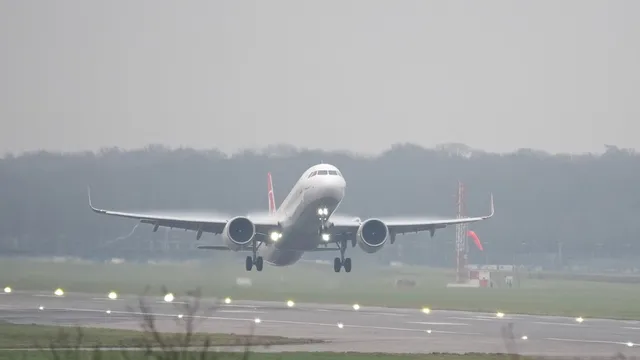
Met Office upgrades supercomputer for better flight and weather forecasts
technology
innovative
update

Met Office upgrades supercomputer for better flight and weather forecasts

10
(Update: )
United Kingdom's national weather service
  • The Met Office has upgraded its forecasting system to improve weather predictions and management of flight schedules.
  • The new technology enhances predictions for cloud and fog and allows for global weather warnings to be issued sooner.
  • This marked enhancement represents the most significant upgrade in over three years, benefiting various industries and public safety.
Share opinion
1

Story

In the UK, the Met Office announced a significant upgrade to its forecasting system, which is expected to enhance flight scheduling and winter preparations. This upgrade provides more accurate predictions for cloud and fog, two critical factors affecting aviation operations. As a result, delays at busy airports, particularly Heathrow, can be minimized. Improved rainfall forecasts are also part of the upgrade, reflecting a noted increase in rainfall in January in the south west of England and South Wales. Furthermore, the new system allows for global severe weather warnings to be issued sooner, expanding forecast windows from seven to ten days. Science Minister Lord Vallance praised this advancement, noting that more precise weather information is crucial for public safety and effective management of daily routines. This initiative marks the first major update in more than three years and comes after a transition to a new supercomputer supplied by Microsoft in May. The Met Office’s director of science, Simon Vosper, emphasized the significance of improvements in rainfall predictability and cloud representation, which enhances overall forecasting accuracy. This progress signifies a major step forward in meteorological science in the UK, The upgraded system not only supports the aviation industry but also aids in energy grid management and road maintenance during winter months. Lord Vallance highlighted the societal benefits of improved weather science, which can affect everything from timely flight operations to adequate preparations against storms, thereby reducing risks to lives and property. With the advent of better technology, forecasts will now be simpler to interpret, providing clear guidance for various industries, including aviation, where timely and precise weather information is essential, The Met Office has marked this upgrade as a transformative moment for weather and climate science in the UK. Enhanced accuracy in weather predictions is intended to support industries that rely heavily on precise meteorological data, particularly for scheduling and safety operations. As weather-related disruptions continue to impact numerous sectors, the hope is that such improvements will lead to safer and more efficient management of both daily flights and severe weather events in the future.

Context

Weather forecasting plays a crucial role in aviation, significantly impacting flight operations, safety, and efficiency. Accurate and timely weather predictions enable airlines and pilots to make informed decisions regarding flight planning, routing, and scheduling. Adverse weather conditions such as thunderstorms, fog, ice, and turbulence are common factors that can disrupt flight operations. By utilizing advanced meteorological models and tools to predict these weather patterns, aviation stakeholders can enhance operational reliability while minimizing delays and cancellations. Furthermore, real-time weather updates provide pilots with vital information during flights, allowing them to navigate around hazardous conditions and improve overall passenger safety. The integration of sophisticated weather forecasting technologies has led to remarkable advancements in aviation safety. With the advent of satellite imagery, Doppler radar, and data analytics, meteorological services can deliver highly accurate forecasts that are essential for flight operations. From pre-flight briefings to inflight updates, these forecasts enable pilots to maintain situational awareness of changing weather conditions. This not only aids in avoiding dangerous situations but also facilitates improved communication between air traffic control and flight crews, leading to better management of airspace during adverse weather scenarios. Moreover, the economic impact of effective weather forecasting on the aviation industry cannot be overstated. Airlines benefit from reduced operational costs associated with weather-related disruptions, as precise forecasting allows for optimal resource allocation, more efficient flight paths, and strategic decision-making. For instance, rerouting flights to avoid inclement weather can reduce fuel consumption and enhance overall schedule adherence, resulting in cost savings and increased customer satisfaction. Furthermore, the use of historical weather data can aid airlines in better forecasting demand and optimizing their scheduling operations, thus improving their financial performance. In summary, the impact of weather forecasting on aviation is profound, influencing safety, operational efficiency, and economic performance within the industry. As technology continues to evolve, the accuracy and reliability of weather forecasts will only improve, further enhancing the aviation sector's ability to navigate the challenges posed by unpredictable weather conditions. Ultimately, the integration of effective weather forecasting practices stands as a cornerstone of modern aviation operations, ensuring the safety and satisfaction of passengers while optimizing the use of resources.

2026 All rights reserved