

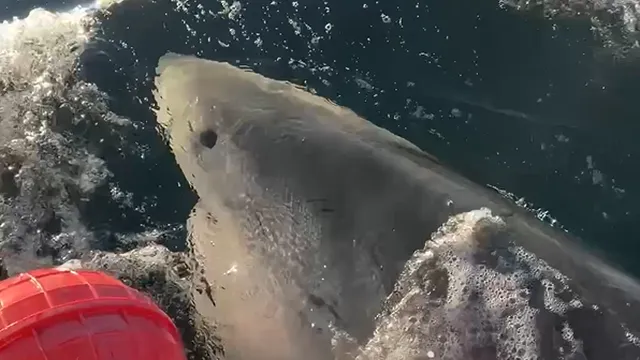
Contender returns to Florida waters prompting scientists to track shark movements
Contender returns to Florida waters prompting scientists to track shark movements
- Contender, the largest male great white shark, was tracked returning to the Florida/Georgia coast where he was tagged by OCEARCH.
- Since being tagged in January 2025, Contender traveled significant distances, spending time in the Carolinas and Canadian waters.
- His recent pings along the Florida coast highlight the importance of these areas as winter feeding grounds for great white sharks.
Story
In March 2026, the Atlantic Ocean's largest male great white shark, known as Contender, returned to familiar waters off the coast of Florida and Georgia. Tagged by OCEARCH in January 2025, Contender was approximately 14 feet long and weighed 1,653 pounds at the time. He was estimated to be around 32 years old. Since his initial tagging, he has migrated significantly, spending time in areas along the Carolinas and even venturing into Canadian waters before returning south. Contender has notably pinged multiple times recently along the Florida coast, with the latest ping occurring just north of Jacksonville. Great white sharks, including Contender, typically seek warmer waters in Florida during the winter and early spring to find food. OCEARCH scientists have noted that dozens of white sharks use Florida's coastal waters as a seasonal habitat, contributing to ongoing research into their migratory patterns and behavior. While other tagged sharks have ventured into the Gulf of America, which recent studies indicate is an ideal winter habitat for white sharks, Contender himself has not been recorded in that area since his tagging. OCEARCH operates as a global nonprofit organization dedicated to the research and conservation of marine life, including sharks, whales, and sea turtles. Their tagging and tracking efforts allow scientists to monitor these creatures’ movements from afar, providing crucial data to enhance understanding of marine ecosystems and shark behaviors. The organization continues to study the patterns and behaviors of sharks like Contender to inform conservation strategies. Observing Contender and similar sharks in their natural habitat offers valuable insights into their behavior and dietary needs. The data obtained from such tracking efforts could be vital in informing marine biology studies and helping to ensure the longevity of white shark populations amid environmental changes. Understanding these migratory behaviors supports conservation efforts and helps promote awareness regarding the importance of wildlife preservation in ocean environments.


