

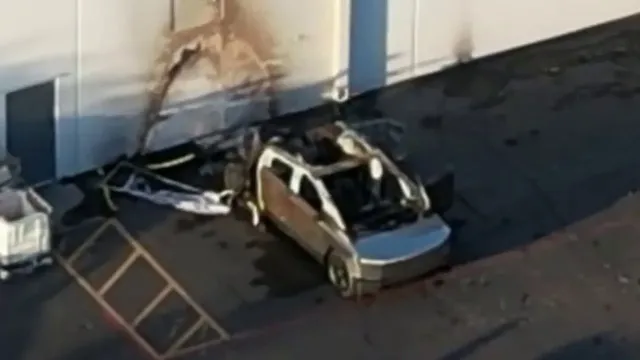
Man sentenced for committing arson at Tesla dealership in Arizona
Man sentenced for committing arson at Tesla dealership in Arizona
- Ian William Moses committed arson at a Tesla dealership in Mesa, Arizona, using gasoline to ignite a fire.
- He was sentenced to five years in prison, a response to the serious nature of arson related to political issues.
- This case highlights the risks posed to public safety and emphasizes that politically motivated attacks will face significant legal repercussions.
Story
In Arizona, Ian William Moses was sentenced to five years in prison for arson committed on April 28, 2025, at a Tesla dealership in Mesa. Surveillance footage captured him shortly before 2 a.m., dressed in dark clothing, and carrying gasoline to ignite fires on the dealership building and a Tesla Cybertruck. Following the fire, which destroyed the vehicle, Moses was seen leaving the scene on a bicycle. Authorities emphasized that arson poses a significant danger to the public and first responders, making it clear that politically charged attacks on businesses will not be tolerated. The decision to impose a five-year prison sentence by U.S. District Judge Diane J. Humetewa reflects the serious nature of such crimes and serves as a warning against politically motivated vandalism. U.S. Attorney Timothy Courchaine noted that these actions could have escalated into a deadly situation. This incident resonates against the backdrop of rising tensions surrounding Elon Musk’s business ventures and the heated political climate influencing public perceptions of Tesla and its vehicles. The backlash against Musk has been attributed to his controversial roles in government and business. In recent times, arson attacks, particularly on businesses, have signified broader unrest. The case of Moses is not isolated; it reflects a trend of increased hostility towards companies perceived as politically charged or linked with certain ideologies. The broader implications of this case raise concerns about the safety of businesses and their employees, as the intersection of politics and everyday commerce continues to evolve. U.S. law enforcement agencies are increasingly vigilant against acts of arson that can be fueled by political sentiments. The case of Moses sheds light on the need for clear legislation and strong responses to threats against public safety and property. The consequences of such actions extend beyond legal penalties, impacting community trust and business stability in political climates ripe with conflict. If not addressed, the behavior leading to such crimes may encourage further incidents, potentially destabilizing community relations and economic security.


