
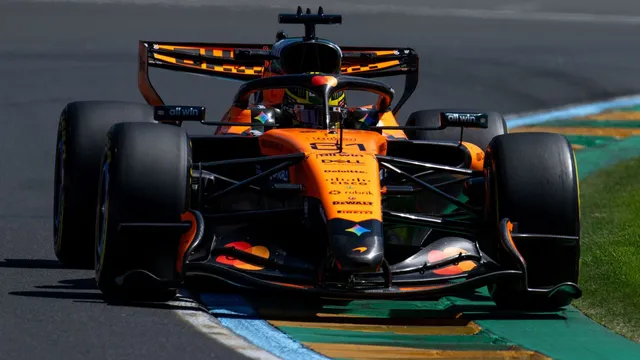
Ferrari's Charles Leclerc leads pre-season testing ahead of new F1 season
- The new Formula 1 season kicks off in Australia with multiple exciting changes.
- Charles Leclerc shone during Bahrain's final pre-season tests, promising a competitive season.
- Geopolitical unrest in the Middle East raises concerns about future race cancellations.
Story
The 2026 Formula 1 season is set to begin soon in Australia, with exciting new rules and regulations. Fans are eagerly anticipating the first race at Albert Park in Melbourne, marking the start of a highly anticipated campaign. The backdrop for this year's season opener is fraught with challenges due to unrest in the Middle East. Specific concerns arise over potential race cancellations in Bahrain and Saudi Arabia next month due to the ongoing geopolitical tensions affecting air travel and safety in the region. Despite the uncertainties, teams have completed pre-season testing, with notable performances, including from Ferrari's Charles Leclerc, who emerged as the standout driver in the final pre-season test held in Bahrain. As new technical regulations come into play, adjustments have been made to the car designs, with a significant emphasis on improving engine performance and efficiency. Teams have been grappling with the implications of these changes, most notably regarding the balance of power between internal combustion engines and electrical energy systems. Executives within Formula 1 are now tasked with navigating these alterations while ensuring competitive balance among rival teams. Teams like Mercedes, which have previously dominated, must regroup and adapt strategies against new contenders like Cadillac, which is making its debut this season. The impact of recent geopolitical events in the Middle East has cast a shadow over preparations. F1’s governing body, the FIA, is closely monitoring the situation to ensure that all races can be conducted safely, particularly those slated for Bahrain and Saudi Arabia. The potential for cancellations due to instability has led to speculation about alternative venues that could step in on short notice to maintain the integrity of the race calendar. As of now, Nurburgring appears to be a strong candidate among potential replacements. While teams like Ferrari show promise with their performance, others, such as Aston Martin, face challenges, as their car development has been hampered by technical issues. In the meantime, fans and media await the opening race, hopeful for an exciting season amid unpredictability. As crowds gather in Melbourne for the traditional lead-up events, the stakes have never seemed higher with both sporting and geopolitical factors at play, shaping the landscape for this year's championship.
Context
The Formula One 2026 season is poised to introduce a new set of regulations aimed at enhancing competition, improving safety, and promoting sustainability within the sport. As teams and stakeholders prepare for these extensive changes, it is essential to analyze the implications of these regulations on both the performance of the vehicles and the strategic approaches of the teams. The upcoming changes seek not only to maintain the spectacle of racing but also to lead the way in innovative automotive technology that can have broader applications outside motorsport. This report focuses on the key elements of the 2026 regulations and their expected impact on Formula One as a whole. Foremost among the new regulations are significant adjustments to the power unit specifications. The 2026 season will see the introduction of hybrid power units that further prioritize sustainability, featuring a greater emphasis on electric power and a reduction in reliance on traditional fossil fuels. The aim is to have a more significant portion of race performance come from electrical energy, enhancing the overall environmental responsibility of the sport. Teams are expected to invest heavily in research and development to optimize these hybrid systems, leading to potentially faster and more efficient racing while minimizing the carbon footprint of the teams. In addition to power unit changes, the aerodynamic regulations will undergo a thorough revision to promote closer racing and increase overtaking opportunities. This includes modifications to the car's wing structures and bodywork to reduce the turbulence generated by the cars, allowing for more competitive racing dynamics on the track. Such strategies are designed to address concerns that have been voiced about single-team dominance and encourage a more balanced competitive environment. The regulations will require teams to adapt their designs significantly, ensuring they remain competitive while complying with the new aerodynamic parameters. Lastly, the financial framework of the sport will be impacted by new cost cap regulations, steering teams towards more balanced budget management and reducing the gap between larger and smaller teams. This would foster a more diverse and competitive field in each race, enabling underdog teams to compete on a more level playing field against the historically well-funded teams. By promoting fiscal responsibility and fair competition, the 2026 regulations aim to secure a vibrant future for Formula One, ensuring it remains at the forefront of motorsport innovation while appealing to a global audience concerned about sustainability and technological advancement.
