
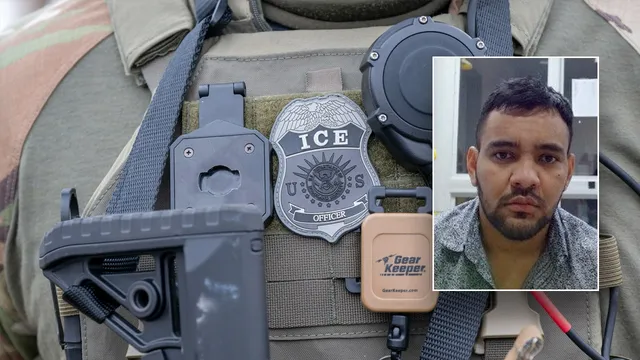
MS-13 gang member arrested in Virginia after claiming murders in El Salvador
- Edwin Antonio Hernandez Hernandez, a 27-year-old illegal immigrant from El Salvador, was arrested by ICE in Virginia for unlawful presence in the U.S.
- Hernandez has claimed involvement in five murders in El Salvador as a member of the MS-13 gang.
- His arrest highlights ongoing tensions between federal immigration enforcement and state policies limiting cooperation with ICE.
Story
In early 2026, Edwin Antonio Hernandez Hernandez, a 27-year-old illegal immigrant from El Salvador, was arrested by U.S. Immigration and Customs Enforcement (ICE) in Virginia. Hernandez, known by the aliases 'Demente' and 'Crazy,' is affiliated with the violent MS-13 gang. He allegedly confessed to participating in five murders while in El Salvador, specifically targeting members of the rival 18th Street gang. His arrest followed a policy change by Virginia Governor Abigail Spanberger, who signed an executive order that limited cooperation between local law enforcement and ICE. This order marked a shift from previous regulations set by her Republican predecessor, Glenn Youngkin. Officials stated that Hernandez had entered the U.S. illegally in June 2015, after which he was briefly detained but later released during immigration proceedings. His continued presence in the country was deemed unlawful, leading to ICE's involvement when he was referred for detention by U.S. Citizenship and Immigration Services. Over the weekend prior to Hernandez's apprehension, ICE conducted a nationwide operation targeting criminal illegal aliens. This operation led to the arrest of various individuals involved in serious crimes, including murder, sexual abuse of minors, and drug trafficking. ICE officials emphasized their commitment to public safety by removing individuals who pose threats to communities, regardless of the new landscape of state-level cooperation with immigration enforcement. As a direct outcome of this operation, multiple repeat offenders of violent crimes were apprehended across the United States. This trend highlights an ongoing struggle between federal immigration enforcement and local policies aimed at protecting immigrant populations from potential deportation. The context surrounding Hernandez's arrest exemplifies the larger debate on immigration policy and public safety. While some argue for stricter enforcement against illegal immigration, others advocate for policies that seek to balance law enforcement with community safety and immigrant rights. This case brings to light the complexities involved, as fear of deportation can inhibit victims or witnesses from coming forward in cases involving serious crimes. It stresses the need for a comprehensive dialogue on how to manage both public safety and humane immigration practices. As the political environment continues to evolve, the implications of such arrests and the approach to dealing with crime committed by illegal aliens will be pivotal in shaping future policies and community relations.
