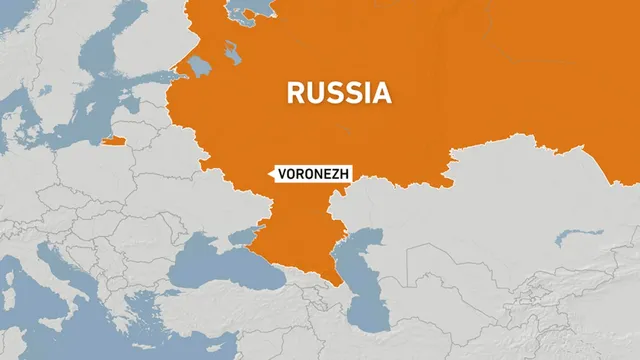
Three injured in Ukrainian missile strike on Russian city
military conflicts
controversial
provocative

Three injured in Ukrainian missile strike on Russian city

21
(Update: )
East Slavic language
sovereign state in Eastern Europe and Northern Asia
politician
capital and most populous city of Russia
capital city of Voronezh Oblast in central Russia
  • On June 21, 2026, a missile strike in Voronezh injured three people and caused significant damage.
  • Authorities issued a missile attack warning, and air defenses intercepted several aerial targets.
  • The attack highlights the ongoing conflict and Ukraine's reliance on Western military support.
Share opinion
2

Story

On June 21, 2026, a Ukrainian missile strike targeted the Russian city of Voronezh, resulting in injuries to three individuals. The attack prompted local authorities to issue a missile attack warning for the region, which is located approximately 450 kilometers south of Moscow. Governor Aleksandr Gusev reported that air defenses intercepted several high-speed aerial targets over the city, indicating an active defense response to the threat. The strike caused damage to an industrial facility, multiple residential buildings, and several vehicles, highlighting the impact of the ongoing conflict on civilian infrastructure. The incident occurred amidst a backdrop of escalating tensions between Ukraine and Russia, with Ukraine intensifying its long-range strikes inside Russian territory. This strategy appears to be aimed at demonstrating Ukraine's military capabilities and encouraging further financial support from Western allies. Reports suggest that Western-supplied projectiles, specifically British-French Storm Shadow air-launched cruise missiles, may have been utilized in the attack, although Russian officials did not immediately confirm the specific weapons used. In the days leading up to the strike, the Russian Defense Ministry claimed to have intercepted over 300 Ukrainian long-range drones, with many of these drones reportedly aimed at Moscow. This increase in drone activity reflects Ukraine's ongoing military efforts, which have been heavily reliant on Western support since the cessation of U.S. assistance under former President Donald Trump. The situation in Voronezh is indicative of the broader conflict, where Ukrainian attacks on Russian territory have resulted in civilian casualties, further complicating the humanitarian situation. As the conflict continues, the implications of such strikes extend beyond immediate physical damage. They serve to underscore the ongoing volatility in the region and the potential for further escalation. The Ukrainian military's reliance on Western support remains critical, as it seeks to maintain its operational capabilities in the face of a challenging front line and a worsening manpower shortage. The attack on Voronezh is a stark reminder of the conflict's reach and the risks faced by civilians caught in the crossfire.

Context

The impact of Western-supplied weapons in the Ukraine-Russia conflict has been significant and multifaceted, influencing both the tactical landscape on the ground and the broader geopolitical dynamics in the region. Since the onset of the conflict in 2014, and particularly following the escalation in 2022, Western nations have provided Ukraine with a range of military assistance, including advanced weaponry, training, and intelligence support. This influx of resources has enabled Ukrainian forces to enhance their defensive capabilities, conduct counter-offensives, and maintain territorial integrity against Russian aggression. The provision of modern systems such as anti-tank missiles, drones, and artillery has shifted the balance of power, allowing Ukraine to inflict substantial losses on Russian forces and disrupt their operational plans. Moreover, the supply of Western weapons has not only bolstered Ukraine's military effectiveness but has also served as a critical signal of international support. The commitment of NATO and other Western allies to supply arms has reinforced Ukraine's resolve and morale, fostering a sense of unity among its military and civilian population. This support has also had a deterrent effect, signaling to Russia that further aggression could lead to increased military aid for Ukraine, thereby complicating Moscow's strategic calculations. The implications of this support extend beyond the battlefield, as it has galvanized international solidarity against Russian actions, leading to sanctions and diplomatic isolation of Russia on the global stage. However, the influx of Western arms has also raised concerns regarding the potential for escalation in the conflict. As Ukraine receives more sophisticated weaponry, there is a risk that Russia may respond with increased military aggression or escalate its own military capabilities. This dynamic creates a precarious situation where the conflict could spiral into a larger confrontation, drawing in more countries and complicating efforts for a peaceful resolution. Additionally, the distribution and management of these weapons pose challenges, as there are concerns about their potential diversion to unintended actors or the long-term implications for regional security. In conclusion, the impact of Western-supplied weapons in the Ukraine-Russia conflict is profound, shaping military strategies and influencing geopolitical relations. While these supplies have empowered Ukraine to defend itself and challenge Russian advances, they also carry risks of escalation and unintended consequences. The ongoing situation necessitates careful monitoring and strategic planning by Western nations to ensure that support for Ukraine contributes to a sustainable resolution of the conflict while minimizing the potential for broader regional instability.

2026 All rights reserved