

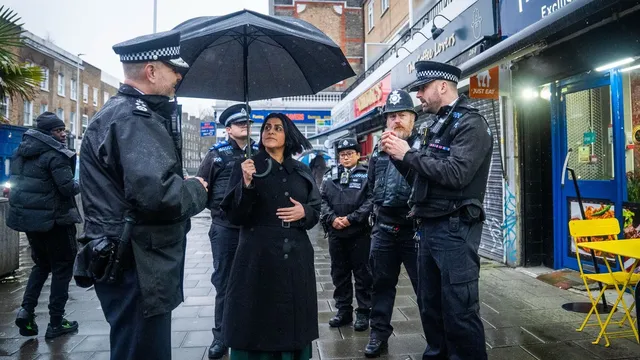
British government to establish national police force to combat complex crime
British government to establish national police force to combat complex crime
- A new National Police Service will be formed to combat complexities in crime, including terrorism and fraud.
- Local police forces will receive support to focus more on everyday offences as a result of these reforms.
- This initiative is deemed the largest reform of policing in England and Wales in over two centuries.
Story
On January 24, 2026, the British government unveiled significant plans to form a new National Police Service (NPS), intended to address complex and serious crimes such as counterterrorism, fraud, online child abuse, and organized crime. This initiative aims to centralize the operations of various agencies, including the National Crime Agency and regional organized crime units, under one umbrella, thereby relieving the burden on local police forces. It is expected to reduce the number of police forces from the current 43 in England and Wales, allowing local officers to focus on everyday crimes. The restructuring comes as many local forces have struggled with the modern challenges of crime that are more intricate due to technological advancements. Home Secretary Shabana Mahmood emphasized the necessity of this reform, stating that some local forces do not possess the requisite skills or resources to effectively tackle these evolving threats. By employing state-of-the-art technology and attracting professionals from various sectors, the new service intends to enhance the capabilities in addressing serious crime comprehensively. Shabana Mahmood's announcement is characterized as the most significant shake-up of policing in the UK in the past 200 years, aimed at improving efficiency and effectiveness within law enforcement. The proposed changes include a direct entry scheme into senior police roles to draw talent from tech and finance sectors, ensuring a more qualified workforce able to handle the sophisticated nature of modern crime. As the transition progresses, the NPS will become operational in stages and will share resources and intelligence across different agencies. Former Counter Terrorism Policing head Neil Basu, along with other law enforcement leaders, has expressed support for these initiatives, asserting that a unified national service will significantly improve the ability to tackle organized crime and security threats. Concerns remain about maintaining connections with local policing to ensure community engagement throughout this transformative process.
Context
The history of policing reforms in England and Wales reflects a complex evolution influenced by social, political, and economic changes. Beginning in the early 19th century, the establishment of the Metropolitan Police in 1829 by Sir Robert Peel marked a significant turning point. Peel's approach emphasized the importance of community involvement and professional standards in policing, which laid the groundwork for the modern police force. Over the subsequent decades, various reforms aimed to address issues such as corruption, accountability, and the relationship between the police and the public. Significant events, including the Poor Law Amendment Act and the introduction of the County Police Act in 1839, expanded policing responsibilities and necessitated ongoing reforms to adapt to new societal challenges. The late 19th and early 20th centuries saw further developments, particularly after the appointment of the first Chief Constables and the establishment of professional training programs for officers. The enactment of the Police Act 1919 marked an additional milestone, as it focused on wages, conditions, and the professionalization of the police. However, these developments were not without challenges, as issues such as strikes, public disorder, and rising crime rates prompted calls for reform. The post-World War II era catalyzed significant shifts in policing, particularly with the establishment of the Police Federation in 1919, which aimed to represent officers' interests and promote improved working conditions. The latter part of the 20th century was characterized by an increasing awareness of the need for equitable policing, fueled by widespread social movements and public outcry against violence and discrimination, particularly race-related issues. The Scarman Report of 1981, which investigated the Brixton riots, highlighted the damaging impacts of police-community relations, emphasizing the requirement for a more accessible and accountable police force. Subsequent reforms focused on establishing the Police Complaints Authority in 1985 and the introduction of community policing models in the 1990s, aiming to rebuild trust and cooperation between the police and the communities they serve. This period also witnessed the introduction of the National Police Improvement Agency (NPIA) and the adoption of new technologies to enhance police effectiveness. In recent years, the landscape of policing has continued to evolve—in response to both national and international challenges, including terrorism and cybercrime. The establishment of the College of Policing in 2013 marked a significant shift toward professionalizing police services and ensuring that officers are equipped with the training and skills necessary to address contemporary issues. Furthermore, initiatives focusing on diversity and inclusion within policing highlight an ongoing commitment to reform, as well as recognizing the need for policing to reflect the communities served. Today, the focus lies not merely on law enforcement but on building trust, ensuring transparency, and fostering community engagement, demonstrating a continuing evolution of policing practices in England and Wales.


