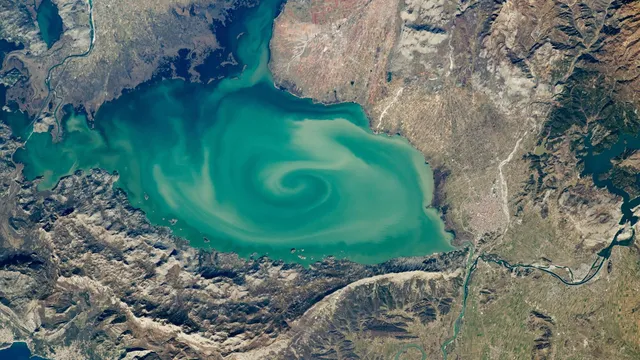
Lake Skadar, located on the border between Montenegro and Albania, is one of Europe's largest lakes, with a surface area that varies between 140 and 200 square miles depending on the season. This karst lake, which formed during the Cenozoic Era, is characterized by its unique geological features, including a floor that lies below sea level, making it a 'cryptodepression.' The lake's primary water source is the Morača River, while its main outlets are the Bojana and Drin rivers, which eventually flow into the Adriatic Sea. The lake's southern shore is bordered by the Dinaric Alps, which contribute to the lake's sediment composition. During late winter and early spring, the lake experiences a rise in water levels, leading to the formation of a milky-green vortex caused by sediment swirling due to wind-driven currents and the natural flow of water. This phenomenon is primarily composed of limestone and dolomite sediments that wash into the lake as snow melts in the surrounding mountains. The lake is also home to several small islands, including Beška and Grmožur, which feature historical sites such as ancient churches and fortifications. Additionally, the lake is recognized as a biodiversity hotspot, hosting around 50 species of freshwater snails, more than any other lake globally. It is particularly significant for birdlife, with over 280 avian species, including the Dalmatian pelican, making it a vital habitat for wildlife conservation efforts on both sides of the Montenegro-Albania border. The lake's ecological importance is further underscored by its protected status, which aims to preserve its unique biodiversity and natural beauty for future generations.