

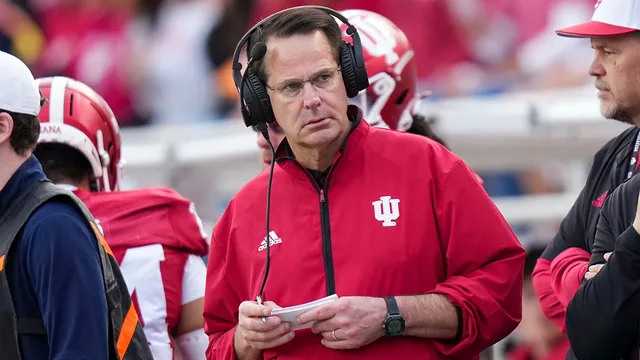
Indiana celebrates historic national championship win in college football
Indiana celebrates historic national championship win in college football
- Curt Cignetti transformed Indiana from a struggling program to a national champion in just two seasons.
- Heisman Trophy winner Fernando Mendoza made key plays, notably a touchdown run in the championship game.
- Indiana's victory marks a historic turnaround in college football history.
Story
In a historic turn of events, Indiana, a longstanding underdog in college football, clinched its first national championship by defeating the Miami Hurricanes 27-21. The victory took place in front of a passionate crowd at Hard Rock Stadium during the College Football Playoff final. Indiana finished the season undefeated at 16-0, a remarkable accomplishment that transformed the program within just two years under the leadership of head coach Curt Cignetti. This championship marked a significant milestone, considering the team's previous struggles and its reputation as one of the losingest programs in college football history. The road to the title was paved by a series of strategic decisions by Cignetti, who became the first head coach since Gene Chizik in 2010 to win a national championship in his first or second year at the helm. By attracting key transfer players, including Heisman Trophy winner Fernando Mendoza, Cignetti managed to elevate Indiana from the depths of Division II football to the pinnacle of the sport. Mendoza's performance in the final was critical; he not only passed for 186 yards but also executed a crucial 12-yard touchdown run that effectively sealed the game. Cignetti's triumph has redefined the expectations for the program, inspiring a new era of football at Indiana University. The championship win has sparked significant interest nationwide, illustrating how rapidly a program can change under effective leadership. With the coaching staff's commitment to nurturing talent and fostering a winning culture, Indiana is expected to build on this success in the coming seasons. Mendoza's expected declaration for the NFL draft and the influx of talented recruits suggest that the Hoosiers are not just a one-time champion but a team ready to compete consistently at a high level. This title win not only reflects the dedication of the players and coaches but also engages the local community and fans who have supported the team through its years of hardship. The victory resonates as a beacon of hope, symbolizing the potential for success even after long periods of struggle. Cignetti's emotional reaction during the post-game interview underlines the significance of this achievement for him and the program, marking an extraordinary journey from a disheartened team to national champions in a mere two years.
Context
The history of Indiana Hoosiers football dates back to the establishment of the University of Indiana in 1820, but the football program formally began in 1887. From its inception, the team has had a fluctuating trajectory, facing varying levels of success and challenges throughout the years. The Hoosiers initially played against primarily regional opponents, but as the program grew, it joined the Big Ten Conference in 1899—a move that established it among the elite of college football. Over the decades, Indiana football has experienced moments of remarkable success, including their first bowl appearance in 1945 and their first bowl victory in 1967, which marked a significant milestone in their program's history. The Hoosiers had a stellar season in 1967, finishing with a perfect conference record and earning a spot in the Rose Bowl, which remains one of their most notable achievements to date. In the subsequent decades, Indiana's football performance fluctuated, characterized by periods of rebuilding and increasing competitiveness. The 1980s and 1990s brought mixed results, yet the emergence of head coach Bill Mallory in the mid-1980s was pivotal; under his guidance, the team celebrated multiple bowl appearances, further solidifying its reputation in the Big Ten. The success was, however, not consistent, and the program underwent various coaching changes, each bringing unique philosophies and strategies, but also challenges. Recruiting and retaining key talent has always been a factor in Indiana’s performance, as larger and more storied programs often competed for the same athletes. Entering the new millennium, the Indiana Hoosiers have continued to strive for respectability in college football. The hiring of head coach Kevin Wilson in 2011 marked a renewed commitment to building a competitive program. He positioned the team to attract a stronger roster of recruits, promoting a high-octane, offensive-minded style of play that began to show promise. Although Wilson's tenure had ups and downs, it laid a foundation for the future. In 2020, the program achieved a significant resurgence by finishing the season ranked in the top 10 for the first time in decades, showcasing Indiana's potential to compete with the Big Ten's best. As of 2023, the Indiana Hoosiers football team continues to navigate the complexities of college athletics in a highly competitive landscape. The program remains committed to developing not just proficient football players, but well-rounded student-athletes capable of contributing to the broader university community. While the road ahead is fraught with challenges from stronger programs and evolving athlete recruitment landscapes, the legacy and passion surrounding Indiana football endure, marked by a fervent fanbase eager for the next chapter in their storied history.


