

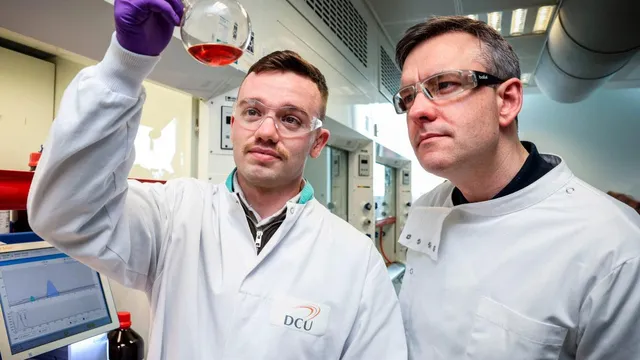
DCU and UL unveil breakthrough strategy to combat cancer drug resistance
DCU and UL unveil breakthrough strategy to combat cancer drug resistance
- Researchers from Dublin City University and University of Limerick have developed new metal-based compounds to damage cancer cell DNA.
- Using the method of 'click chemistry,' the team created 'tri-click' ligands which, combined with copper, cleave DNA.
- This novel approach aims to overcome drug resistance in cancer treatments, marking a critical advancement towards future therapies.
Story
In an innovative collaboration between Dublin City University (DCU) and the University of Limerick (UL), researchers have developed a new chemical strategy to combat cancer drug resistance. This project, involving scientists from Chimie ParisTech in France and Chalmers University of Technology along with Sahlgrenska University Hospital in Sweden, marks a significant advancement in cancer treatment methodologies. The team, led by Professor Andrew Kellet from DCU, focused on constructing metal-based compounds that are specifically designed to damage cancer cell DNA through a unique chemical mechanism, differentiating it from traditional chemotherapy drugs. The consortium leveraged a technique known as 'click chemistry' to assemble these new molecular components. This method facilitates the creation of compounds termed 'tri-click' ligands, which, when combined with copper ions, yield artificial agents that cleave DNA. Professor Kellet emphasized the transformative potential of click chemistry in the synthesis of complex molecules. He noted that while the development of these compounds is in its early stages, it opens doors to addressing significant challenges in cancer treatment, particularly drug resistance. The problem of drug resistance persists as one of the greatest obstacles in effective cancer treatment. Cancers often adapt by repairing DNA damage or by obstructing the action of conventional drugs, significantly limiting successful patient outcomes. The design of these novel compounds aims to circumvent the common mechanisms that enable tumors to develop resistance, thereby providing a new avenue for therapy in treating resistant cancers. This research represents a promising step towards finding more effective treatments for patients facing highly resistant cancer types. Research outcomes have been published in the journal Nature, showcasing the work's implications for future drug development. Damien Thompson, the director of SSPC, the Research Ireland Centre for Pharmaceuticals, extolled the importance of their collaboration, which melded experimental and computational modeling approaches. This joint effort underscored the strategic advancements required for the development of sustainable and well-tolerated anticancer drugs, a vital aspect of ongoing research in an area where innovation is crucial for saving lives.


