
technology
innovative
controversial

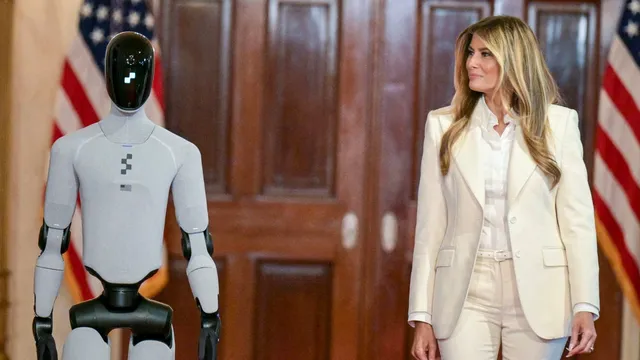
Humanoid robot Figure 03 introduces Melania Trump at White House AI summit

Mar 25, 2026, 11:35 PM30
(Update: Mar 26, 2026, 1:53 PM)
First Lady of the United States (2017–2021), model, and businesswoman

Humanoid robot Figure 03 introduces Melania Trump at White House AI summit

  • A humanoid robot named Figure 03 introduced Melania Trump at a recent White House summit focused on artificial intelligence and children's education.
  • The event featured orchestral music from the film Hook, sparking online reactions related to pop culture and nostalgia.
  • The presence of the robot emphasized the fast integration of advanced technologies into public life and education.
Share your opinion
3

Story

In the United States, a humanoid robot named Figure 03, developed by the AI robotics company Figure, made a notable appearance at a White House summit focused on artificial intelligence, children's safety, and education. During the event, which occurred recently, the robot delivered a speech introducing Melania Trump, showcasing its advanced language abilities and human-like interactions. This event served as both a demonstration of cutting-edge technology and a symbol of the growing intersection between education and artificial intelligence. As the robot walked alongside Melania Trump, an orchestral track titled "Flight to Neverland" from the celebrated 1991 film Hook was played, piquing the interest of viewers online. This particular choice of music was met with mixed reactions on social media, where many users expressed surprise at the nostalgic association between the score and the futuristic context of a humanoid robot. The incorporation of such recognizable film music during an official White House event caught the attention of audiences, prompting discussions about the blending of pop culture with formal governmental engagements. The summit was designed to address critical topics regarding the integration of technology into educational systems aimed at empowering children. Figure 03's vocal performance included greetings in multiple languages, emphasizing its programmed capabilities to enhance communication and interaction in diverse settings. As debates around the implications of artificial intelligence continue, the presence of humanoid robots like Figure 03 at high-profile events underscores the accelerated pace at which AI technologies are entering various aspects of public life. The ongoing discussions surrounding AI's role in education and beyond are indicative of a broader societal engagement with these emerging technologies. The event highlighted the potential benefits of integrating AI into child education while simultaneously raising questions about safety and regulation. The White House has yet to comment on the polarizing music choice, but the incident served to keep the dialogue surrounding AI, robotics, and their implications in children's education ongoing and crucial for future policy development.

Context

The integration of robotics in children's education is becoming increasingly significant in fostering engagement, creativity, and critical thinking skills. Robotics combines multiple disciplines, including science, technology, engineering, and mathematics (STEM), and provides a hands-on learning experience that captivates young minds. As children interact with robotic tools, they gain a practical understanding of complex concepts, enhancing their problem-solving skills and encouraging collaboration among peers. This immersive approach not only makes learning enjoyable but also motivates students to explore and innovate, leading to a more adaptive and forward-thinking workforce in the future. Moreover, robotics education aligns with various learning paradigms by promoting experiential learning. As children design and build robots, they encounter real-world challenges that require experimentation and revision. This iterative process fosters resilience and adaptability, as children learn to embrace failure as a step toward success. Additionally, robotics encourages the development of social skills through teamwork, as students often work in groups to achieve common goals. Collaborating on projects cultivates communication skills and instills a sense of responsibility and accountability among young learners, preparing them for future professional environments. The impact of robotics on children's cognitive development is also noteworthy. Research suggests that engaging in robotic activities enhances computational thinking, a critical skill in today's technology-driven world. Children learn to break down problems into manageable parts, recognize patterns, and formulate algorithms, all of which are applicable across various subjects and in everyday problem-solving scenarios. Such skills are increasingly vital in an economy that demands a workforce proficient in digital literacy and technological competencies. Furthermore, the exposure to robotics can inspire interest in STEM careers, encouraging more children, especially from underrepresented backgrounds, to pursue education and careers in these vital fields. However, to maximize the benefits of robotics in education, it is essential for educators to receive adequate training and for schools to invest in resources and curriculum development. The successful implementation of robotics programs requires careful planning and support from administration to create an inclusive environment that caters to diverse learning needs. As robotics continues to evolve, it is crucial that education systems remain responsive to these changes, ensuring that they effectively prepare students for a future where technological fluency is paramount. By integrating robotics into the educational framework, we are not just teaching children how to work with machines; we are equipping them with the skills and mindset necessary to navigate and influence the future.

2026 All rights reserved
