

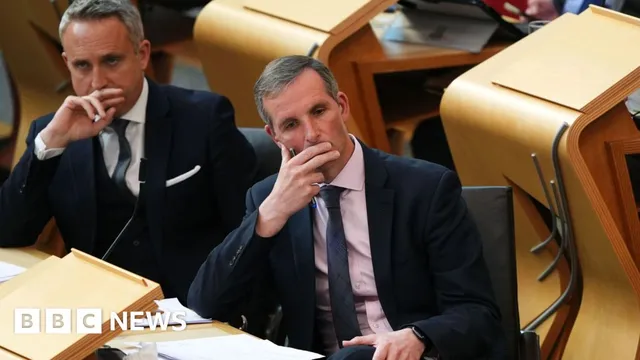
Scotland votes down assisted dying bill amid emotional debate
Scotland votes down assisted dying bill amid emotional debate
- The Assisted Dying for Terminally Ill Adults Bill was voted down by the Scottish Parliament with 69 votes against and 57 in favor.
- Liam McArthur introduced the bill, arguing it would provide choice and dignity for terminally ill patients.
- Opposition focused on concerns about potential coercion of vulnerable individuals in the decision-making process.
Story
In Scotland, the Assisted Dying for Terminally Ill Adults Bill faced a decisive vote on March 18, 2026, where it was ultimately rejected in the Scottish Parliament. The emotional debate surrounding this legislation lasted for weeks, as supporters and opponents expressed their views on the rights of terminally ill individuals to choose assisted death. Liam McArthur, the backbench Scottish Liberal Democrat MSP who introduced the bill, argued that it would offer choice, compassion, and dignity to those suffering from terminal illnesses. The proposed legislation required the approval of two doctors and stipulated that the lethal substance would be self-administered by the patient. This was not the first time such a bill had been considered; in fact, it marked the third attempt in 16 years, with a previous version having been rejected in 2015 by a larger margin. The recent parliamentary discussions highlighted significant concerns regarding possible coercion of vulnerable individuals, particularly in cases involving disabled persons. Critics, including members of the Scottish Conservative Party, voiced fears that relatives and medical professionals might unduly influence a terminally ill person's decision. Despite these concerns, McArthur insisted the bill contained multiple safeguards designed to protect vulnerable individuals, while emphasizing the necessity of palliative care alongside assisted dying options. The issue of individual autonomy in choosing the manner and timing of one’s own death sparked fervent debate, with moral arguments often rooted in religious beliefs and philosophical traditions. In this context, key figures in the government, including First Minister John Swinney and former First Minister Nicola Sturgeon, publicly opposed the bill, contributing to the overall dissent against its passage. In addition to Scotland's situation, similar legislative efforts were observed in England and Wales; however, a comparable bill there faced challenges due to opposition in the House of Lords. Meanwhile, developments were awaited in the Isle of Man and Jersey, which were on track to potentially become the first regions in the British Isles to legalize assisted dying. The rejection of McArthur's bill, particularly during such an emotional day in Parliament, represents a significant moment reflecting the tension surrounding assisted dying legislation, and the ongoing societal debate on how to approach issues of life and death in the healthcare system.


