

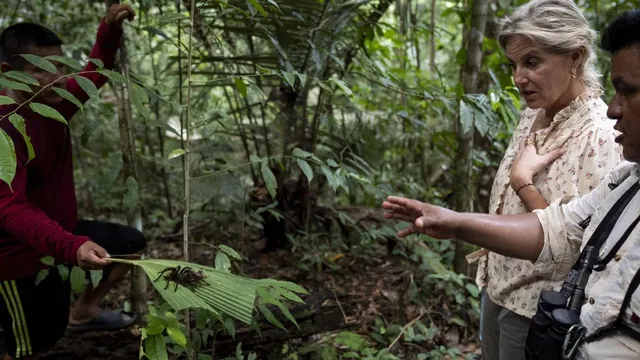
Duchess of Edinburgh faces the king of spiders on Amazon trek
Duchess of Edinburgh faces the king of spiders on Amazon trek
- Sophie, Duchess of Edinburgh, explored the Peruvian Amazon on a biodiversity nature walk.
- During her trek, she encountered the Goliath birdeater spider and held it despite initial nervousness.
- Her official visit highlights the importance of biodiversity and conservation efforts in South and Central America.
Story
During a recent trip to Peru, Sophie, Duchess of Edinburgh, embarked on a biodiversity nature walk in the Peruvian Amazon, where she encountered wildlife and unique flora. Accompanied by professional guides Rey Mozombite and Daniel Macedo, she ventured deep into the jungle, showcasing her adventurous spirit. Notably, she came face-to-face with the Goliath birdeater spider, the largest tarantula in the world, which is often referred to as the 'king of spiders'. Sophie, despite showing signs of nervousness, bravely inspected the spider and even held it on a leaf, highlighting her willingness to engage with local wildlife and enrich her understanding of the diverse ecosystem. In addition to the spider encounter, Sophie also interacted with other fascinating creatures, including holding a green anaconda snake. The nature walk allowed her to appreciate the incredible biodiversity of the Amazon, where she also spotted a sloth resting among the trees. Sophie documented her encounter by taking photos of the wildlife, signifying her keen interest in documenting her experiences throughout her travels. Sophie’s visit to South and Central America is part of a 10-day official tour at the request of the UK Foreign Office. The itinerary includes multiple countries such as Peru, Panama, Guatemala, and Belize, emphasizing the Duchess's commitment to promoting biodiversity and environmental awareness. Her exploration is not only a chance for adventure but also serves as a platform to showcase the importance of conservation efforts in these regions, especially in hotspots rich in biodiversity like the Amazon. Her engagement with the local environment reflects a broader commitment to environmental issues and a desire to learn from diverse ecosystems. The Goliath birdeater spider, while imposing, is harmless to humans, focusing instead on small creatures as its typical prey. This experience signifies a blend of royal duty and personal exploration, as it allows Sophie to connect with the natural world and highlight key biodiversity issues relevant to her audience back home. Overall, the Duchess's journey in the Peruvian Amazon provides insight into the delicate balance of ecosystems and the importance of global efforts in conservation, making her visit not only a personal adventure but a statement on the significance of protecting such vital environments.
Context
The Peruvian Amazon, a part of the Amazon rainforest that spans several countries in South America, is one of the most biodiverse regions on Earth. Known for its vast array of plant and animal species, many of which are endemic to the area, this region plays a crucial role in global biodiversity. The Amazon rainforest, covering an area of approximately 5.5 million square kilometers, is home to an estimated 390 billion individual trees, representing over 16,000 different species. Among these are vital resources such as rubber trees, Brazil nuts, and a plethora of medicinal plants, making the preservation of this ecosystem essential not only for local communities but also for global health and economy. The intricate web of life sustained in this environment reveals the importance of each species and their interdependent relationships, showcasing how biodiversity contributes to ecosystem resilience and stability. The unique geographical and climatic conditions of the Peruvian Amazon contribute to its rich biodiversity. The region experiences high levels of precipitation, with an annual rainfall of approximately 2,000 to 4,000 millimeters, facilitating diverse habitats such as flooded forests, terra firme forests, and wetlands. These habitats support a variety of wildlife, including more than 1,800 species of birds, 400 species of mammals, and over 3,000 species of fish. This rich array of organisms underscores the significance of the Amazon not only as a habitat for wildlife but also as a crucial component of the Earth's ecological balance. Additionally, the Peruvian Amazon serves as a critical component of the global carbon cycle, absorbing large amounts of CO2 and helping to mitigate climate change. Despite its invaluable ecological contributions, the biodiversity of the Peruvian Amazon is under significant threat. Deforestation, driven primarily by agriculture, logging, and infrastructure development, poses a significant risk to this delicate ecosystem. Reports indicate that Peru has lost approximately 14 percent of its original rainforest area, with rapid urbanization and land conversion practices leading to habitat fragmentation. Furthermore, illegal mining and the impacts of climate change further exacerbate these issues, resulting in habitat degradation and loss of species. Conservation efforts are of paramount importance in addressing these challenges, with initiatives focused on sustainable land management, reforestation, and the establishment of protected areas making strides towards preserving the rich biodiversity of the Amazon. Efforts to protect the biodiversity of the Peruvian Amazon involve collaborative approaches that engage local communities, governments, and non-governmental organizations. The promotion of sustainable practices and the protection of Indigenous rights are crucial components in any conservation strategy. Awareness programs highlighting the significance of biodiversity and the ecosystem services it provides are also vital for garnering public support. By understanding the interconnectedness of the species and their habitats, it becomes evident that protecting the Peruvian Amazon is not simply an environmental issue but a global responsibility. The outcomes of conservation activities in the Amazon echo beyond its borders, affecting global biodiversity, climate stability, and ecological health.


