

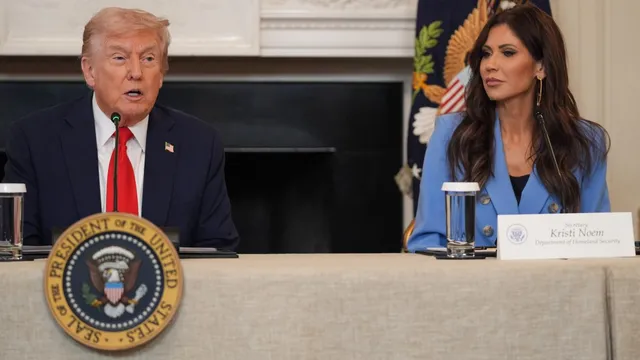
Impeachment articles target Kristi Noem over agency actions
Impeachment articles target Kristi Noem over agency actions
- Democratic Representative Robin Kelly introduced three articles of impeachment against Kristi Noem in January 2026.
- The impeachment effort has garnered support from approximately 100 co-sponsors in the House.
- The likelihood of successful impeachment is low due to the Republican majority in Congress.
Story
In January 2026, discussions regarding the impeachment of Homeland Security Secretary Kristi Noem intensified amid rising discontent within the Democratic Party concerning her conduct. Representative Robin Kelly from Illinois formally submitted three articles of impeachment against Noem, claiming she committed high crimes and misdemeanors during her time in office. This escalation comes as calls for accountability within the Department of Homeland Security grow louder, especially following the fatal shooting of Renee Nicole Good by an ICE agent. Kelly's introduction of impeachment articles garnered notable support, reaching approximately 100 co-sponsors in a relatively short time. Allegations against Noem include obstruction of Congress and a violation of public trust, as she is accused of acting unlawfully when attempting to access a DHS facility. Furthermore, critics allege that she directed ICE to engage in unlawful practices, including warrantless arrests. These problems have sparked outrage among lawmakers and citizens alike, as Noem's actions have been perceived to cause chaos and disruption nationwide. The impeachment attempt illustrates the Democratic commitment to addressing perceived injustices and holding federal officials accountable. Despite the show's strength, the chances of successful impeachment appear slim due to the Republican Party's substantial presence in both the House of Representatives and the Senate. Although nearly half of the House Democrats have joined the resolution to impeach Noem, the political landscape suggests that the impeachment movement may serve more as a rallying point than a realistic threat to Noem's position. While other efforts to impeach officials, including Donald Trump, have faced obstacles, this specific initiative aims to challenge bureaucratic malfeasance. The urgency of this impeachment campaign underscores the Democrats' perceived obligation to advocate for issues of public concern, especially those relating to immigration enforcement and human rights violations. Representative Kelly's move has resonated with constituents across the nation who are demanding accountability from government officials perceived to misuse their power. The coming months will reveal whether further action will be taken by the House or if the political divide will stifle any further advancements in the impeachment efforts against Kristi Noem.
Context
The current political landscape in the US Congress, as of January 2026, continues to be characterized by a deeply polarized environment, reflecting the divisions within American society. The Republican Party maintains a slim majority in the House of Representatives, while the Senate remains under Democratic control. This bifurcation fuels an ongoing struggle for power and influence, affecting legislative priorities and the overall effectiveness of governance. The dynamics between the parties have prompted increased partisanship, making bipartisan cooperation a rare occurrence, as members of the Congress navigate the electoral pressures from their respective bases while responding to national concerns. Legislation surrounding key issues such as healthcare, immigration, and climate change has become entangled in political conflicts, stalling comprehensive reform efforts. The stark differences in policy approaches between the two parties are evident, with Republicans predominantly advocating for deregulation and tax cuts, whereas Democrats are pushing for expanded social programs and environmental protections. This stark division leads to frequent clashes in congressional committees and on the House and Senate floors, slowing down the legislative process and contributing to public frustration with Congress. Another significant factor in the current landscape is the growing influence of social media and grassroots movements, which have reshaped campaign strategies and voter engagement. Members of Congress are increasingly responsive to their constituents through digital platforms, often reflecting the heightened activism among younger voters. As diverse political movements gain traction, such as those advocating for social justice and climate action, congressional representatives face mounting pressure to align with these initiatives or risk alienating key segments of their electoral base. This evolution in communication may also signal a shift in how policy discussions occur, necessitating legislators to adapt their approaches to remain relevant and credible. As we look ahead towards the upcoming elections and the remainder of the congressional term, the interplay between the two parties, evolving voter demographics, and emergent social movements will significantly shape the fabric of American governance. The extent to which Congress can collaborate on critical issues may hinge not only on partisan alignments but also on the ability to tap into the broader public sentiment. With challenges ranging from economic uncertainties to geopolitical tensions, the necessity for effective legislative measures is paramount. The direction in which Congress steers its agenda will undoubtedly impact the nation's trajectory and its citizens, making the political landscape a focal point for continued scrutiny and analysis.


