

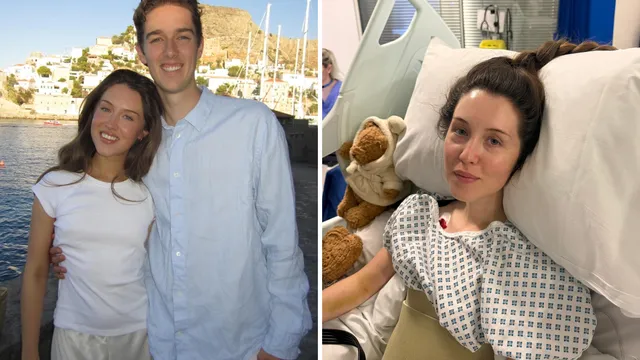
Rebecca Waller faces paralysis after rare stroke during work from home
Rebecca Waller faces paralysis after rare stroke during work from home
- Rebecca Waller, 27, experienced a sudden stroke due to fibroadipose tissue embolism while working from home on January 9, 2026.
- She suffers from paralysis from the neck down and has begun rehabilitation to regain her mobility.
- Her experience highlights the importance of appreciating health and planning for unexpected life changes.
Story
In the United Kingdom, on January 9, 2026, Rebecca Waller, a 27-year-old woman, experienced a sudden sharp pain while working from home. During a phone call, she felt unusual pressure in her back that soon escalated to pins and needles in her arms. Despite her efforts to manage the pain, it worsened, prompting her fiancé, James, to call for an ambulance. Initially, paramedics believed she was experiencing a panic attack. However, her condition was later identified as being caused by fibroadipose tissue embolism (FCE), which can trigger a spinal cord stroke. FCE occurs when material from the center of a spinal disc enters blood vessels that supply the spinal cord, ultimately blocking blood flow and causing significant nerve injury. Such strokes are rare but can result from intense physical strain, including activities like heavy lifting or sudden impact. Waller was then transferred to a specialized spinal rehabilitation center in March to begin her recovery journey, which is usually a lengthy process involving the rebuilding of neural pathways. After the stroke, Waller could only move her shoulders and above. However, she noted a small twitch in her right arm that had developed significantly over the course of her rehabilitation. Waller remains optimistic about regaining her mobility. She dreams of walking down the aisle at her wedding scheduled for next year. Despite the uncertainty and challenges faced during recovery, she emphasizes the importance of hope as it gives her the best chance to heal. In her reflection, Waller acknowledged that everything related to her wedding has been put on hold due to her condition. While she expresses a desire not to imagine a future where she cannot walk down the aisle, she is considering postponing the wedding until her health improves. Her story illustrates the unexpected nature of life events, urging others to value their health and the small things in life. Recently, Waller’s journey has garnered significant attention online, going viral with over 512,000 views and nearly 50,000 likes on her TikTok post where she shared photos of her condition before and after the stroke.
Context
Spinal cord stroke, or spinal cord ischemia, is a relatively rare but significant condition that occurs when blood flow to the spinal cord is disrupted. This can lead to neurological deficits that impact an individual's mobility and quality of life. Recovery from a spinal cord stroke can vary widely among patients, depending on factors such as the severity of the injury, the speed of diagnosis and intervention, and the patient's overall health. Understanding the mechanisms behind spinal cord stroke and the prospects for recovery is crucial in guiding treatment strategies and rehabilitation efforts. The human spinal cord is reliant on a rich supply of blood to maintain its function. When blood flow is interrupted, neurons within the spinal cord can become damaged or die, leading to a loss of motor function, sensory perception, and autonomic control below the level of the injury. Recovery is often a long and challenging process, necessitating a multi-disciplinary approach that may include medical management, physical therapy, occupational therapy, and psychological support. Advances in research have led to improved treatment modalities, including the use of medications aimed at enhancing neuronal repair and rehabilitation techniques that focus on neuroplasticity. Rehabilitation plays a vital role in spinal cord stroke recovery. Targeted therapies aim to stimulate neural recovery and improve functional outcomes. Physical therapy often begins shortly after the initial event to prevent further complications, such as muscle atrophy and joint stiffness. Therapists work with patients to optimize movement patterns and regain independence in daily activities. Occupational therapy, on the other hand, focuses on adaptive techniques and assistive devices that promote self-sufficiency. It's essential for patients to set realistic goals and remain engaged in their recovery process. Overall, while the prognosis for recovery from spinal cord stroke can be uncertain, early intervention, personalized therapy, and ongoing support are key factors that can influence outcomes. With continued research and advancements in medical science, there is growing optimism regarding the potential for recovery and improvement in the quality of life for those affected by this condition. Individual resilience, support systems, and a commitment to rehabilitation further foster an environment conducive to recovery.


