

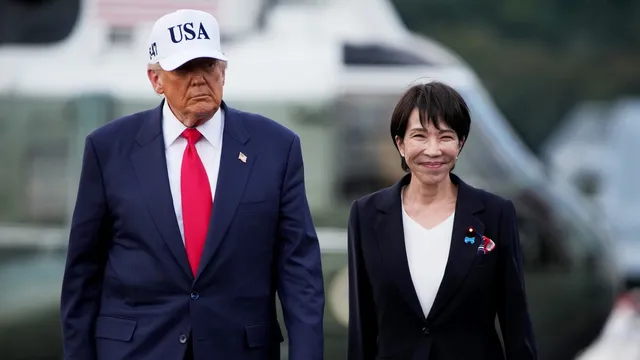
Takaichi faces Trump’s demands for help in securing the Strait of Hormuz
Takaichi faces Trump’s demands for help in securing the Strait of Hormuz
- Japan's Prime Minister Sanae Takaichi is on a three-day visit to Washington to discuss trade and security issues.
- Trump criticized Japan's lack of support for securing the Strait of Hormuz days before Takaichi's visit.
- Takaichi's meeting with Trump is crucial for strengthening the US-Japan alliance amid rising tensions related to Iran.
Story
Japan's Prime Minister Sanae Takaichi embarked on a challenging three-day visit to Washington amid heightened tensions related to the Strait of Hormuz and the ongoing conflicts in Iran. Days prior to her travels, U.S. President Donald Trump publicly criticized Japan for not responding to his calls for assistance in securing the crucial waterway, which is vital for global oil supply. This visit, significant for trade discussions and reinforcing the US-Japan alliance, was particularly complicated given the urgent demands of the U.S. on its allies, including Japan, for military support in the region. Takaichi's administration, established only a few months prior, was faced with defending its pacifist constitution while addressing Trump's expectations. Japan's constitution, adopted post-World War II, strictly limits military engagement, stipulating that the country can only act in self-defense. Any direct military involvement by Japan could provoke significant backlash from its citizens, especially considering a recent poll indicated that 82% disapprove of the current state of war. The diplomatic challenges were compounded by deteriorating relations between Japan and China, stemming from Takaichi's comments regarding the potential activation of Japan’s self-defense forces in response to threats against Taiwan. Amid these complex geopolitical dynamics, ensuring economic stability was a priority for Takaichi, especially with Japan's economy grappling with inflation and a weakened yen. As the trip commenced, experts speculated that the success of the meetings would largely depend on Trump’s temperament. Takaichi’s aim was to illustrate herself as a collaborative leader to secure beneficial trade agreements, vital for her country’s economic recovery. Nonetheless, the core agenda remained overshadowed by the pressing issue of the conflict in Iran, illustrating the uncertainties and strategic complexities facing Japan’s leadership on the international stage.
Context
geopolitical market policy market impact geopolitical global global global trends market geopolitical geopolitical shift data geopolitical impact economic strategic economic trends global data global global data geopolitical shift trends analysis policy impact geopolitical impact geopolitical shift global policy geopolitical strategic global shift insight global shift economic analysis market trends geopolitical trends geopolitical analysis impact trends policy market data geopolitical trends strategic economic analysis economic shift analysis economic economic shift geopolitical trends economic global global shift strategic policy analysis global shift...


