

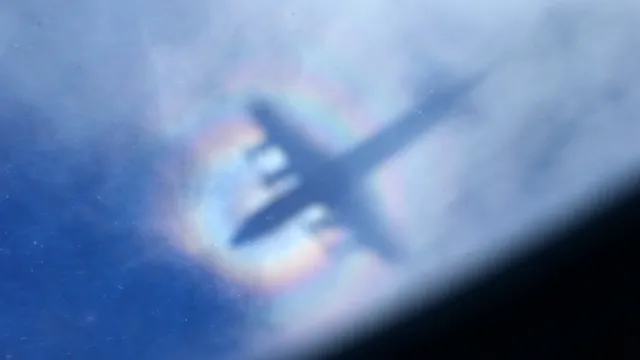
Search for missing Malaysia Airlines Flight 370 resumes after decade-long mystery
Search for missing Malaysia Airlines Flight 370 resumes after decade-long mystery
- The search for the wreckage of Malaysia Airlines Flight 370 resumed on December 30, 2025.
- Ocean Infinity is conducting the search operations using advanced technology over a 6,000-square-mile area.
- Families of passengers maintain hope for closure as they continue to seek answers about the plane's disappearance.
Story
In China, the search for the missing Malaysia Airlines Flight 370, which vanished on March 8, 2014, has resumed after more than a decade. The Boeing 777 disappeared approximately 39 minutes after leaving Kuala Lumpur for Beijing, carrying 239 passengers and crew. With no distress calls or signs of technical issues identified, the incident remains one of aviation's greatest mysteries. The U.S. marine robotics company Ocean Infinity is conducting the search, using advanced underwater vehicles and scanning technology over a designated area of 6,000 square miles of the Indian Ocean. This renewed effort comes after a previous search ended in 2017 without conclusive results. The search operations, initially called off due to bad weather, are now planned to continue intermittently for 55 days, with the goal of locating the aircraft wreckage. Ocean Infinity's commitment to a no-find, no-fee agreement reflects tailored strategies to maximize resources and expertise to respond to this unresolved case. Since the crash, the search area has broadened significantly, which includes extensive mapping operations covering roughly the size of Ohio. Historically, investigations have considered various theories behind the disappearance, ranging from hijacking to technical failures, none of which definitively explain the event. Investigators have suggested a deliberate act of severing communications before redirecting the aircraft. The lack of evidence found in the extensive previous searches, including debris identification of a flaperon in 2015, only adds to the families' longing for closure. The search has evoked numerous lawsuits against Malaysia Airlines, with compensation claims still arising from affected families. Families of the victims express renewed hope as the search restarts. Jiang Hui, whose mother was among those missing, believes that despite the extended timeline of uncertainty, the wreckage is likely to be found within the next few years, if not sooner. As technology improves and with more concentrated efforts focused on targeted areas believed to be the most viable, experts remain optimistic about finding answers to this enduring mystery. With personal stakes high for the surviving relatives, the ongoing support from government authorities and organizations keeps the spirit of discovery alive as the search deepens across the vast waters of the Indian Ocean.
Context
The disappearance of Malaysia Airlines Flight 370 (MH370) on March 8, 2014, stands as one of the most perplexing incidents in aviation history and has had significant repercussions on aviation safety regulations worldwide. This Boeing 777, en route from Kuala Lumpur to Beijing, vanished from radar screens, leading to an extensive search operation, but its wreckage was never found until pieces of debris began to wash ashore on Indian Ocean islands. This unprecedented event exposed glaring weaknesses in existing aviation safety protocols, primarily concerning tracking, communication, and emergency response mechanisms, which ultimately prompted a re-evaluation of safety standards across the industry. In the wake of MH370's disappearance, there were concerted efforts by regulatory bodies such as the International Civil Aviation Organization (ICAO) to enhance aircraft tracking capabilities. The initial focus was on the implementation of satellite-based tracking systems to ensure that aircraft could be monitored in real-time, even over remote areas of the ocean where traditional radar coverage does not exist. The ICAO established new standards mandating that all commercial aircraft be equipped with systems capable of transmitting their location at regular intervals, strengthening the ability of search and rescue operations to respond more effectively in similar instances. These measures were imperative to prevent a repeat of such an incident in the future and to provide airlines and passengers with increased confidence in safety protocols. Moreover, aviation communications technology also underwent significant upgrades following the events surrounding MH370. The need for robust communication systems was highlighted, with a push for all aircraft to have improved cockpit voice and flight data recorders. These devices are essential for understanding the circumstances leading up to an emergency and can provide critical data for investigations. Furthermore, regulatory agencies advocated for initiatives that would ensure two-way communication between pilots and air traffic controllers, enhancing the flow of information and allowing for quick decision-making in crises. The evolution of these technologies reflects the aviation industry's commitment to learning from past mistakes to prevent future tragedies. Lastly, the incident has sparked broader discussions about regulatory compliance, transparency, and accountability within the airline industry. Airlines are now held to more stringent safety management systems, which include regular audits and mandatory reporting of safety issues. The continued emphasis on data sharing among airlines and regulatory bodies is crucial for increasing overall safety management. The legacy of MH370 serves as a reminder of the vulnerabilities facing modern aviation and the necessity for ongoing adaptation of safety regulations to new challenges. As new technologies emerge and air traffic increases, the lessons learned from this tragic event will continue to shape the future of aviation safety.


