

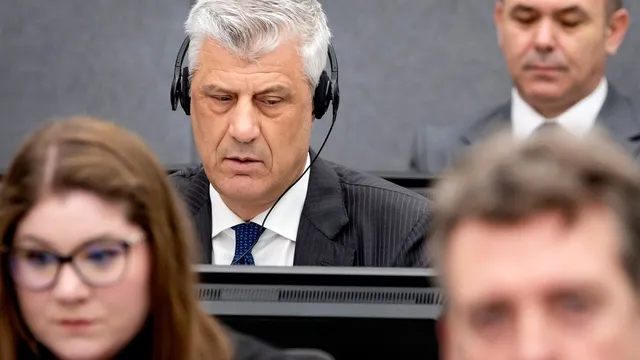
Hashim Thaci resigns amid war crimes trial in Kosovo
Hashim Thaci resigns amid war crimes trial in Kosovo
- Hashim Thaci and three other defendants face charges for murder and torture during the Kosovo War.
- Prosecutors presented overwhelming evidence of systematic targeting of civilians and political opponents.
- The trial has sparked controversy, as many Kosovars view it as an attempt to rewrite history.
Story
In 2020, Hashim Thaci, the former president of Kosovo, resigned from office to face serious charges at a tribunal in The Hague, where he and three other defendants stand accused of committing crimes against humanity and war crimes. The charges stem from their involvement during the 1998-1999 Kosovo War for independence from Serbia, a conflict marked by significant violence and civilian suffering, with an estimated 13,000 fatalities, predominantly among ethnic Albanians. Prosecutors have asserted that these individuals orchestrated a systematic approach to target political opponents as well as civilians labeled as collaborators or traitors within the Kosovo Liberation Army. The prosecution presented substantial evidence, demonstrating the severity of the allegations, which include murder, torture, and persecution against those who opposed or were perceived to undermine their efforts during the war. Despite the compelling evidence and testimonies from witnesses who risked their safety to disclose these accounts, Thaci and his co-defendants have consistently proclaimed their innocence, claiming that they are victims of a politically motivated initiative designed to discredit their efforts during the liberation of Kosovo. The trial, which began in 2023, has attracted significant attention not only for its implications regarding the legacy of the wartime leaders but also for its reflection of the ongoing sentiments among Kosovars who feel that their struggle for sovereignty is being unjustly equated with the actions of Serbian forces. The atmosphere surrounding this process is tense, as many Kosovars perceive the tribunal as an attempt to rewrite history and equate their suffering with the acts of genocide attributed to Serbia during the conflict. Legal experts and international observers have underscored the importance of this trial in establishing accountability for war crimes and addressing the pain of those affected by the atrocities committed in the war. As the tribunal continues to unfold, it highlights the complex dynamics of post-war Kosovo and the continuing challenges in reconciling its history with the aspirations of its people. The court proceedings serve as a crucial platform for the victims and their families in search of truth and justice against the backdrop of a still fracture society.
Context
The Kosovo Specialist Chambers (KSC) represent a significant advancement in the pursuit of justice for war crimes and serious human rights violations that occurred during the Kosovo conflict in the late 1990s. Established under the jurisdiction of Kosovo and supported by the international community, the KSC was created to investigate and prosecute individuals accused of committing these crimes, which include but are not limited to, murder, torture, and the targeting of civilians. The establishment of the KSC is predicated on the need for accountability in a region that has struggled with the complexities of post-war justice and has faced challenges in addressing past atrocities. As such, the KSC functions as a reminder of the international community's commitment to uphold the rule of law and deliver justice for victims who had long felt marginalized and overlooked in the aftermath of conflict. One of the KSC's most significant aspects is its innovative hybrid court structure, which combines international and local legal principles. This framework is designed to ensure impartiality while retaining a connection to the local context, an essential factor for the legitimacy of judicial proceedings in Kosovo. By incorporating international judges and prosecutors into the court, the KSC aims to instill public confidence in the judicial process while navigating the complexities of a society still grappling with its past. This hybrid model also addresses the historical distrust of local legal systems, particularly within minority communities, by demonstrating a commitment to fair and unbiased legal processes. The KSC is not only about accountability; it also represents a broader educational and sociopolitical endeavor. By facilitating the prosecution of war crimes, it plays a crucial role in fostering a culture of accountability, human rights, and the rule of law. In a society where reconciliation is often hindered by a legacy of violence, the work of the KSC can help mitigate tensions and promote healing. Through its actions, the court seeks to contribute to an environment where victims of past atrocities can find a sense of closure, while also encouraging a collective transition towards a more peaceful and just society. Furthermore, the long-term implications of the KSC extend beyond its immediate jurisdiction. The work performed by the KSC serves as a reference point for other nations facing similar transitional justice challenges. The international community closely monitors and supports the KSC's progress, viewing it as a test case for the efficacy of hybrid tribunals in addressing war crimes. As such, the KSC not only aims at delivering justice for Kosovo but also contributes to the development of frameworks that can be applied to other conflict-ridden regions around the globe. In summary, the KSC represents a pivotal effort in the global agenda for justice, accountability, and the prevention of future atrocities.


