

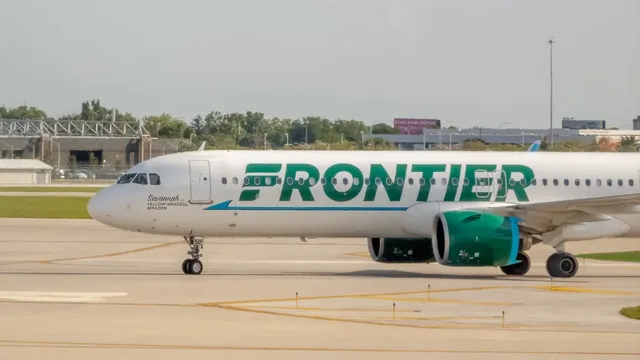
Frontier Airlines flight strikes pedestrian during takeoff at Denver airport
Frontier Airlines flight strikes pedestrian during takeoff at Denver airport
- A Frontier Airlines flight struck a pedestrian on the runway during takeoff at Denver International Airport.
- The pilot reported hitting an individual and smoke in the cabin, leading to an emergency evacuation.
- The incident has prompted an investigation into safety protocols and has raised concerns about air traffic control staffing.
Story
On the evening of May 8, 2026, a serious incident occurred at Denver International Airport in the United States when an Airbus A321 operated by Frontier Airlines struck a pedestrian on the runway during its takeoff. The flight, designated Frontier 4345, was on its way to Los Angeles International Airport and was carrying a total of 224 passengers along with seven crew members at the time of the incident. Reports indicate that the pilot, upon realizing the aircraft had hit an individual and was experiencing smoke and an engine fire, communicated with air traffic control and initiated an immediate stop on the runway. Passengers were quickly evacuated via slides as a precautionary measure following the incident, which included reported smoke in the cabin. The swift actions taken by both the flight crew and the emergency response teams led to a brief engine fire being extinguished by the Denver Fire Department. The flight incident raised alarms, particularly as it followed a pattern of recent safety concerns within airport operations across the country. This incident will be examined further, given the backdrop of investigations into air traffic control staffing issues that may have contributed to increased risk situations at airports nationwide. As the investigation gets underway, Frontier Airlines has expressed deep concern and sadness over the event, emphasizing that they are fully cooperating with the airport and safety authorities. The authorities have not publicly disclosed further details regarding the individual struck by the aircraft, leaving many unanswered questions about their condition and the circumstances leading up to their presence on the runway. Runway 17L at Denver International Airport was closed for the duration of the investigation, conducted by the National Transportation Safety Board, to ascertain the event's full context and situational factors. The incident also comes on the heels of other aviation-related events, including a recent occurrence where a United Airlines flight collided with a tractor-trailer truck while landing at Newark Liberty International Airport. These events have triggered discussion about the adequacy of safety measures currently in place at airports, leading to increased scrutiny from both the public and safety regulators. The need for improved safety protocols and potentially increasing air traffic staffing levels has become a predominant topic in the wake of such alarming incidents, generating broader considerations and calls for reform within the aviation industry, especially in the context of growing air travel demand and ongoing operational challenges.
Context
The National Transportation Safety Board (NTSB) plays a critical role in ensuring transportation safety across various modes including aviation, highways, railroads, and marine environments. Established in 1967, the NTSB is tasked with investigating significant transportation accidents, determining their probable causes, and issuing safety recommendations aimed at preventing future incidents. The NTSB operates independently of other governmental agencies and is composed of five board members who are nominated by the President and confirmed by the Senate. This independence is essential for the objectivity and integrity of its investigations, which include high-profile cases such as commercial airline crashes and major train derailments. Central to the NTSB's mandate is the investigative process, which involves a thorough examination of accident sites, collection of evidence, and interviews with witnesses and involved parties. The typical investigation can take months or even years, depending on the complexity of the incident and the factors involved. The NTSB utilizes a wide range of tools and techniques in their investigations, including simulation modeling and data reconstruction to analyze accident scenarios. Their findings are compiled into detailed reports that outline not only the causes of the accidents but also recommendations aimed at mitigating future risks. In addition to conducting investigations, the NTSB plays a vital role in promoting safety through public outreach and collaboration with various stakeholders, including federal and state agencies, transportation organizations, and the general public. The agency regularly publishes information about their investigations, safety alerts, and safety recommendations on their website, contributing to a culture of safety across the transportation sectors. The board prioritizes issues such as pilot training, vehicle maintenance, and infrastructure improvements to enhance safety standards in transportation systems. The effectiveness of the NTSB's recommendations is evident in the measurable decline in transportation fatalities and accidents over the years. The board remains committed to its mission to improve transportation safety through informed decisions and policies, ultimately reducing loss of life and injuries resulting from transportation incidents. As transportation technology continues to evolve, the NTSB is also adapting its approaches to address emerging threats and challenges, ensuring that safety remains at the forefront of transportation systems nationwide.


